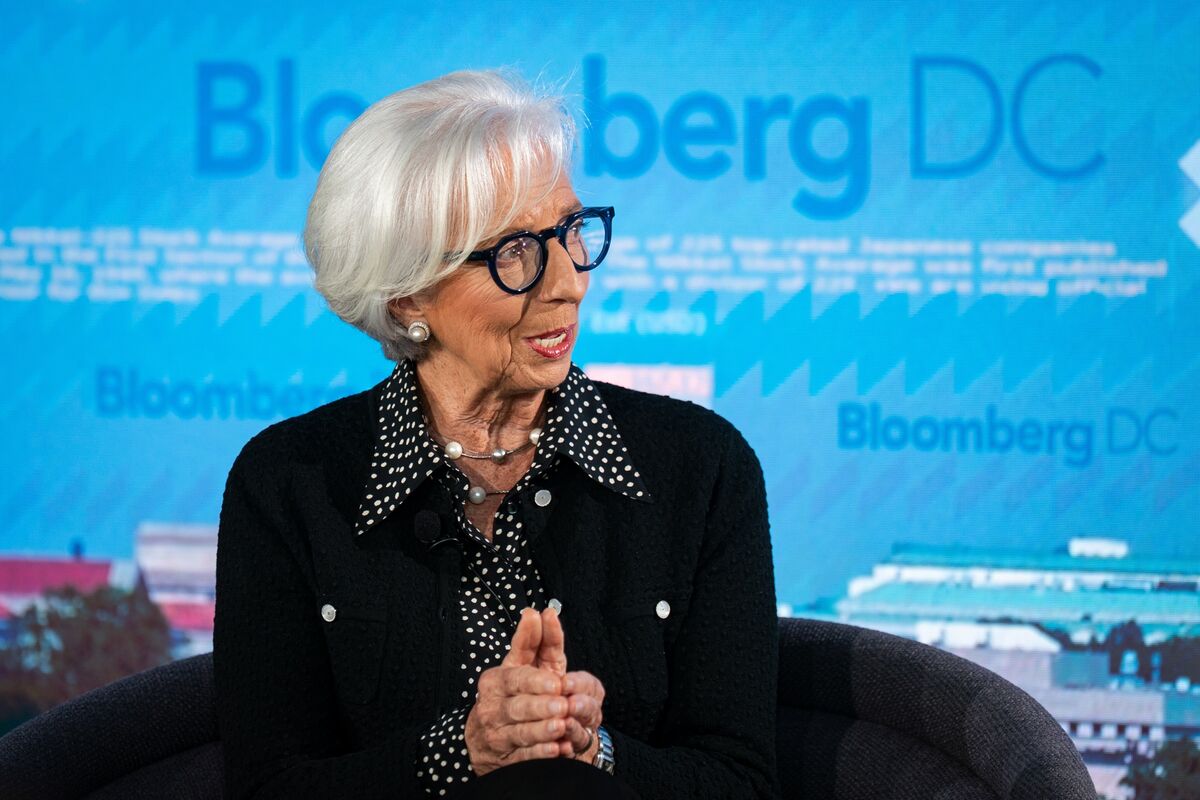
ECB President Christine Lagarde said inflation risks are tilted to the upside, with near-term price pressures potentially worsening as the Iran conflict continues. She noted the medium-term impact will depend on the intensity and duration of the war, underscoring a cautious, risk-off stance from ECB policymakers. The remarks are relevant for rates and broader European markets because they reinforce upside inflation risk from geopolitical shocks.
The market is underpricing how quickly an oil shock can bleed into euro-area inflation expectations even if the direct CPI impulse is temporary. The second-order risk is not just headline energy inflation, but broader persistence through transport, chemicals, and wage bargaining if households and firms treat the shock as regime-shifting rather than transient. That matters because the ECB is already boxed in: any renewed upside in medium-term inflation expectations reduces its ability to ease into weak growth.
The immediate winners are upstream energy producers and defense/logistics beneficiaries with pricing power; the losers are European energy-intensive industries, airlines, and consumer discretionary names with low pass-through. The more interesting spread is within Europe: quality defensives with domestic demand exposure should hold up better than cyclicals whose margins are most sensitive to imported energy costs and FX pressure. A weaker euro would amplify the imported-inflation channel, creating a self-reinforcing tightening of financial conditions even without a formal rate hike.
Catalysts over the next 1-4 weeks are any escalation in shipping disruption, insurance costs, or rhetoric that extends the conflict’s duration; over 1-3 months, watch whether energy forward curves stay elevated enough to leak into inflation swaps. The contrarian view is that this could be a short, sharp energy impulse rather than a durable inflation problem if supply routes remain intact and growth weakens further, limiting demand pass-through. In that case, the ECB’s hawkish bias would prove more verbal than real, and long-duration assets could recover once the market prices in slower growth rather than sticky inflation.
AI-powered research, real-time alerts, and portfolio analytics for institutional investors.
Request TrialOverall Sentiment
mildly negative
Sentiment Score
-0.20
