
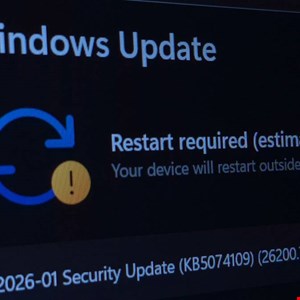
Microsoft said six vulnerabilities in its products were publicly disclosed before patches were available, including privilege escalation, security feature bypass, and denial-of-service issues across Defender, BitLocker, and Cloud Filter. The company said the disclosures increased customer risk and forced teams to work around the clock on mitigations and patches. It also warned that AI is accelerating vulnerability research and may put traditional 90-day coordinated disclosure norms under pressure.
This is not a headline risk event for Microsoft’s economics; it is a process-risk event that mostly affects perceived operational control and, more importantly, the timing of downstream security spend. The immediate loser is the enterprise security budget allocator: when proof-of-concept code becomes public before fixes are broadly deployed, CIOs tend to accelerate emergency hardening, which is usually noisy, expensive, and favors vendors that can sell detection/response rather than point products. That dynamic is mildly negative for MSFT optics but can be positive for adjacent controls stacks that sit in the attack path.
The second-order issue is that AI-assisted vulnerability discovery compresses the half-life of defensive moats. If the researcher community believes the 90-day norm is breaking, then large vendors face a rising cadence of disclosed issues before patches are ready, which increases the probability of short-lived but frequent reputational hits. Over months, this can lift demand for managed detection, endpoint telemetry, identity controls, and patch orchestration, while making basic endpoint feature narratives less persuasive. The market should care less about the individual bugs and more about the likelihood that disclosure velocity outpaces remediation velocity.
For Microsoft, the risk is mostly multiple compression rather than revenue damage: unless disclosures start causing measurable enterprise churn or regulatory scrutiny, the issue should fade after patch release and internal process changes. The real catalyst would be a well-publicized exploitation campaign that links one of these weaknesses to a broader incident wave; that would convert a hygiene story into a trust story. Conversely, if Microsoft publishes rapid mitigations and no material exploitation emerges over the next 2-6 weeks, the trade should mean-revert quickly.
The contrarian take is that the market may be overpricing the reputational angle and underpricing the fact that Microsoft often benefits when cyber fear rises because security spend consolidates around platforms with scale. In other words, higher disclosure pressure can be net supportive for bundled security attach rates and premium support, even if it creates short-term headline volatility.
AI-powered research, real-time alerts, and portfolio analytics for institutional investors.
Request TrialOverall Sentiment
neutral
Sentiment Score
-0.10
Ticker Sentiment
