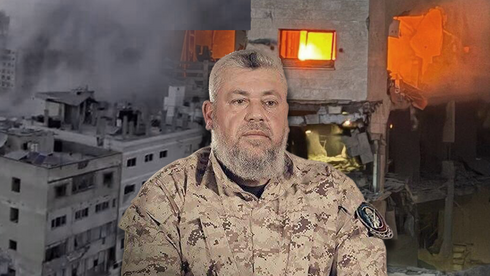
Israel reportedly killed Hamas veteran commander Izz al-Din al-Haddad in an airstrike last Friday, removing a key figure in the group’s Gaza leadership and negotiations posture. The strike occurred under a ceasefire framework and highlights heightened operational risks as Israel continues targeted actions while resources are stretched across Gaza, Lebanon and Iran. His replacement, Mohammed Odeh, is viewed by intelligence officials as weaker, but the broader impact on ceasefire implementation and renewed fighting remains unclear.
The immediate market read-through is not “more war” so much as a narrower and more disciplined threat vector: Israel is showing it can still execute targeted decapitation strikes even under a constrained ceasefire framework. That raises the probability of sporadic escalation without necessarily implying a return to full-scale ground operations, which is the key distinction for regional risk assets; the first-order beneficiary is Israel’s security apparatus credibility, while the first-order loser is Hamas’ negotiating leverage and command continuity.
The second-order effect is on the bargaining geometry. Removing a hardline field commander reduces Hamas’ ability to coordinate a coherent position across Gaza and external leadership, which can paradoxically increase the odds of a temporary pause if a weaker successor prioritizes survival over maximalist bargaining. But the more likely near-term outcome is a “messy stall”: fragmented decision-making, slower hostage/disarmament sequencing, and higher variance of localized retaliation over the next 1-3 weeks.
For markets, the better trade is not broad geopolitical beta but tail-risk insurance against a ceasefire breakdown. The article implies Israel retains freedom to strike high-value targets while avoiding broad occupation costs, which usually compresses realized volatility after the headline as traders fade immediate escalation risk. That setup favors selling complacency rather than chasing defense equities outright; if anything, defense beneficiaries should be treated as a slower-moving structural theme over months, not a one-day event trade.
Contrarian angle: consensus may overestimate how much a single replacement changes Hamas’ strategic behavior. Leadership decapitation often creates a short-term vacuum but can also harden factions and delay compromise, meaning the next catalyst is not peace progress but a higher-variance response cycle. The key watchpoint is whether Israel leverages the vacuum for a broader campaign; if it does not, the market impact should mean-revert quickly.
AI-powered research, real-time alerts, and portfolio analytics for institutional investors.
Request DemoOverall Sentiment
moderately negative
Sentiment Score
-0.35
