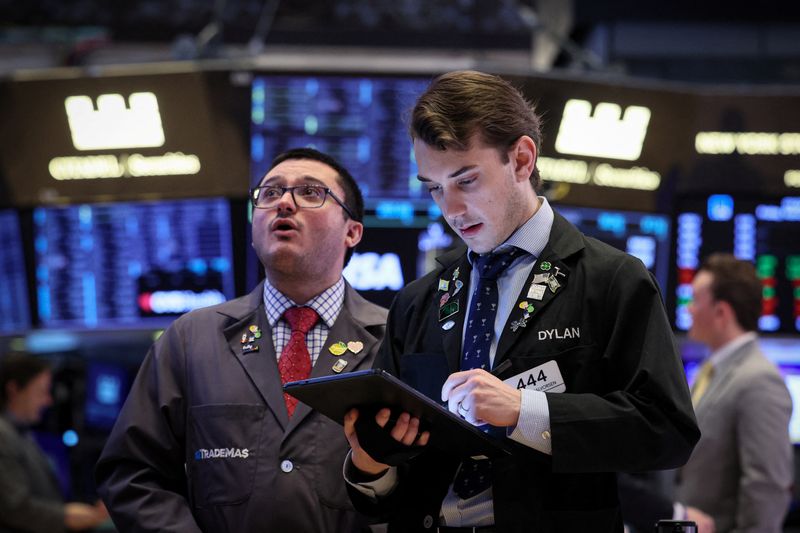
U.S. stock index futures rebounded sharply, with S&P 500 futures up 0.8% to 7,556.75, Nasdaq 100 futures up 1.4% to 30,400.50, and Dow futures up 0.6% to 52,247.0 after reports Trump and Iran signed a preliminary deal to end hostilities. The agreement is still only a 60-day framework, but it includes an immediate ceasefire, reopening the Strait of Hormuz, and lifting the U.S. naval blockade, helping push oil prices lower. The move comes as the Fed struck a hawkish tone, signaling possible rate hikes later this year amid sticky inflation concerns.
The immediate market read is a two-stage regime shift: lower geopolitical risk pressure on energy inputs, but a tighter policy path if inflation re-accelerates from a stabilization in oil and shipping costs. That combination is usually negative for cyclical duration proxies and positive for quality growth with secular earnings power, especially names whose multiples are most sensitive to real-rate moves. The first-order move in futures may be too linear if investors are still using the war premium as the dominant driver while the bigger medium-term driver becomes the discount rate.
The more interesting second-order effect is in breadth. A de-escalation that cools crude and freight can relieve margin pressure for software, semis, and consumer internet, but it also removes the inflation excuse that had been compressing real yields. That means the same news can simultaneously support earnings estimates and hurt valuation multiples, which tends to favor companies with both high growth and near-term free-cash-flow visibility over long-duration, profitless names.
For SMCI and APP, the setup is asymmetric but conditional. Both benefit if lower energy costs and lower macro stress improve risk appetite, yet they remain exposed to any rebound in yields because their multiples are still rate-sensitive. The better trade is to own them only through a catalyst window where the war premium keeps bleeding out before the market fully reprices the Fed reaction function; beyond that, the beta can work against you if the Fed hardens its stance on rates.
The contrarian read is that the market may be underestimating how quickly a calmer oil backdrop can shift attention back to sticky-services inflation and labor resilience. If the ceasefire holds and energy retests lower, the Fed has more room to stay hawkish without appearing reactive, which caps the upside in broad indices even as earnings risk improves. In that case, this is less a broad-risk-on event than a rotation event: long disinflation beneficiaries, short duration-sensitive index beta.
AI-powered research, real-time alerts, and portfolio analytics for institutional investors.
Request DemoOverall Sentiment
neutral
Sentiment Score
0.10
Ticker Sentiment
