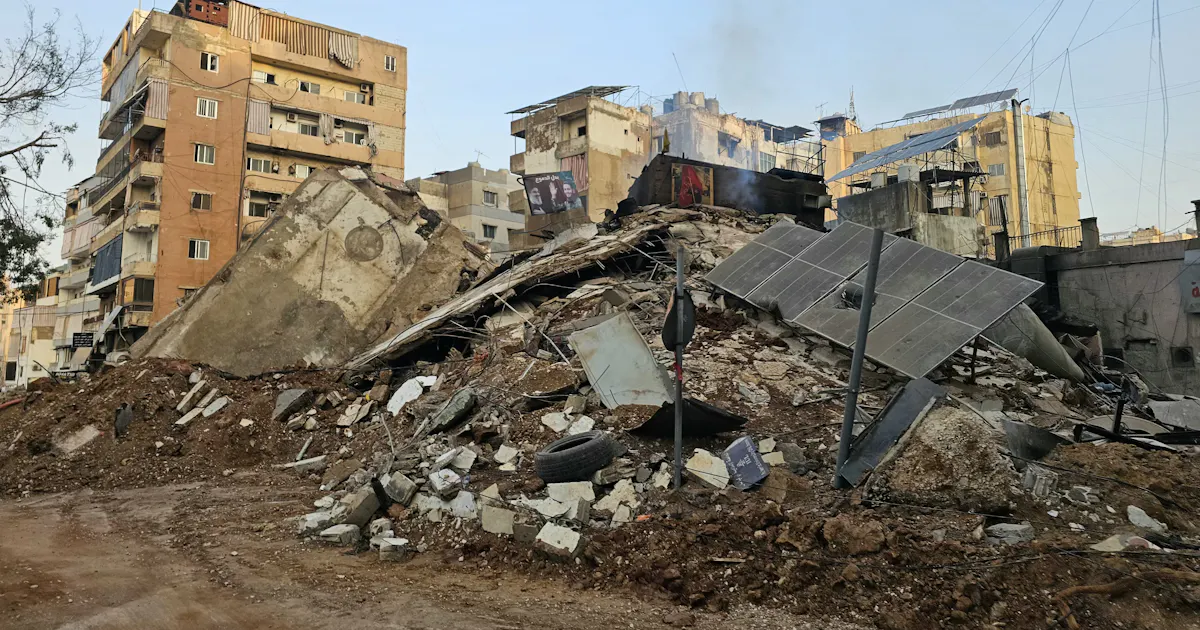
Key number: a potential $2 trillion bill to wage and secure oil routes in a Middle East conflict (current Iran spend cited at ~$12B to date). At an ~$890M/day burn rate the piece warns $1T could be reached in ~3 years; it contrasts that with alternative uses — $2T to build ~1,600 GW of renewables (to replace fossil/nuclear-heavy 1,189 GW U.S. grid, 71% fossil+nuclear) and an additional ~$2.5T to upgrade grid and storage. The author frames the choice as fiscal and strategic — spend on war and reconstruction versus large-scale decarbonization, housing, or education — with election risk noted if voters react.
Winners in a protracted Middle East kinetic scenario are obvious in headline terms—large defense primes, integrated oil majors and commodity exporters—but the more durable gains accrue to upstream commodity suppliers and capital goods firms that enable sustained buildouts (steel, copper, lithium chemicals, heavy electrical equipment). A multi-year rerouting of capital into defense and emergency energy supplies compresses private-sector capex for civilian projects, creating second-order scarcity in transformers, high-capacity cabling and turreted turbine foundations that would bid up prices for any subsequent clean-energy mobilization.
Risk timing matters. A sudden Strait-of-Hormuz disruption can spike oil and freight within days and lift defense equities within weeks as order visibility improves, whereas a political pivot away from war toward domestic infrastructure plays out over quarters-to-years and requires explicit fiscal reallocation or a new administration to enact it. Reversal catalysts include a negotiated de-escalation or coordinated SPR releases (60–120 day horizon) and, on the long end, a decisive election outcome that mandates redirecting marginal fiscal dollars to housing/green capex (6–24 months).
The consensus trade—buy defense, buy oil—is underestimating fiscal arithmetic and supply-chain friction. If taxpayers and voters force a reallocation, capital chasing renewables and housing will face acute bottlenecks that create concentrated winners (component manufacturers, copper/lithium miners, project EPCs) while leaving many broad energy and defense exposures stranded. That asymmetry argues for option structures that capture volatile upside on geopolitical shocks while keeping convex exposure to a potential policy-driven rotation into domestic green and real-estate capex.
AI-powered research, real-time alerts, and portfolio analytics for institutional investors.
Request DemoOverall Sentiment
strongly negative
Sentiment Score
-0.60
