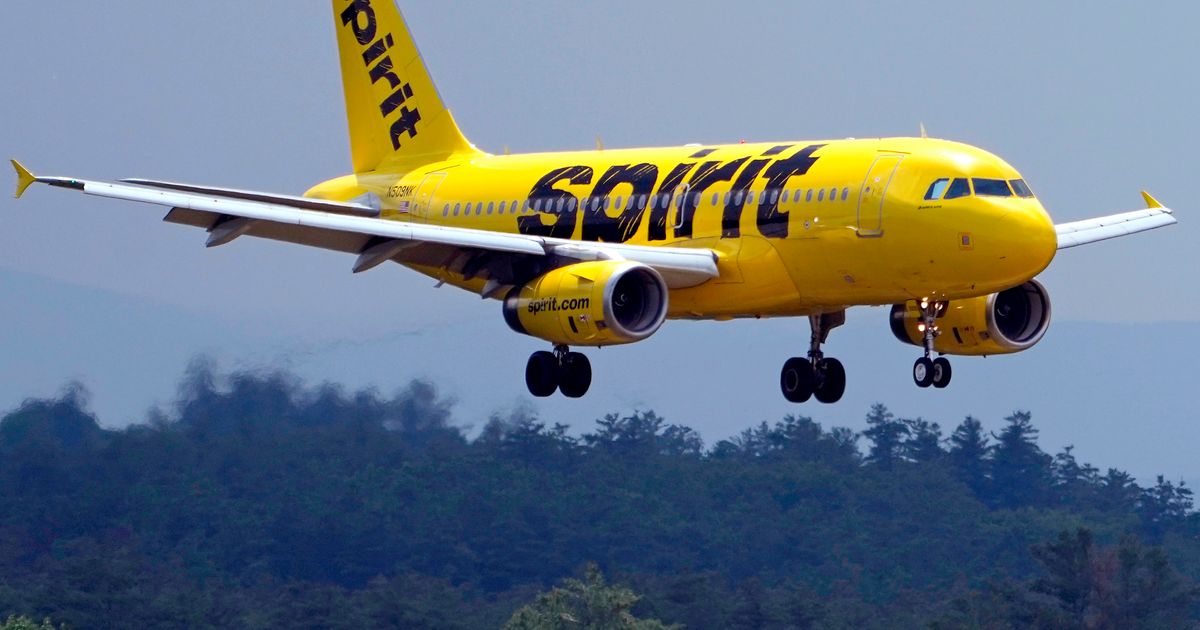
Spirit Airlines appears closer to shutdown after Friday passed without a government bailout, with a person familiar saying preparations were being made for a Saturday shutdown. The airline's second bankruptcy in less than two years underscores severe financial distress, with $8.1 billion in debt versus $8.6 billion in assets as of August 2025 and more than $2.5 billion in losses since early 2020. About 17,000 jobs could be affected if operations cease.
The immediate market read is not just “another distressed airline,” but a forced-capacity event. A shutdown would remove ultra-discount fare pressure on short-haul leisure routes, which is constructive for higher-quality domestic carriers and regional operators with cleaner balance sheets; the bigger second-order effect is on pricing discipline during the low-demand shoulder period, when marginal capacity tends to be the difference between stable yields and fare wars.
The more interesting angle is liquidity contagion. When a carrier is pushed to the edge by fuel shocks and refinancing stress, suppliers, lessors, and airport counterparties tighten terms across the sector, which can raise working-capital needs even for healthier peers. That means the winners are not all obvious airline equities; aircraft lessors and non-spirit-adjacent carriers with strong cash buffers can pick up displaced routes and lease placements, while weaker operators may see financing costs widen if markets start to price “next domino” risk.
Catalyst timing matters: the shutdown risk is a days-to-weeks event, but the equity implications extend months because network rebuilds are slow and customer reacquisition is expensive. If there is any policy backstop or asset-level restructuring, the downside on the airline itself may be partially delayed, but the probability-weighted outcome still favors liquidation or severe asset fire sales over a clean rescue. The contrarian point is that the market may be underestimating how quickly competitors can absorb this capacity without destroying yields, especially if broader industry demand remains intact; in that case, the value transfer accrues to incumbents rather than disappearing.
The biggest mispricing is likely in the aftermarket impact on ancillary ecosystem names: a shutdown can pressure airport concessions, low-cost catering, and some domestic MRO vendors that are more exposed to utilization than headline fleet counts. However, the sharper opportunity is in owning the survivors rather than shorting the casualty, because the bankrupt airline’s equity value can go to zero while competitors capture a measurable slice of traffic and pricing power with limited capital intensity.
AI-powered research, real-time alerts, and portfolio analytics for institutional investors.
Request DemoOverall Sentiment
extremely negative
Sentiment Score
-0.88
