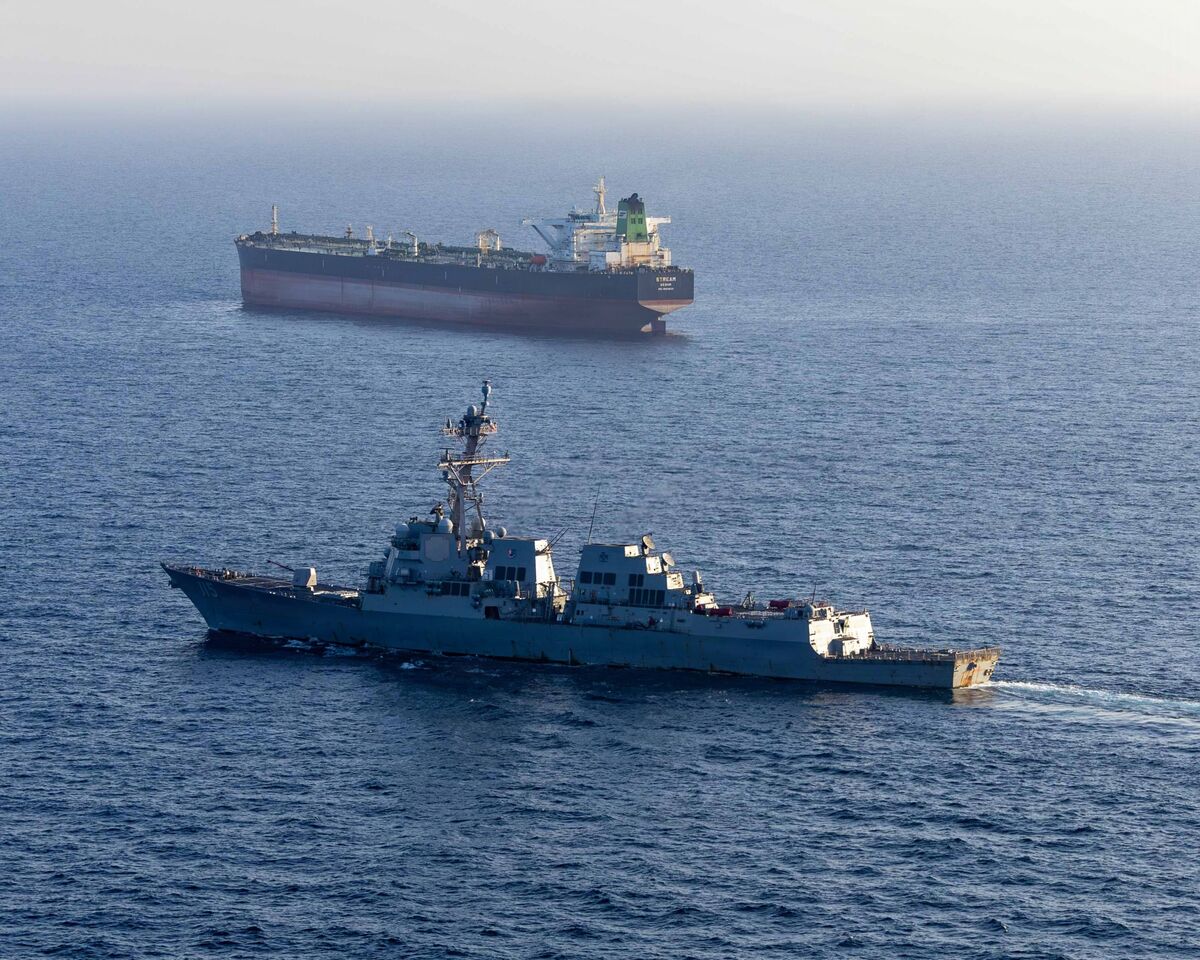
A Chinese-owned supertanker carrying about 2 million barrels of Iraqi crude is set to test the US blockade of the Strait of Hormuz within the next 24 hours, highlighting escalating geopolitical risk to a key global oil chokepoint. The vessel, Yuan Hua Hu, has already passed Iran’s Larak Island and is crossing the Gulf of Oman as tensions rise around the largely shuttered waterway. The event raises the risk of disruption to crude flows and could pressure oil markets and tanker logistics.
The market is underpricing how quickly a maritime choke-point event can ripple from freight into refinery margins and then into broader risk assets. Even a single successful transit does not normalize the route; the real signal is whether insurers, shipowners, and charterers treat this as a one-off or as proof that traffic can still move under armed scrutiny. If risk premia re-price, the first beneficiaries are not necessarily oil producers but the logistics layer: tanker rates, war-risk insurance, and adjacent vessels reroute, tightening effective supply and raising delivered crude costs outside the Gulf.
The second-order impact is asymmetric for Asian importers. China’s ability to keep a politically sensitive cargo moving argues for selective de-escalation rather than clean reopening, which means volatility can stay elevated even if flows continue. That tends to support prompt grades and nearby refining margins while hurting airlines, chemicals, and other fuel-intensive sectors with limited pricing power; the pain shows up fastest over days to weeks, not months.
The tail risk is a miscalculation around a high-visibility political moment: if the passage is challenged, the market will instantly front-run broader interdiction risk and extrapolate from one tanker to broader Gulf throughput. Conversely, if the ship exits cleanly and no follow-on incidents occur, the headline premium can fade quickly, but only after shipping rates and options skew have already repriced. The contrarian angle is that the most investable move may be in dispersion, not direction: crude can stay range-bound while transport and insurance costs spike, a setup the market often misses when it focuses only on front-month oil.
AI-powered research, real-time alerts, and portfolio analytics for institutional investors.
Overall Sentiment
mildly negative
Sentiment Score
-0.35
