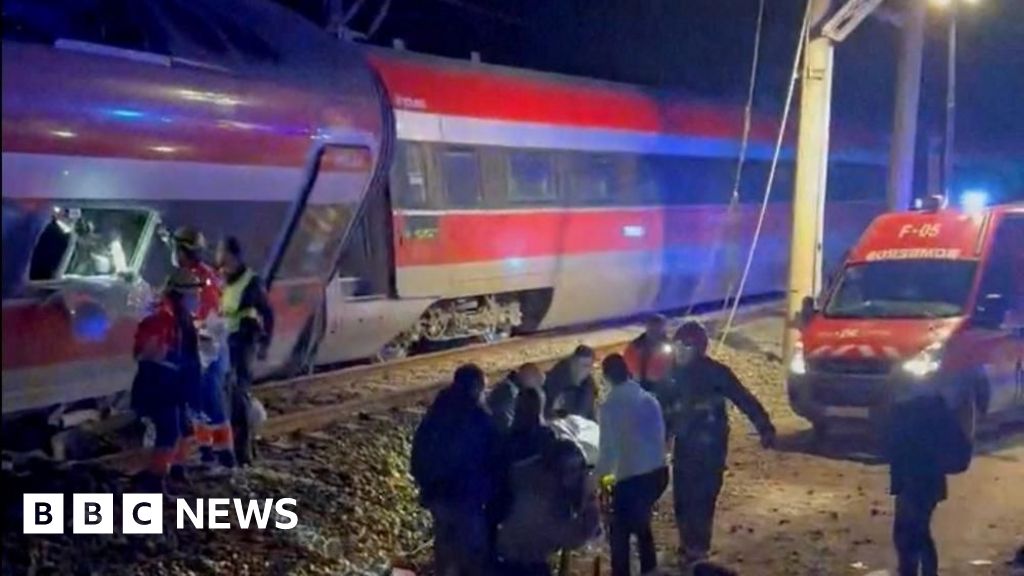
A collision between two high-speed trains near Adamuz, Spain, killed at least 21 people and left dozens more injured after a Malaga-to-Madrid service derailed and struck a Madrid-to-Huelva train; operator Adif and private carrier Iryo report roughly 300 passengers aboard and about 73 seriously injured. Services on the Madrid–Andalusia corridor have been suspended, terminals kept open for affected passengers, and authorities — including national and regional leaders — are coordinating response, raising potential operational, insurance and regulatory implications for the rail operator and regional transport infrastructure as investigations proceed.
Market structure: immediate winners are ground-transport operators and providers of rail-safety/signalling equipment (expect demand shift to bus/short-haul flights for 1–8 weeks and accelerated tendering for signalling upgrades over 6–24 months). Direct losers are the private operator Iryo (reputational hit), Adif/Renfe (operational disruption), and Spanish insurers if claims aggregate; expect a localized ridership drop of 5–15% on Madrid–Andalusia flows for 4–12 weeks. Pricing power shifts toward modal substitutes (bus/air) near-term and to large signalling incumbents (Alstom ALO.PA, Thales HO.PA, Siemens SIE.DE) if governments fast-track procurements.
Risk assessment: tail risks include a regulatory overhaul (national safety standard changes or temporary private-operator restrictions) and a state compensation bill >€100–300m that could force operator recapitalization within 30–90 days. Immediate risk (days): service suspensions and revenue loss; short-term (weeks–months): investigations, insurance claims, reputational losses; long-term (quarters–years): capex cycles for signalling with 6–18 month lead times. Hidden dependencies: EU funding rules and OEM supply-chain lead times that can delay revenue recognition; catalysts are official investigation reports (expected 30–90 days) and any emergency procurement announcements.
Trade implications: tactical plays favor short-dated exposure to modal substitutes and mid-term longs in signalling OEMs. Buy-strength in bus operator National Express (NEX.L) likely within 1–6 weeks; medium-term upside to Alstom/Thales/Siemens on accelerated safety spend over 6–24 months. Options can concentrate risk: defined-cost call spreads on signalling names around major procurement announcements; avoid large exposure to Spanish insurers (MAP.MC) until claim magnitude clears.
Contrarian angles: consensus may overestimate enduring rail demand loss—histor precedent (major European rail incidents) shows ridership rebounds in 2–6 months while safety budgets rise for years, favoring OEMs not operators. The market may underprice procurement delays and winner-take-most outcomes, which benefits incumbents with certified systems (Alstom/Thales) and penalizes smaller vendors. Unintended consequence: politicized central procurement could limit competition but accelerate order sizes—tradeable if monitored against tender thresholds (>€50m per lot).
AI-powered research, real-time alerts, and portfolio analytics for institutional investors.
Request DemoOverall Sentiment
moderately negative
Sentiment Score
-0.60
