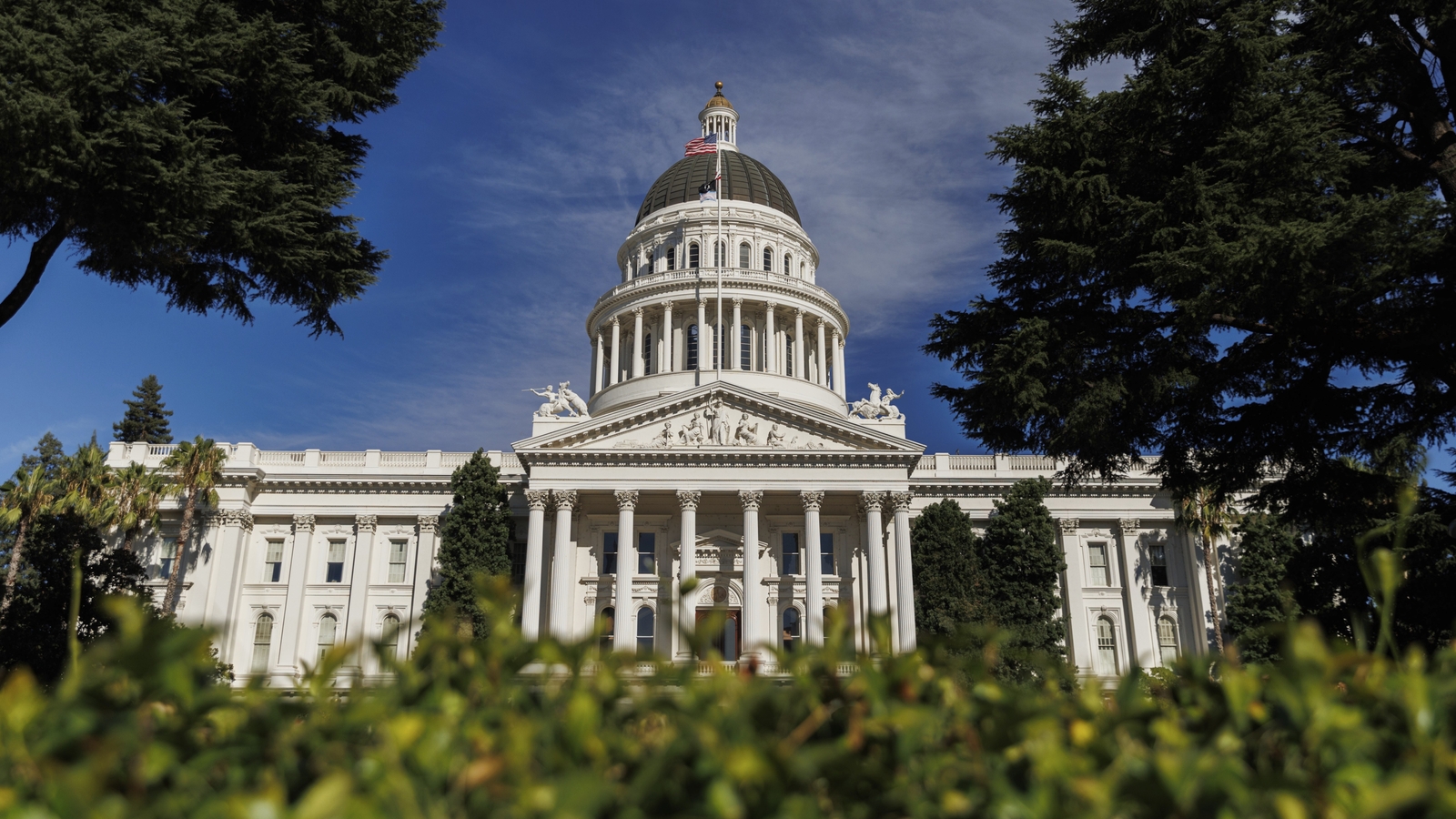
California Democrats are warning that a crowded Democratic primary for governor could split the party's vote under the state's top-two system and allow two Republicans to advance to the November general election, potentially depressing Democratic turnout and complicating efforts to regain the U.S. House. California Democratic Chair Rusty Hicks urged trailing Democrats to withdraw while strategists estimate the chance of an all-GOP November ticket has risen to roughly 25% after a conservative candidate's exit; polls show Democrats holding about 60% of primary support split across many contenders while Republicans consolidate ~40% behind Chad Bianco and Steve Hilton ahead of the June 2 primary.
Market structure: A risk of an all-Republican November ticket (current polling/simulations implying ~25% tail per article) raises short-term political-risk premia concentrated in California-exposed sectors: state munis, regional banks, homebuilders, clean-energy beneficiaries and large-cap tech with concentrated CA revenue. If two GOP names consolidate they increase policy uncertainty around state-level regulation, permitting and green incentives, shifting a modest share (low-single-digit percent) of relative expected cashflows for CA-centric firms over 6–18 months.
Risk assessment: Tail scenarios include (1) a surprise GOP governor who accelerates rollback of clean-energy mandates and tax incentives, (2) a county-level litigation wave against state policies, and (3) turnout-driven national spillovers affecting federal control — each low probability (~10–30%) but high-impact for sector earnings and muni spreads. Immediate window: price moves likely around June 2 primary (days-weeks); medium-term: policy signaling through governor’s first 3–6 months; long-term: multi-year regulatory trajectory.
Trade implications: Tactical plays should be small, event-driven and hedged: short-duration bets ahead of the June primary and re-evaluate post-primary. Expect CA muni spreads to widen by 10–40bp in a shock GOP outcome, regional banks to re-price by 5–15% on perceived state credit/loan growth shifts, and clean-energy builders to underperform homebuilders by mid-single-digit percentages if subsidies/mandates are curtailed.
Contrarian angles: Consensus focuses on turnout and vote-splitting; missed is that a GOP governor has limited unilateral power — legislative constraints and ballot initiatives blunt immediate policy moves, muting long-term impacts. Markets likely overprice a structural regime change; opportunities exist for mean-reversion after headline-driven dislocations, particularly in diversified large-cap tech and long-duration munis.
AI-powered research, real-time alerts, and portfolio analytics for institutional investors.
Request TrialOverall Sentiment
moderately negative
Sentiment Score
-0.30
