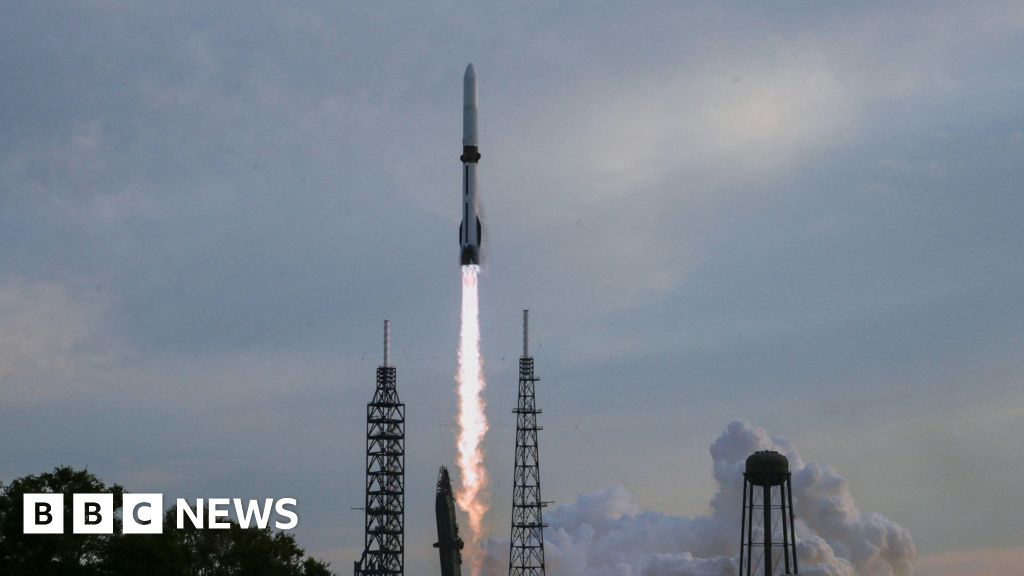
Blue Origin’s New Glenn rocket was grounded after the FAA ordered a mishap investigation into Sunday’s failed satellite launch, with the company citing insufficient thrust in an engine. AST SpaceMobile’s stock fell more than 6%, and the satellite payload is now unusable; AST said the loss will be covered by insurance. The incident delays Blue Origin’s launch cadence and could affect its plan for a dozen launches this year, pending FAA approval to return to flight.
This is more than a one-day setback for ASTS; it raises the probability that its launch schedule becomes the binding constraint on growth rather than demand for capacity. For a business whose valuation depends on a clean cadence of deploy-and-monitize, even a short grounding of a new launcher can push revenue recognition, constellation density, and customer confidence out by quarters, not weeks. The market is likely underestimating how sensitive ASTS is to launch execution because insurance covers satellite replacement but not the opportunity cost of lost orbital slot time and delayed commercial ramp.
The second-order winner is not necessarily a direct competitor of ASTS, but the incumbent connectivity stack that already has scale in orbit. Any disruption to an emerging operator’s rollout improves the durability of the installed base moat for the leader, because enterprise and carrier customers prefer certainty over theoretical coverage. The broader ecosystem also takes a credibility hit: launch providers with thin flight histories tend to trade on “next launch” optimism, but one anomaly can reprioritize customer contracts toward more proven stacks and increase the cost of capital for nascent space names.
The key catalyst path is binary over the next 30-90 days: if the investigation is narrow and reflight comes quickly, the stock reaction in ASTS can partially mean-revert; if the root cause suggests engine reliability issues, the delay can compound into a 6-12 month schedule slip as manifests are reshuffled. For AMZN, this is more of an option on eventual vertical integration than an immediate earnings event, but any perception that Amazon’s space ambitions are still dependent on third-party launch reliability argues for a slower monetization curve. The contrarian view is that the market may be too focused on the failed satellite and not enough on the fact that launch scarcity itself can create pricing power for the few providers that can fly consistently.
AI-powered research, real-time alerts, and portfolio analytics for institutional investors.
Request DemoOverall Sentiment
moderately negative
Sentiment Score
-0.45
Ticker Sentiment
