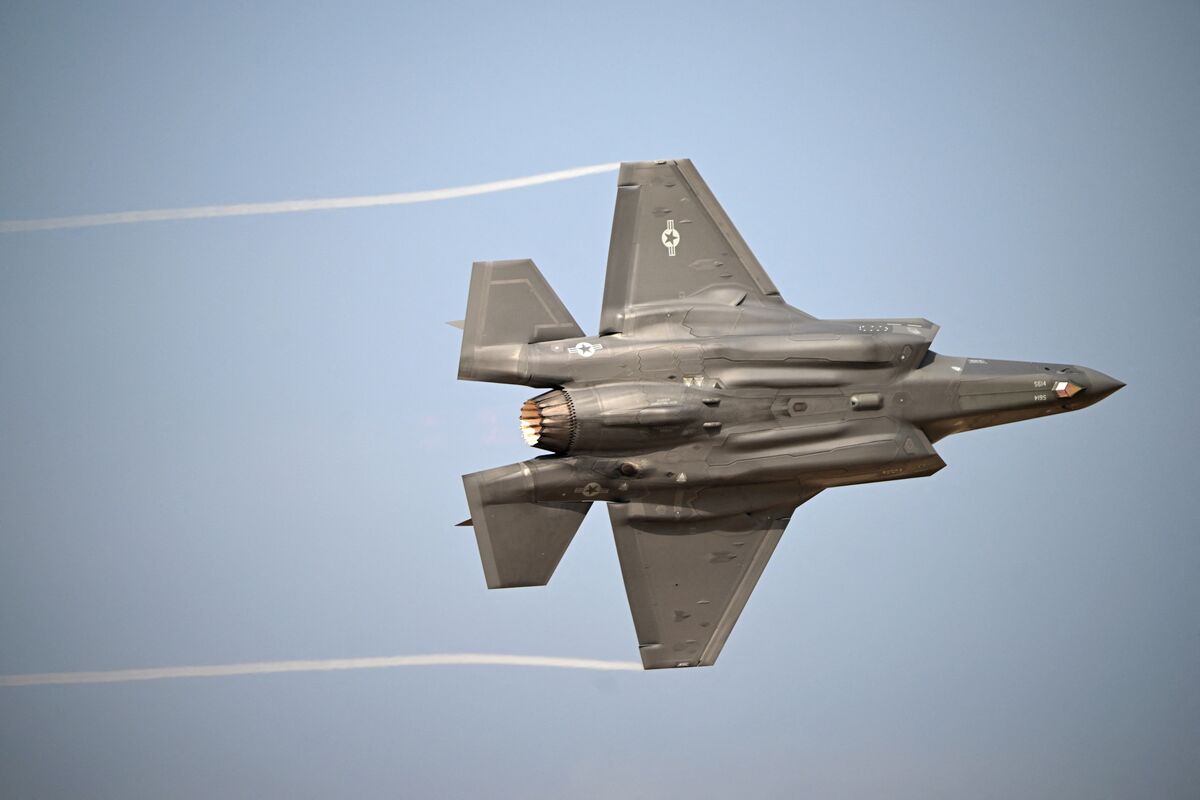
U.S. Ambassador to Turkey Tom Barrack indicated Ankara has largely cleared an "operability" objection to acquiring American F-35 fighters by keeping its Russian S-400 systems inactive, narrowing a key hurdle to sales. Nonetheless, Turkey's continued possession of the S-400s remains a sticking point with Washington and could delay or condition any approval, a development with potential but limited near-term implications for defense contractors and U.S.-Turkey security cooperation.
Market structure: If Turkey is permitted to re-enter F-35 acquisition, US prime contractors (Lockheed Martin LMT, Northrop Grumman NOC, Raytheon/RTX) are the direct beneficiaries via incremental airframe, avionics and sustainment revenue; a 10–40 jet order implies ~$1–4bn top-line over several years (each jet ~$80–120m), <2–6% of LMT annual revenue but meaningful for supplier margins and aftermarket services. Losers include Turkish defense suppliers exposed to CAATSA sanctions risk and Turkish credit/FX (TRY) if sanctions or secondary financial restrictions are applied.
Risk assessment: Key tail risk is a CAATSA sanction or Congressional block — low-probability (<25%) but high-impact (halts sales, sanctions on Turkish banks, >200–500bp widening in TUR sovereign spreads). Timeline: immediate (days) for FX/bond volatility, 30–90 days for State/Dept/Congress signals, 6–24 months for procurement/industrial workshare finalization. Hidden dependency: US insistence on removal/offline status of S-400 hardware and intelligence-sharing safeguards; technological counterintelligence concerns could limit scope of any deal.
Trade implications: Tactical longs on US defense primes (LMT, NOC, RTX) sized 1–3% each for 6–12 month horizons, preferring buy-write or call-spread structures to cap premium spend; hedge Turkish/EM exposure via short TUR ETF (iShares MSCI Turkey TUR) or buy 3-month USD/TRY call options sized to cover 1–2% portfolio FX risk. Pair trade: long LMT (1.5%) / short TUR (1.5%) to capture re-rating of primes vs political risk premium in Turkey; increase LMT exposure to 3% only if a formal State Dept waiver is announced within 60 days.
Contrarian angles: Market may overestimate order size — Washington could limit sales to F-16 upgrades instead of F-35s, or require extensive offsets that dilute US primes’ margin — meaning upside for LMT/NOC is asymmetric/modest (low double-digit %) not binary. Historical parallel: 2019 removal of Turkey from F-35 program shows reversals are reversible; unintended consequence: partial reinstatement could accelerate Turkey’s indigenous defense push, creating a medium-term competitor to some supplier niches.
AI-powered research, real-time alerts, and portfolio analytics for institutional investors.
Request DemoOverall Sentiment
neutral
Sentiment Score
0.15
