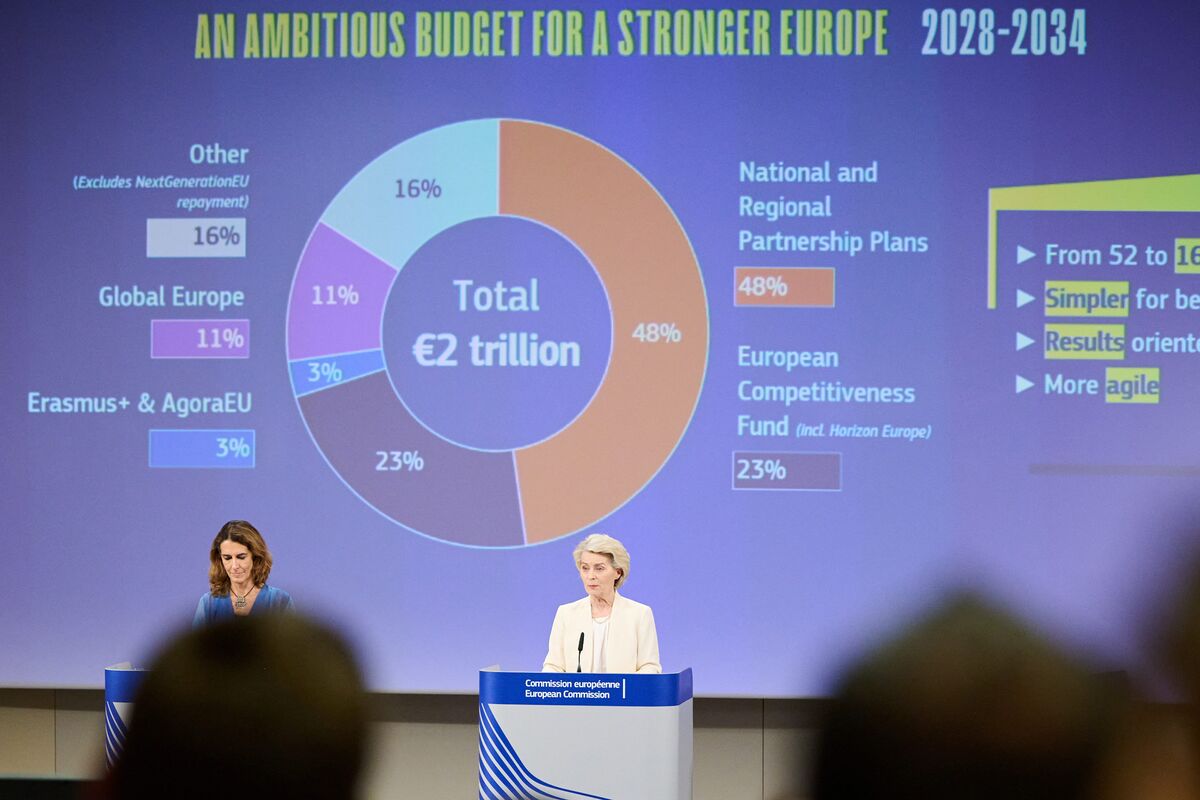
Germany has swiftly rejected the European Commission's recently proposed €2 trillion ($2.3 trillion) budget plan, stating that a comprehensive EU budget increase is unacceptable while member states are actively consolidating their national budgets. This immediate opposition from a key economic power signals significant challenges for the EU in achieving consensus on large-scale fiscal initiatives and highlights potential internal divisions regarding financial burden-sharing amidst national austerity efforts.
Germany's swift and unequivocal rejection of the European Commission's €2 trillion budget proposal represents a significant political and fiscal obstacle for the European Union. The German government's rationale—that a substantial increase in the EU budget is unacceptable while member states are implementing national austerity measures—highlights a fundamental schism in fiscal philosophy between key member states and the Commission. This immediate opposition from the EU's largest economy, coming just hours after the proposal's announcement, signals that negotiations will be protracted and contentious, casting uncertainty on the eventual size and scope of any agreed-upon package. The event underscores the persistent political risk of investing in the region, as internal divisions can delay or dilute major economic support initiatives, thereby creating a headwind for investor confidence in European assets.
AI-powered research, real-time alerts, and portfolio analytics for institutional investors.
Request DemoOverall Sentiment
moderately negative
Sentiment Score
-0.50
