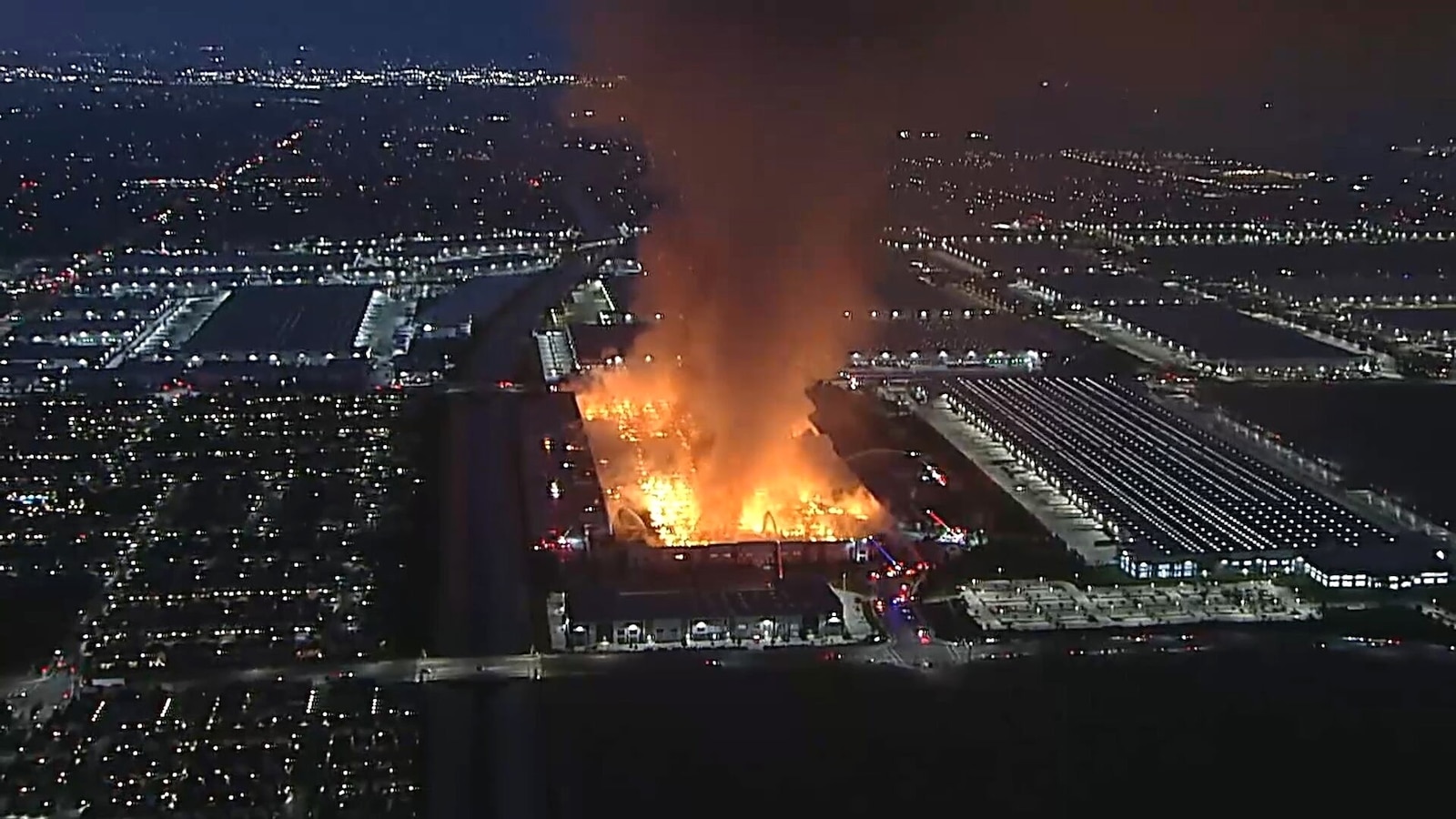
A man has been charged federally for allegedly setting a fire that destroyed a 1.2 million-square-foot Ontario, California warehouse and caused about $500 million in damage. No one was injured, but the incident is a major legal and property-loss event with potential implications for logistics operations and insurance claims. The suspect is also facing state charges and is expected to be arraigned in state court on Friday.
This is less an isolated crime story than a signal that labor anger can translate into operational disruption at the exact nodes where modern supply chains are least resilient: high-throughput distribution assets with long rebuild times and limited redundancy. The immediate economic loss is only the starting point; the bigger issue is the implied rise in security and continuity costs across logistics real estate, where insurers will likely reprice the tail risk of intentional loss rather than just accidental fire.
The second-order impact is on margin structure for warehouse-dependent retailers and 3PLs. Even if the event is idiosyncratic, it reinforces a broader underwriting theme: facilities tied to e-commerce, consumer goods, and cross-dock operations may face higher premiums, tighter lease terms, and more capex for monitoring, access control, and worker screening over the next 6-18 months. That is a quiet tax on the sector and a modest relative benefit to owners/operators with stronger balance sheets and better loss histories.
The market is likely to overreact to the headline damage number but underreact to the compounding effect on insurance, re-leasing, and supply chain optionality. The better trade is not a directional bet on one facility, but a relative-value expression between logistics REITs and more insulated industrials or defense-adjacent infrastructure names. The key catalyst is not the court case itself; it is the next round of carrier renewals and any guidance cuts from firms exposed to warehouse downtime or elevated property/casualty expense.
Contrarian take: the event does not automatically imply a durable earnings hit for the whole logistics complex. If this remains a one-off with no broader copycat wave, the equity market may quickly fade the headline while insurers and landlords absorb the real cost over time. That argues for trading the lagged repricing in margins rather than chasing the immediate news shock.
AI-powered research, real-time alerts, and portfolio analytics for institutional investors.
Request DemoOverall Sentiment
strongly negative
Sentiment Score
-0.60
