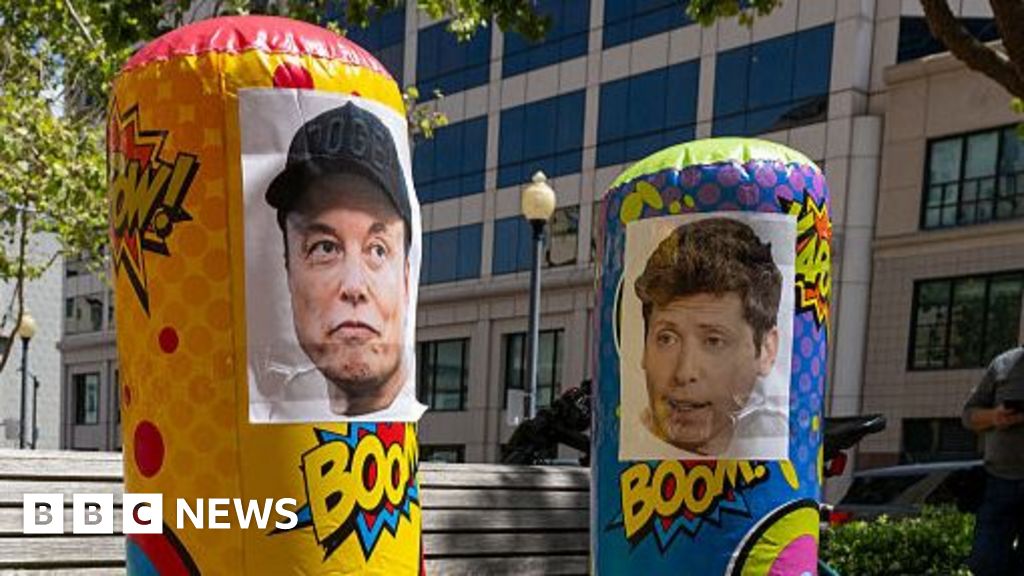
A jury trial in California is underway over OpenAI’s shift from nonprofit roots to a commercial AI business, with Elon Musk seeking billions of dollars in alleged wrongful gains and control-related remedies including Altman’s ouster. OpenAI says Musk is trying to kneecap a competitor, while Musk argues the company “stole a charity” and breached charitable trust. The case centers on OpenAI’s governance and commercialization history, and a verdict is expected in late May.
This is less about the legal merits than about whether the market starts pricing a governance overhang discount into AI beneficiaries with founder-control structures. For TSLA, the immediate channel is reputational and managerial distraction: the litigation reinforces a narrative that Musk’s attention is split across multiple capital-intensive bets, which can modestly compress the multiple on execution-sensitive assets even if core fundamentals are unchanged. Over the next few weeks, the bigger issue is not the verdict itself but the stream of testimony, which can keep Musk’s name in the headlines and elevate volatility around any TSLA moves tied to his broader public behavior.
The second-order effect is competitive. If the court record highlights the degree to which strategic control and capital allocation were contested at OpenAI, it increases investor scrutiny of every AI platform with concentrated decision-making and opaque governance. That scrutiny can benefit better-governed public AI infrastructure and semiconductor beneficiaries by shifting capital away from pure “founder premium” names toward picks-and-shovels exposure with cleaner cash-flow visibility.
The contrarian view is that the market may be overestimating direct legal damage and underestimating how little this changes the AI spending cycle. Even if Musk wins some monetary remedy, it is unlikely to alter OpenAI’s commercial trajectory over the next 6-12 months; the more durable outcome is a small but persistent governance discount on TSLA and xAI-adjacent sentiment. The cleanest risk is that Musk uses the trial to reframe himself as an AI safety advocate, which could partially offset headline negativity if jurors or investors buy the long-duration mission narrative.
AI-powered research, real-time alerts, and portfolio analytics for institutional investors.
Request DemoOverall Sentiment
mildly negative
Sentiment Score
-0.15
Ticker Sentiment
