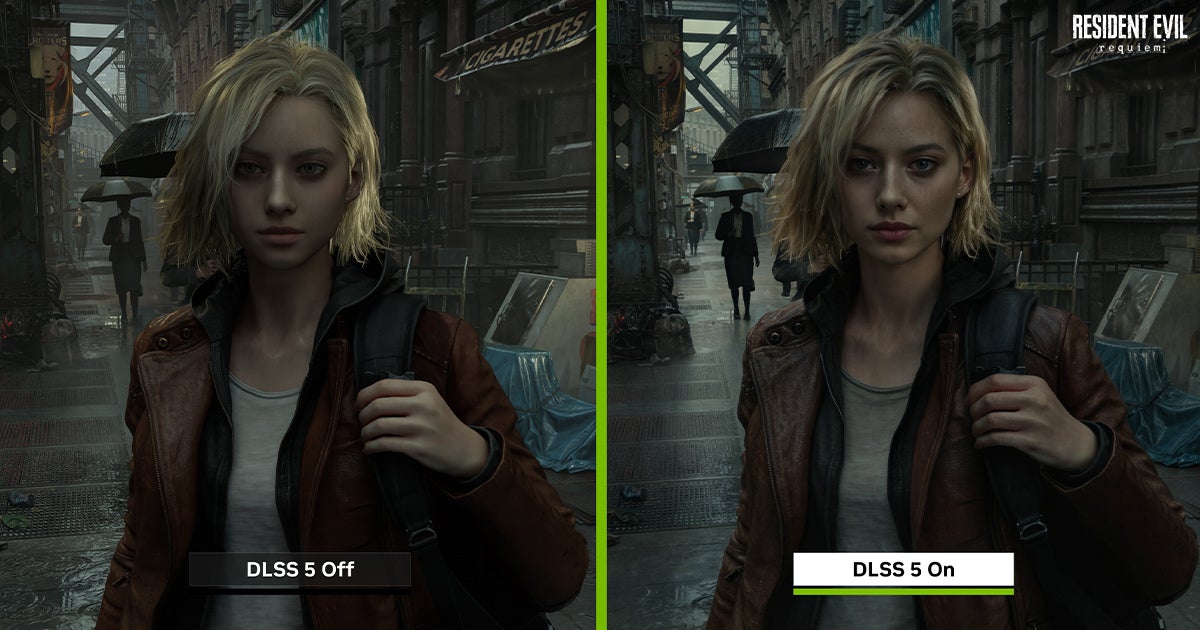
Nvidia's unveiling of DLSS 5 has generated widespread backlash from both gamers and developers for altering character visuals and scene lighting in ways that break artistic intent. Developers highlight that DLSS 5 changes whole-scene lighting and flattens distinctiveness, while gamers find the shown examples visually unacceptable; CEO Jensen Huang publicly dismissed the criticism, underscoring Nvidia's strategic AI focus. The episode creates reputational and adoption risk for Nvidia's gaming products and may slow uptake of DLSS 5, but is unlikely to materially affect Nvidia's near-term financials given gaming is a minority of revenue.
Developer rejection of a platform-level generative image layer is not just a PR problem for the vendor — it creates a multi-year implementation tax for studios, engines and middleware as they demand per-scene/per-character controls, validation pipelines and QA cycles. That extra dev time will compress the marginal utility of any hardware-driven feature and lengthen the window between initial launch and broad adoption by 6–18 months, materially slowing monetization curves that assumed rapid engine integration.
The most durable winners will be firms that sell developers fine-grained control (engine/tool vendors and middleware) rather than raw inferencing power: think companies that can expose deterministic toggles, per-object attribution and provenance into art pipelines. Conversely, incumbents that try to hard-wire generative priors into the graphics stack risk eroding studio goodwill and becoming a checklist risk in partnership negotiations — an effect that compounds when studios negotiate exclusives or optimizations.
Near-term catalysts that can reverse sentiment are concrete developer-facing controls announced at industry shows (GDC/GTC cycles) and third-party validation benchmarks showing no net loss to artistic intent; absent those, expect sustained negative PR to translate into higher stock volatility and selective channel pull-forward delays. Regulatory or IP enforcement actions around generative outputs remain a low-probability, high-impact tail risk that would materially widen adoption timelines across the ecosystem.
AI-powered research, real-time alerts, and portfolio analytics for institutional investors.
Overall Sentiment
strongly negative
Sentiment Score
-0.60
Ticker Sentiment
