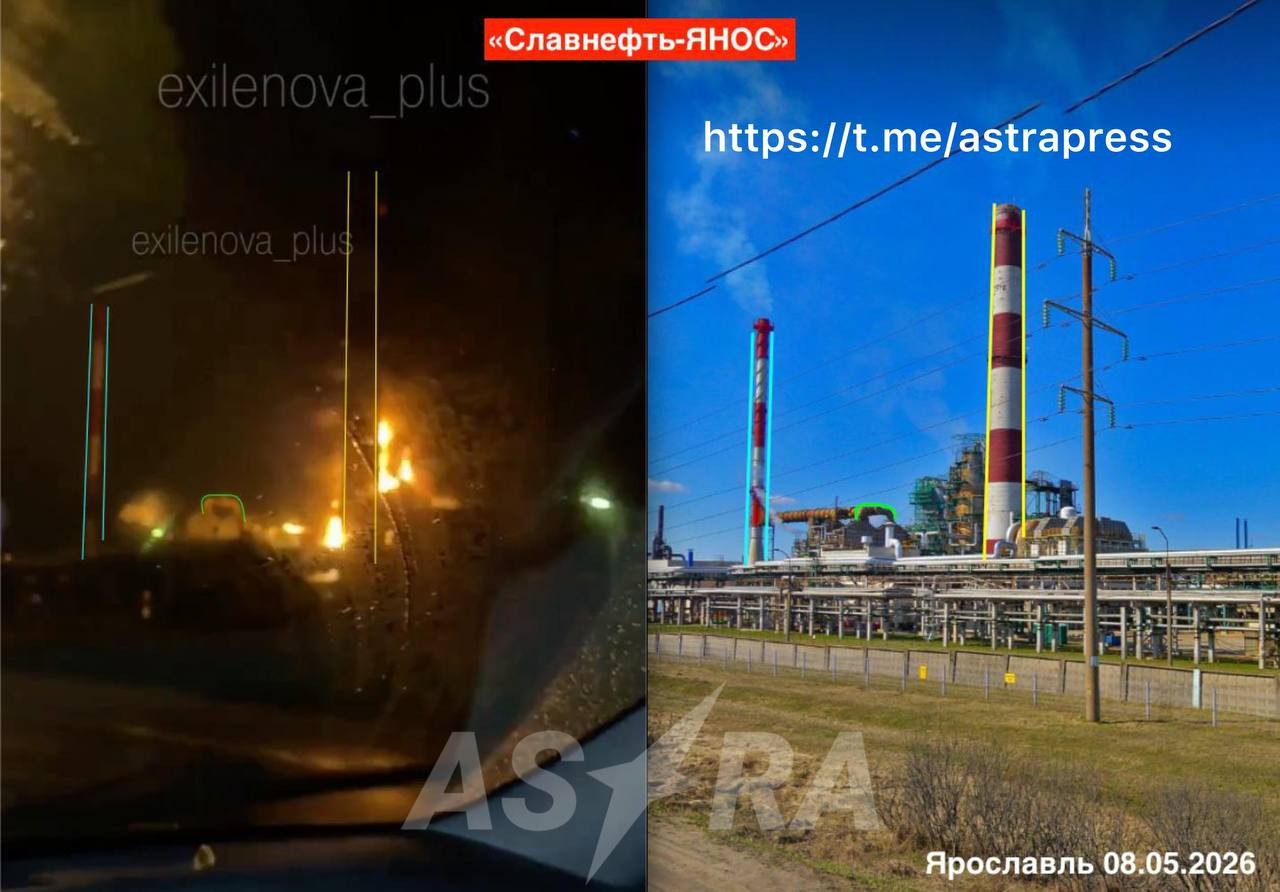
Ukrainian drones reportedly struck a major oil refinery in Yaroslavl and military-linked industrial sites in Rostov-on-Don, while Russia said it intercepted 264 drones across more than a dozen regions. The attacks forced temporary flight restrictions at Moscow’s Vnukovo and Domodedovo airports and sparked fires at key energy and defense-linked facilities. The strikes underscore escalating geopolitical risk around Russia’s energy infrastructure and aviation operations ahead of Victory Day.
The immediate market read is not “more war” but a renewed probability of transport and refined-product disruption deep in the Russian rear. The higher-conviction second-order effect is not a clean crude bid, but a widening of regional product differentials: diesel, jet, and low-sulfur fuel oil should outperform headline Brent if refinery downtime proves sticky, while inland logistics and insurance costs embed a risk premium that can persist for days to weeks.
This also raises the probability that Russia leans harder on air-defense inventory and rail/road dispersal, which is economically inefficient and cumulative. Even if physical damage is modest, repeated successful penetrations force capex toward hardening and redundancy rather than throughput growth, and that is a slow-burn negative for Russian energy and industrial output over a multi-month horizon. The bigger loser is not just the struck sites, but any adjacent chemical, power, and defense-linked industrial cluster that depends on uninterrupted utility and freight access.
The contrarian point: the market may overestimate how much of this transmits into global crude prices. Russia’s export system is more resilient than its domestic refining complex, so the cleaner expression is in refined products and freight/aviation rather than crude itself. If the attacks do not materially reduce exports or trigger retaliation on Black Sea or transit infrastructure, the crude rally should fade faster than implied volatility on energy names suggests.
Catalyst-wise, the next 72 hours matter for whether Russia’s response extends beyond rhetoric into asymmetric strikes on Ukrainian power or logistics nodes, which would reprice winter-style outage risk. Over the next 2-6 weeks, watch for evidence of refinery run-rate reductions, domestic fuel rationing, or higher Russian product imports from allies; any of those would confirm a more durable squeeze on regional product balances and shipping cadence.
AI-powered research, real-time alerts, and portfolio analytics for institutional investors.
Request DemoOverall Sentiment
strongly negative
Sentiment Score
-0.55
