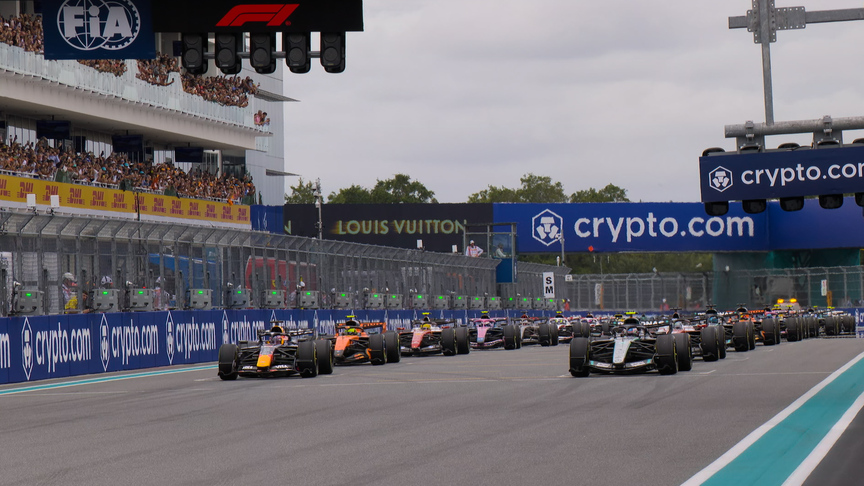
The Miami Grand Prix start time was moved up 3 hours to 13:00 local time from 16:00 due to forecast heavy rainstorms later on Sunday. FIA, Formula 1 and the Miami promoter said the change is intended to minimize disruption and maximize the chance of completing the race safely. The update is operational rather than financial and is unlikely to have meaningful market impact.
The key market impact is not the weather itself but the timing compression it creates for the event ecosystem. Moving the start earlier should reduce the probability of a full washout, which is positive for broadcasters, hospitality operators, and local transport providers that monetize the race window; however, it also concentrates arrivals into a tighter pre-race peak, raising short-duration strain on roads, rideshare, and venue staffing. In practice, the biggest loser is any service layer with high fixed labor deployment and low flexibility, because revenue is largely preserved while operating complexity rises.
Second-order, the real catalyst is schedule certainty. If the race clears before the heavier storm band, organizers avoid the much more costly outcomes: delayed start, reduced spectator dwell time, or a suspended session that dents broadcast quality and sponsor activation. That matters over days, not months; the tradeable angle is around event-exposure names with direct leverage to live attendance and ancillary spend, rather than broad market hedges. A clean finish would likely be a relief rally in the most weather-sensitive travel/leisure proxies, but the move should fade quickly once the event risk window passes.
The contrarian view is that markets usually overestimate the incremental benefit of an earlier start because consumer demand for marquee sports events is relatively inelastic in the short run. The bigger issue is operational disruption and safety optics, which can quietly compress margins for vendors without showing up in headline attendance. For public comps, the best expression is to focus on businesses with exposure to premium event logistics and local mobility rather than the teams or the race franchise itself.
AI-powered research, real-time alerts, and portfolio analytics for institutional investors.
Request DemoOverall Sentiment
neutral
Sentiment Score
0.05
