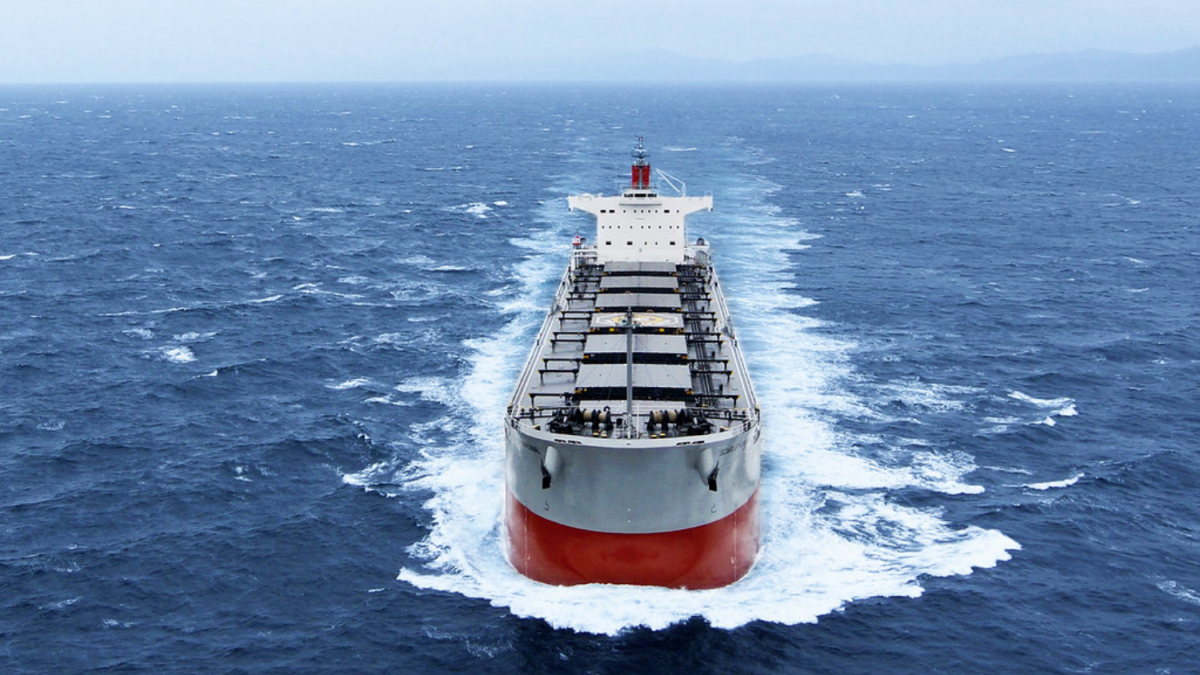
Research published in ClassNK’s Technical Journal finds that compliance costs under the IMO GFI scheme for bulk carriers operating on low‑sulphur heavy fuel oil will balloon from roughly US$2m in 2032 to over US$6m by end of life in 2040, likely substantially exceeding a vessel’s original newbuilding price. The paper warns more than 1,000 small- and medium-sized bulkers (≈40% of the fleet) risk subpar CII ratings by 2026 and models a staged mitigation pathway requiring fuel-consumption cuts of 10% by 2030, 30% by 2035 and 50% by 2040; near-term energy-saving technologies (silicone low-friction coatings and propeller retrofits) can yield ~11% savings, while later-stage measures cite 30% carbon-capture and biofuel blends as the most economical route to meet CII/GFI targets.
Market structure: IMO-driven GFI/CII costs (~US$2M in 2032 rising to >US$6M by 2040 on a 10-year Kamsarmax) shift economics away from legacy tramp bulk owners and toward providers of energy‑saving technologies (ESTs), retrofit yards and biofuel/CCS suppliers. Winners: EST/coatings makers and retrofit yards; Losers: owners of older small/medium bulkers (≈1,000 vessels ~40% fleet) facing margin compression and potential impairments. Cross-asset: expect widening credit spreads for shipping high‑yield bonds, higher volatility in dry‑bulk equities and FFA markets, and upward pressure on biofuel/LSFO prices; FX flows favor shipbuilding nations (KRW, CNY) via retrofit demand.
Risk assessment: Tail risks include accelerated regulatory adoption of GFI (fast‑track within 12 months) or a fuel‑price shock that makes retrofit CAPEX untenable, causing wave of forced sales/scrapping and cascade defaults in mid‑cap owners. Near term (days–months) the trigger is CII 2026 ratings and any IMO votes; medium term (1–3 years) is retrofit capex cycles and bond maturities; long term (3–10 years) is structural shift to biofuels/CCS and fleet renewal. Hidden dependencies: charter party structures (tramp routes cannot pass costs easily), fuel pass‑through ability, and ship finance covenants that may accelerate defaults.
Trade implications: Direct plays favor long exposures to EST/coatings stocks (e.g., RPM: marine coatings/retrofits) and listed yards with retrofit capability (e.g., HHI/COSCO ADRs where liquid) while shorting high‑beta dry‑bulk names (SBLK, GOGL, DSX) or buying credit protection on their bonds. Relative value: pair long RPM (or AKZOY ADR) / short SBLK to capture EST revenue re‑rating vs operator margin squeeze. Options: buy 9–12 month put spreads on SBLK/GOGL (25–35% OTM) to limit cost while keeping convex downside. Rotate out of pure shipping equities into specialty materials and decarbonization equipment over next 3–12 months.
Contrarian angles: Consensus underestimates freight pass‑through and scrapping-induced supply tightening that could support rates — if >10–15% of obsolete tonnage is scrapped by 2028, BDI could spike, rescuing some owners. Historical parallel: 2015‑2017 scrubber and sulfur rules caused capex then freight volatility but ultimately rewarded flexible owners and retrofit suppliers. Unintended consequence: premature write‑downs/forced sales could create acquisition opportunities for well‑capitalized names; consider staging capital to buy distressed assets if scrappage exceeds a 10% fleet reduction over 2 years.
AI-powered research, real-time alerts, and portfolio analytics for institutional investors.
Request TrialOverall Sentiment
strongly negative
Sentiment Score
-0.60
