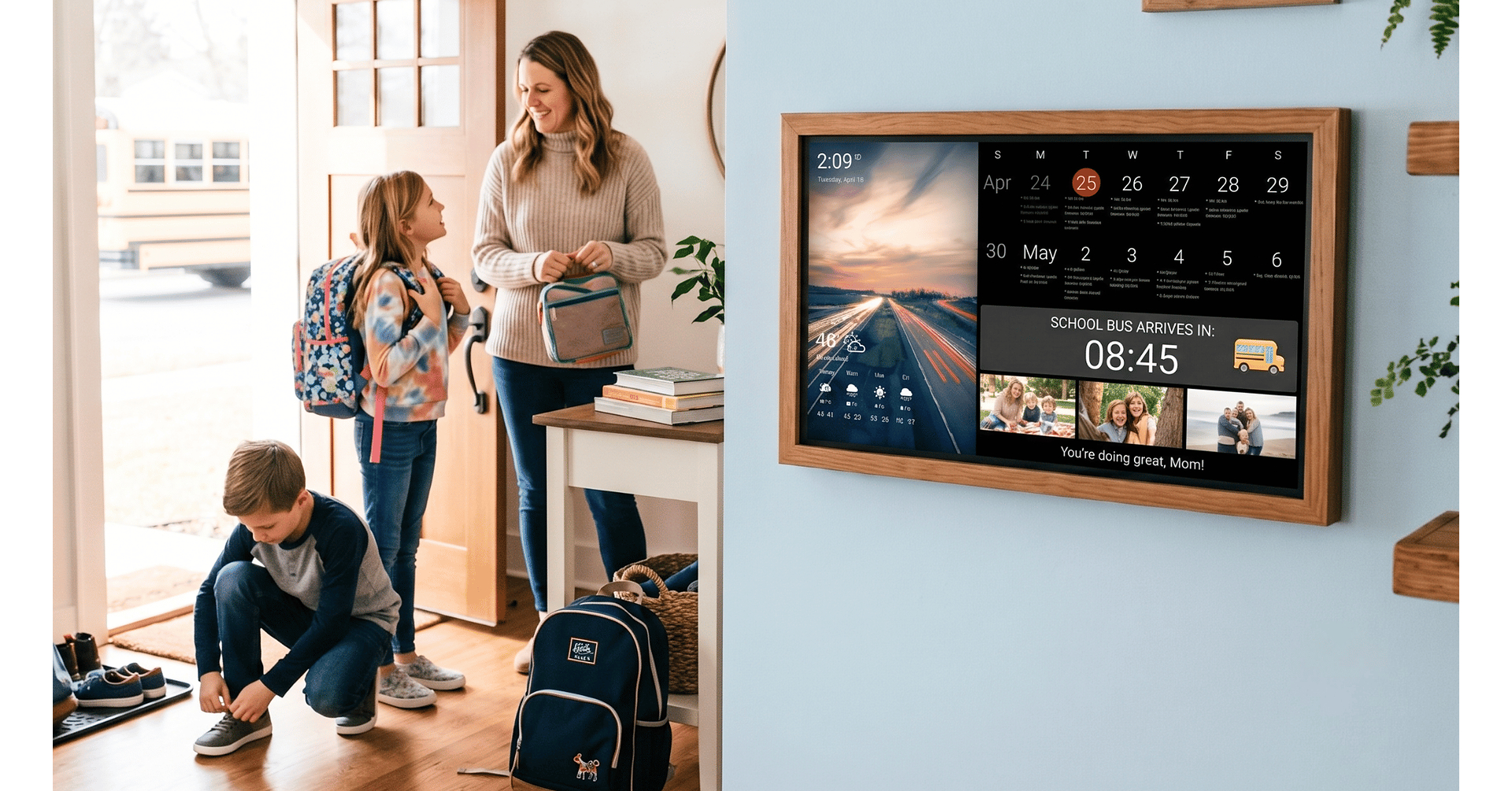
DAKboard launched TouchHub, upgrading its digital family calendar into an interactive “family command center” with a Family Chores Manager (shared chore chart, points/rewards, and Child Lock) plus Home Assistant smart-home control and a new dock for quick navigation. TouchHub is available now on all DAKboard plans, including the free tier, potentially improving user engagement ahead of back-to-school season. The article frames the rollout as reducing parents’ organizational burden while enabling kids’ independence, but provides no financial metrics or guidance impact.
This reads more like a retention/engagement feature than an economically meaningful product cycle. The free-tier availability matters: it lowers adoption friction but also caps near-term monetization, so any upside is likely in time-on-platform, lower churn, and a modest conversion uplift over several quarters rather than a step-change in revenue. The main winner is the incumbent software base that already sits on households’ spare screens; the loser is any dedicated single-purpose home-organizer hardware, because the product reinforces the “use what you already own” behavior.
Second-order, the smart-home angle is more interesting than the family-chore angle. If the wall device becomes the household control point, it can increase switching costs for adjacent ecosystems and make the software more valuable to Home Assistant-style power users, but that is still a niche behavior and unlikely to move a public-equity needle. For GOOGL, the most plausible benefit is incremental Android/tablet persistence and broader home-screen usage, but the effect is too small to justify a thesis unless there is evidence of paid conversion or materially higher retention.
Contrarian view: the market may overread a polished PR launch and underweight the fact that consumer productivity software monetization is usually constrained by willingness to pay, not feature breadth. The relevant catalyst window is 1-3 months of download/review/engagement data; if those do not improve, the update is just noise. Falsifiers: no visible uptick in paid plan adoption, no retention lift into the back-to-school period, or evidence that usage remains confined to existing enthusiasts rather than broader family households.
AI-powered research, real-time alerts, and portfolio analytics for institutional investors.
Request DemoOverall Sentiment
mildly positive
Sentiment Score
0.18
Ticker Sentiment
