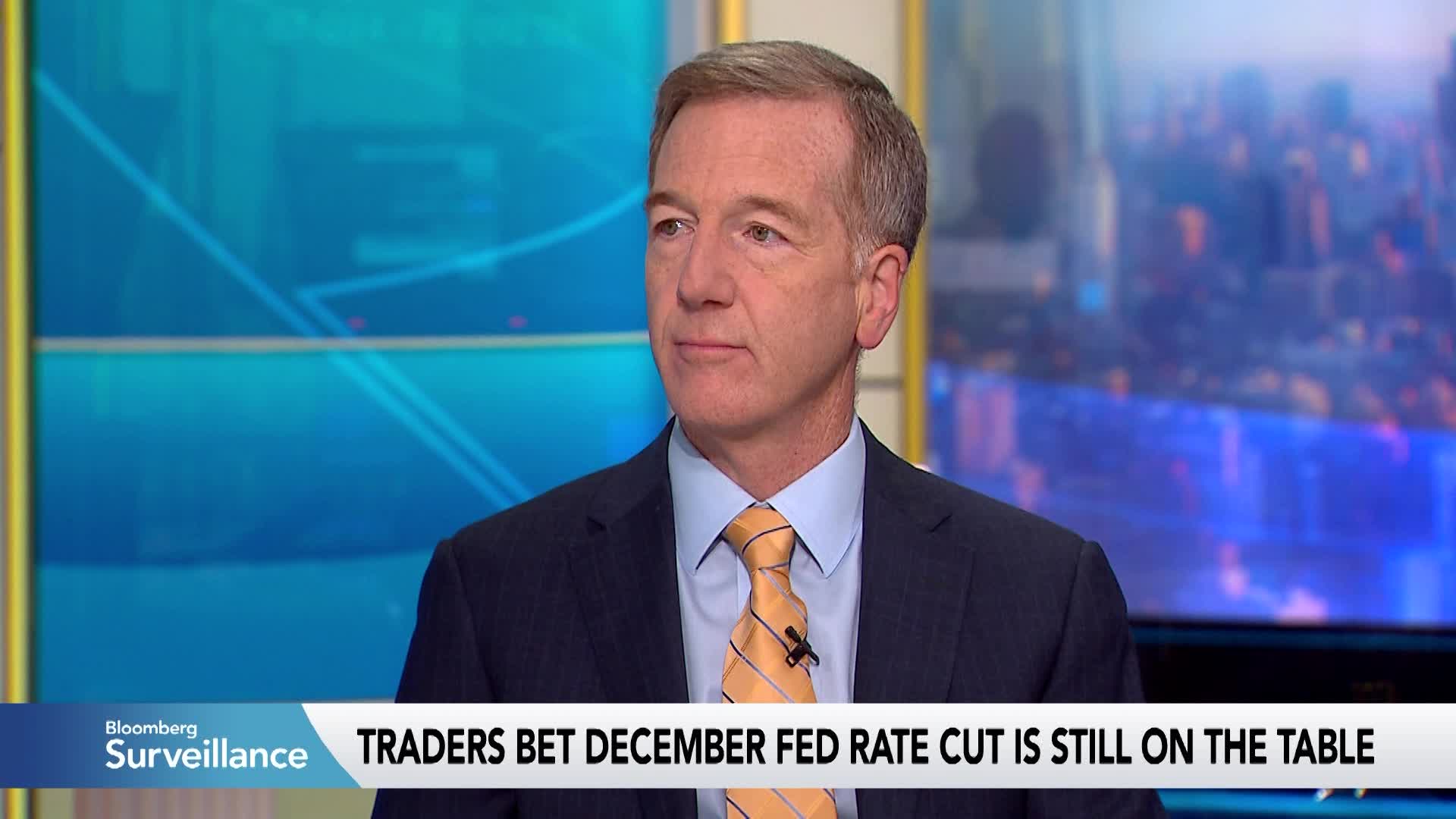
Commentary highlights rotation dynamics and policy risk: Ed Yardeni urges non-AI companies to demonstrate performance while Morgan Stanley's Wilson warns the Fed may be slow to act, injecting monetary policy uncertainty. Lutnick discusses regulatory developments — EU tech rules and a SCOTUS tariff matter — and flags that the U.S. president may soon decide on permitting Nvidia H200 chip shipments to China, a decision with potential trade and supply‑chain implications for semiconductors.
Market structure: The immediate winners are AI‑compute specialists and upstream semicap suppliers if a China H200 license is granted; losers are cyclical export‑sensitive suppliers and any firms with large China revenue exposure if approval is blocked. Pricing power concentrates in a smaller set of validated AI incumbents (NVDA, select fab equipment names), likely compressing margins for second‑tier GPU competitors over 1–4 quarters. Bond and FX markets will price-in policy uncertainty: a delayed Fed tightening path lifts 2–10y yields and supports dollar strength in the short run, increasing financing costs for capex‑heavy semiconductor projects.
Risk assessment: Tail risks include a partial license that lets H200 wafers ship but with usage restrictions (high impact, <30% prob.), or SCOTUS/tariff rulings that re‑price supply chains (10–20% downside for exposed stocks). Immediate (days) risk is binary headline reaction to the presidential decision; short term (weeks) is orderbook/production re‑routing; long term (quarters) is demand elasticity in China vs re‑shoring of fabs. Hidden dependencies: downstream cloud demand and enterprise AI budgets will mediate China loss; secondary effects include pricing dynamics in memory and interconnect markets.
Trade implications: Position size should be surgical: use short‑dated options around the presidential window (2–6 weeks) to capture binary moves and long equity for multi‑quarter secular AI exposure. Consider long NVDA equity or LEAPs sized 2–3% portfolio with a small put hedge, and short or underweight Morgan Stanley (MS) by 25–50% if monetary policy uncertainty threatens capital markets revenue. Rotate 1–3% from broad tech into semicap names on any approval; if denied, deploy hedges and reduce cyclical exposure within 48–72 hours.
Contrarian angles: Consensus underprices the ability of enterprise and cloud customers outside China to absorb supply if China access is limited, tempering downside to NVDA — downside risk could be <15% vs consensus 25% in a ban. Conversely, markets may under‑discount regulatory costs from EU tech rules that can shave 5–10% off large US tech multiples over 12–24 months. Historical parallels (chip export curbs 2019) show rapid re‑routing and price resilience within 6–9 months, so sell‑off windows may be shorter than consensus expects.
AI-powered research, real-time alerts, and portfolio analytics for institutional investors.
Request DemoOverall Sentiment
neutral
Sentiment Score
0.00
Ticker Sentiment
