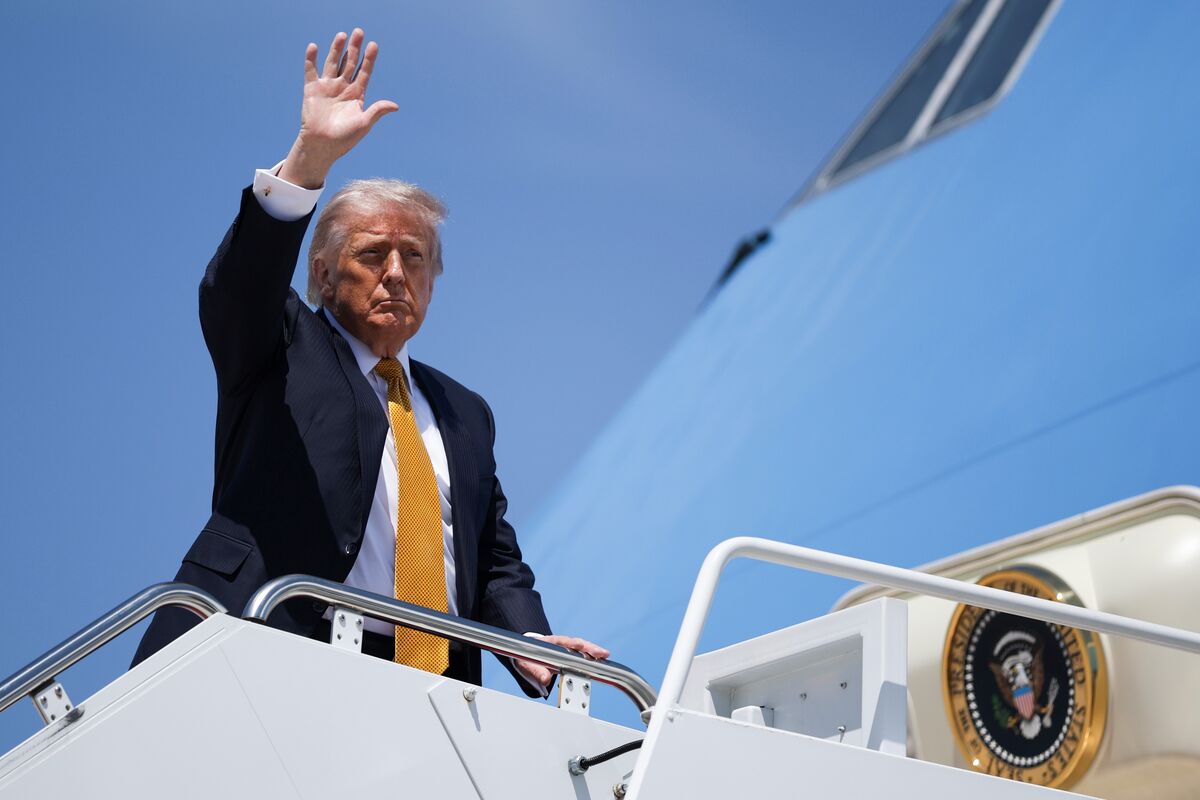
President Trump traveled to Beijing with a delegation of tech giants and business executives as part of a push to 'open up' China and pursue deals. The article frames the visit as a high-level trade and geopolitical engagement, but provides no specific agreement, policy change, or financial magnitude. Market impact appears limited unless the meetings produce concrete trade or technology commitments.
This is less about an immediate tariff headline and more about the market repricing the probability distribution of China exposure across the tech stack. The near-term beneficiaries are firms with non-material incremental China revenue but high optionality from licensing, enterprise partnerships, or export-control relaxation; the losers are businesses whose valuation assumes frictionless China monetization or uninterrupted cross-border hardware flows. The second-order effect is that “China beta” may briefly rotate from semis/manufacturing into software and platform names that can claim diplomacy upside without needing a physical supply-chain reset.
The bigger risk is that any thaw is likely tactical, not structural. Beijing can offer enough symbolic opening to support a meeting-cycle rally, but that does little to change the underlying strategic contest in advanced chips, cloud, AI models, and industrial policy; in other words, the market may front-run a regime change that never arrives. For supply chains, the more actionable implication is not a binary reopening but a widening dispersion between firms that already diversified assembly and those still dependent on China-origin components for 2026-27 capacity plans.
From a catalyst perspective, the next 2-6 weeks matter more than the next 2-6 quarters: rhetoric, joint statements, and any carve-outs can force factor squeezes in China-sensitive baskets even if fundamentals don’t change. The contrarian view is that consensus may be too eager to buy a “deal” and underappreciates how much of the upside is already embedded after years of tariff fatigue; a disappointment here would hit crowded cyclical and multinational longs fastest. The best expression is likely relative value, not outright beta.
The cleanest trade is to fade the headline-driven rally in the most China-exposed hardware names and own the beneficiaries of partial de-risking and policy ambiguity. If talks improve, you get a near-term relief pop in software and select AI infrastructure names; if they fail, the market should revert to rewarding domestic revenue and supply-chain resilience. That skew favors pairs over directionals.
AI-powered research, real-time alerts, and portfolio analytics for institutional investors.
Request DemoOverall Sentiment
neutral
Sentiment Score
0.05
