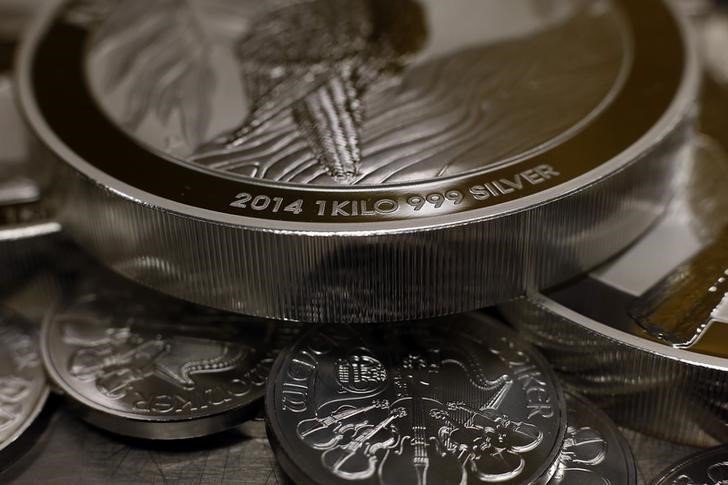
Silver (SI) is trading at $70.19 after a more than 3% surge, with bulls pushing price through the Ichimoku Cloud and a bullish SuperTrend flip. The article says the key test is $70.42 Fibonacci resistance, with upside targets at $72.50 and $75.25, while support sits near $68.30-$68.70. Separately, the headline geopolitical note says the US and Iran reached a peace deal and the Strait of Hormuz may reopen, which could be relevant for broader commodity and risk sentiment.
The immediate market winner from a credible Strait-of-Hormuz de-escalation is not just oil-on-the-margin but every asset whose pricing embeds a geopolitical risk premium. That matters most for the volatility complex: lower implied energy tail risk should compress front-end commodity vol first, then bleed into rates and FX via weaker inflation hedging demand. Silver’s move is therefore less about “peace” per se and more about a fast unwind of defensive positioning that had been crowded into hard assets and option convexity.
For silver, the second-order effect is that a geopolitical relief rally can become self-limiting near the first major resistance band because the marginal buyer changes. Short-covering can carry price through technical levels quickly, but once that fuel is exhausted, continuation requires real macro demand or a fresh dollar down-leg; otherwise, the move risks stalling within days. In that sense, the most attractive long is not a chase at current levels but either a pullback entry after a successful retest or a call structure that pays for a breakout without needing immediate follow-through.
The contrarian read is that a peace headline is often most bearish for the same crowded longs that just worked: gold/silver miners, energy beta, and broad inflation hedges. If the market starts to believe the risk premium is being stripped out faster than the physical supply response, realized volatility in commodities can compress hard over 1-3 weeks, favoring short premium over outright shorts. The key risk is a headline reversal or renewed shipping disruption, which would reflate the geopolitical bid almost instantly and punish any fade trades.
From a positioning standpoint, the better expression is to own optionality into the next 5-10 trading sessions rather than pay up for spot exposure at an obvious resistance cluster. If silver clears the overhead band on volume, the move can extend sharply because forced re-hedging and CTA trend following often kicks in after the first breakout confirmation. If it fails, the market likely snaps back to the last breakout shelf, making the reward/risk on a clean pullback materially superior to a momentum chase.
AI-powered research, real-time alerts, and portfolio analytics for institutional investors.
Request DemoOverall Sentiment
neutral
Sentiment Score
0.12
