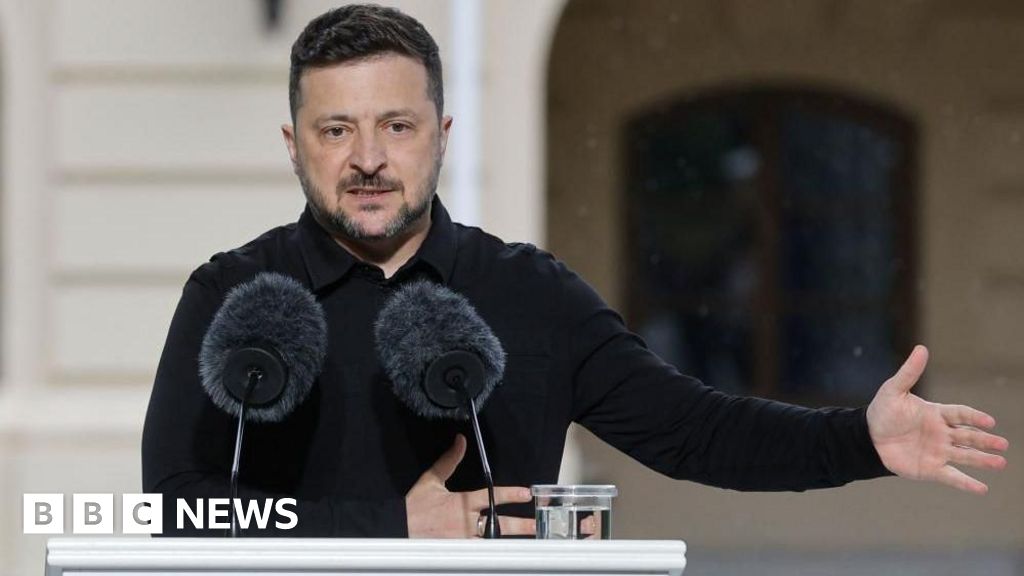
Zelensky proposed a face-to-face meeting with Putin and a full ceasefire during negotiations, but the Kremlin reiterated that any talks could only occur on Russia's terms, including possible surrender of occupied territory. Putin said he was willing to reach an agreement in principle, yet questioned Zelensky's legitimacy and ruled out a ceasefire. The article underscores stalled peace efforts amid ongoing drone and missile attacks, keeping geopolitical risk elevated.
The market implication is less about an immediate ceasefire and more about a widening gap between headline diplomacy and battlefield reality. Publicly pushing for leader-level talks while both sides continue to strike suggests a higher probability of a prolonged, low-intensity grind rather than a clean de-escalation; that typically keeps defense procurement demand sticky even if front-end ceasefire odds rise briefly. The first-order tradeable effect is on European risk assets: any perceived thaw should mechanically compress the geopolitics premium in regional industrials, insurers, and transport, but the second-order effect is that governments are likely to preserve elevated readiness budgets until a verifiable ceasefire and monitoring regime exist.
The more important catalyst is not the meeting itself but whether this becomes a signal of US strategic bandwidth shifting away from Europe. If Washington remains distracted by another theater, Europe has an incentive to accelerate procurement and stockpile replenishment, which is structurally supportive for ammunition, air defense, drones, and electronic warfare names over a 6-18 month horizon. Conversely, a genuine negotiation track would pressure energy insecurity beneficiaries and some defense multiples, but only if it is paired with enforcement architecture; absent that, any selloff in defense should be shallow and tradable.
The contrarian read is that the most likely outcome is not peace but a reset in expectations: diplomacy headlines create temporary mean reversion in war-risk assets while materially increasing the probability of sustained attritional conflict if talks fail. That argues for buying volatility rather than directional certainty, especially in Europe where policy response tends to lag events by quarters, not days. The biggest hidden risk is that a staged diplomatic process allows both sides to rearm under the cover of negotiations, extending the conflict duration and preserving elevated defense spending.
AI-powered research, real-time alerts, and portfolio analytics for institutional investors.
Request DemoOverall Sentiment
neutral
Sentiment Score
-0.10
