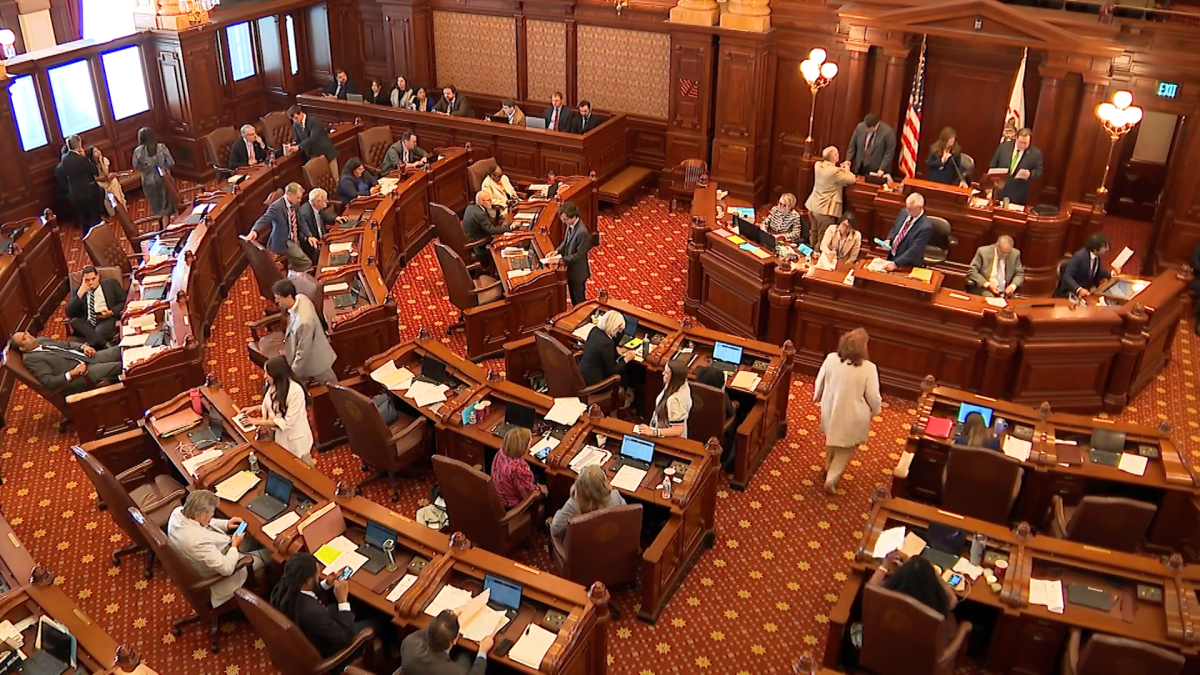
The Illinois House adjourned without voting on a Chicago Bears stadium bill, leaving the team's in-state future unresolved for now. The Senate passed a modified bill by 37-17 that would let certain Cook County municipalities create stadium authorities, but the earlier PILOT tax framework was abandoned. The Bears said they are still evaluating Arlington Heights and Hammond and plan to update later this spring or early summer.
The near-term market impact is less about the stadium itself than the signaled shift in bargaining power: the team still has a credible in-state path, but the loss of the favored tax-structure removes the cleanest way to make Arlington Heights pencil. That increases the probability of a prolonged bid process, which tends to favor the incumbent city on non-financial grounds and compresses the odds of an aggressive, immediate capital commitment.
Second-order beneficiaries are the adjacent real-estate and infrastructure names tied to uncertainty arbitrage. Any delay preserves optionality for landholders and entitles the local public sector to keep negotiating leverage, but it also raises carrying-cost risk for the development platform that would eventually finance roads, utilities, and site prep. The more this drags into summer, the more the project starts to resemble a multi-year entitlement story rather than a near-term construction catalyst.
The bigger tail risk is political fatigue: once the current session ends, the project becomes vulnerable to agenda crowding, special-session optics, and a late-cycle hardening of positions ahead of broader fiscal debates. That creates a binary setup over the next 1-3 months: either a compromise re-emerges with a public-authority wrapper, or the team shifts its evaluation toward the Indiana alternative, where subsidy intensity may be higher but remediation and optics are worse.
Contrarian takeaway: the market may be overestimating the immediacy of relocation optionality. A public-stadium structure reduces the team’s tax burden but also introduces governance, bond-timing, and lease-duration hurdles that slow execution materially; in other words, the probability of a grand bargain may be lower than the headline drama implies. That favors patience over chasing the event before there is a binding financing framework.
AI-powered research, real-time alerts, and portfolio analytics for institutional investors.
Request TrialOverall Sentiment
neutral
Sentiment Score
-0.10
