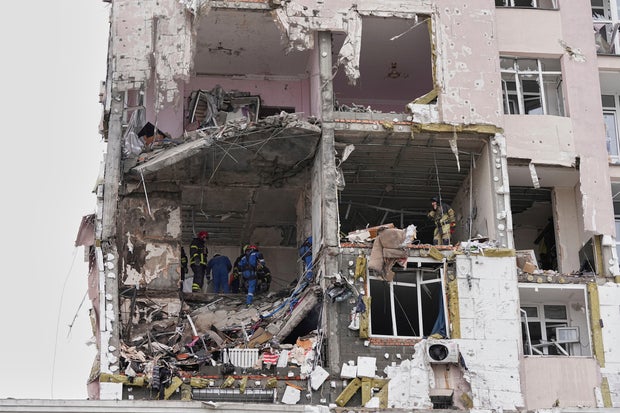
Russian forces struck Kyiv with what Moscow called a 'massive strike' using long-range weapons including Kinzhal missiles and drones, killing one person and wounding 27 while reportedly targeting energy and civilian infrastructure; President Zelenskyy said nearly 500 drones and 40 missiles were used, causing power and heating outages in parts of the capital. The strikes — hitting multiple residential high-rises and prompting brief Polish air alerts — come a day before Zelenskyy’s scheduled talks with U.S. President Donald Trump and follow Kremlin claims of territorial gains in eastern and southern Ukraine, elevating regional geopolitical risk and likely supporting higher risk premia for energy and defense-related assets as security guarantees and territorial issues are negotiated.
Market structure: Near-term winners are defense primes (LMT, RTX, NOC, GD) and commodity exporters (large oil majors XOM/CVX, LNG names) as risk premia for prolonged conflict and energy-asset attacks rise; expect a tactical 5–12% re-rating on defense names within 1–3 months and a 3–8% move higher in Brent/WTI if Black Sea/Crimea shipping disruption persists. Losers are Ukraine/EM EMEA risk assets, regional airlines/insurers and utilities exposed to Ukrainian grid damage; credit spreads for Ukraine-linked debt should widen sharply and remain elevated into winter. Cross-asset: USD and Treasuries rally (safe-haven), gold up 3–7% and VIX likely to spike 20–50% intra-week on headline shocks.
Risk assessment: Tail risks include NATO involvement or a nuclear-plant incident — low probability (<15%) but catastrophic for markets (risk-off ratio >10x); sanctions escalation cutting seaborne Russian oil exports is a medium probability (20–35%) and would drive multi-month commodity dislocations. Time horizons: immediate (days) = volatility trades and protection; short-term (weeks–months) = commodity and defense exposure; long-term (12–24+ months) = sustained defense capex and energy-supply chain reconfiguration. Hidden dependencies: Chinese purchase patterns of Russian hydrocarbons and winter gas pipeline flows can quickly offset/compound price moves.
Trade implications: Direct plays: asymmetric option exposure to defense primes and energy plus duration protection via TLT/Long USD. Pair trades: long LMT (or NOC) vs short cyclical industrial CAT or airline ETF (JETS) to express defense vs travel decoupling. Options: buy 3-month call spreads on RTX/LMT sized 2–3% NAV, buy 1–3 month Brent call delta ~0.35 or XOM outright if Brent breaks +3% intraday. Sector rotation: reduce EM EMEA equity weight by 25–50% of current exposure, increase energy/defense allocation by 3–6% of NAV.
Contrarian angles: The consensus may overpay for large-cap defense primes — growth in smaller systems/subcontractors and shipbuilding will compound earnings in 12–24 months; consider select Tier-2 suppliers with backlog and <15x PE. Oil spikes could be transitory if diplomatic brakes succeed; price thresholds (Brent >$95 for 2 weeks) should be used to add duration energy exposure, otherwise prefer options to avoid time decay. Unintended consequence: higher freight rates and tanker owners (STNG) can outperform majors if crude rerouting persists.
AI-powered research, real-time alerts, and portfolio analytics for institutional investors.
Request DemoOverall Sentiment
strongly negative
Sentiment Score
-0.65
