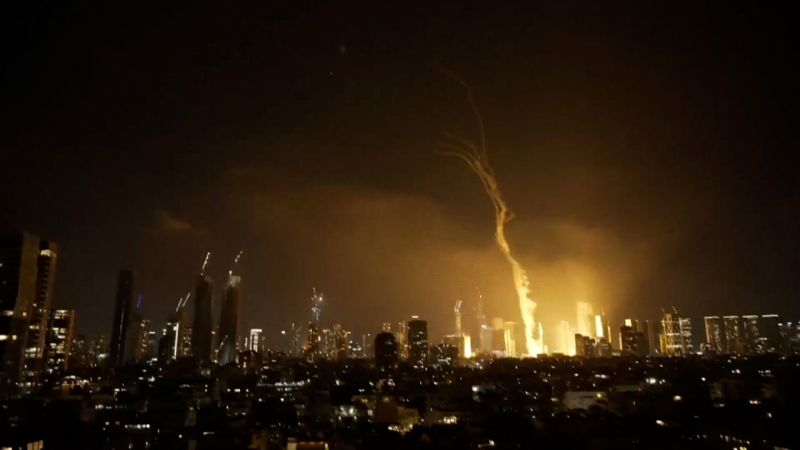
Iran launched a retaliatory strike against Israel on Friday, firing "hundreds of various ballistic missiles" at targets including Tel Aviv and Jerusalem, following Israeli attacks on Iranian military and nuclear sites earlier that day. Initial reports indicate some injuries and damage in central Israel, with defense systems activated to intercept incoming missiles. The Israeli strikes, which prompted the Iranian response, were reportedly conducted unilaterally without US involvement, escalating regional tensions.
A significant escalation in Middle Eastern geopolitical tensions has occurred with Iran launching a large-scale retaliatory missile strike against Israel, involving "hundreds of various ballistic missiles." This direct military action, confirmed by Iran's official news agency IRNA as the "beginning" of its "crushing response," followed Israeli attacks on Iranian military and nuclear targets earlier on Friday. Initial reports from Israel indicate explosions heard in Tel Aviv and Jerusalem, with at least seven people sustaining light to moderate injuries and damage to infrastructure, such as mangled cars and collapsed building facades in central Israel. Israel's defense systems were activated to intercept the incoming missiles, and the Israeli military has warned that "all of Israel is under fire." Notably, the preceding Israeli strikes, which targeted Iranian nuclear sites and military leadership, were reportedly conducted unilaterally, without the involvement or blessing of the United States, which has stressed it was "not involved." This direct state-on-state conflict signals a dangerous new phase in regional hostilities, underscored by a strongly negative sentiment score (-0.85) and a high market impact score (0.85), indicating substantial concern for regional stability and broader market repercussions.
AI-powered research, real-time alerts, and portfolio analytics for institutional investors.
Request DemoOverall Sentiment
strongly negative
Sentiment Score
-0.85
