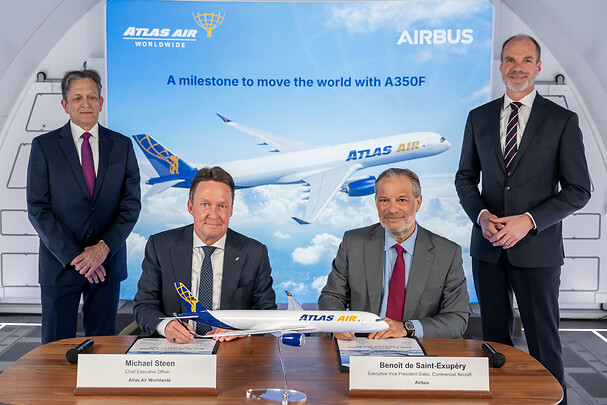
Atlas Air placed a firm order for 20 Airbus A350F freighters — the largest A350F order to date, making Atlas the type's biggest customer. The A350F offers material operational advantages (over 70% of the airframe in advanced materials and a 46-tonne lighter take-off weight versus the competing derivative) and will fully meet ICAO's enhanced CO2 standards effective 2027, supporting Atlas' fleet modernization and growth. The deal should boost Airbus' commercial backlog and expand Atlas' capacity, likely moving stocks in the cargo and OEM space modestly (~1–3%) while having limited market-wide impact.
This deal materially accelerates the A350F industrial ramp and shifts bargaining power down the value chain: OEMs, engine makers and MRO chains will see a multi-year cadence of widebody shop visits and engine-on-wing demand that is lumpy but high-margin. Expect aftermarket revenue to compound for engine OEMs and Tier-1 MROs over 3–7 years even if airfreight volumes plateau, because freighter utilization concentrates heavy maintenance events versus pax aircraft.
For the cargo market, added outsourced freighter capacity is an implicit supply shock to spot and contract charter rates. If Atlas (and similar wet-lease providers) scale capacity faster than structural cargo demand growth, spot yields could compress 10–20% within 12–24 months, advantaging large integrators that monetize scale while pressuring smaller niche charters and standalone lessors.
Key downside catalysts are delivery or engine certification delays, and a cyclical downturn in global trade. A 15–25% contraction in airfreight volumes in a recession would rapidly invert the positive view; conversely, sustained e-commerce and nearshoring trends would stretch production slots and push used-freighter values higher, creating scarcity premia for lessees.
Consensus is underweight the supplier consolidation angle: Airbus internalization moves increase execution risk for independent suppliers (pressure on SPR), but also create a path to higher-than-expected aftermarket scarcity if newbuild deliveries slip. That divergence creates asymmetric trading opportunities between airlines/successful lessors and exposed Tier-1 suppliers.
AI-powered research, real-time alerts, and portfolio analytics for institutional investors.
Request DemoOverall Sentiment
strongly positive
Sentiment Score
0.70
Ticker Sentiment
