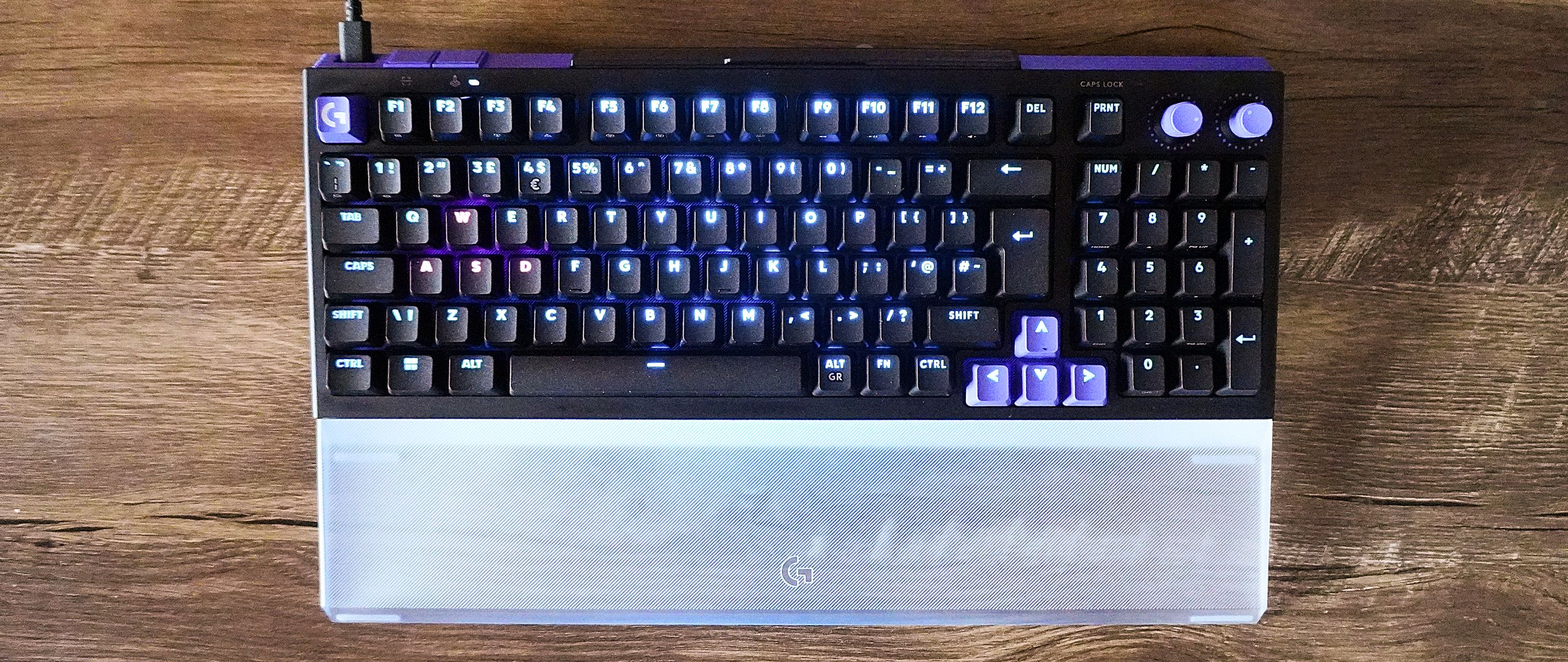
Logitech’s G G512 X gaming keyboard is positioned as a customizable analog board priced at $179/£169 for the 75-key version and $199/£199 for the 98-key model, with optional palm rests for $39-$45. The review is broadly positive, citing a strong typing feel, smart design, and meaningful gaming performance gains from analog switches and 8KHz polling, though only 39 keys are analog-compatible and SAPP rings can fall out easily. The article is product-focused and unlikely to move the stock materially, but it supports Logitech’s gaming peripherals franchise and innovation narrative.
The key takeaway is not the keyboard itself but the monetization of an upgrade path. Logitech is effectively lowering the adoption barrier for analog/enthusiast gaming by bundling storage, tooling, and software into the product, which can expand attach rates on higher-margin accessories and software-led ecosystem engagement. That matters because the category is still niche; the first-order revenue contribution may be modest, but the second-order effect is higher willingness to pay for premium peripherals across the G gaming line.
The competitive signal is more important than the product review score. If a mainstream brand can make analog feel accessible, incumbents with fragmented ecosystems risk losing the “good enough” middle of the market to a bundle that is easier to understand and use. The most exposed competitors are brands relying on specs-only differentiation; the winner is the company that can convert novelty into repeatable upsell, replacement cycles, and software retention over the next 2-4 quarters.
The main risk is adoption saturation: enthusiast demand may be strong, but the addressable market is still bounded by gamer willingness to pay for wired, premium keyboards with partial analog functionality. If reviews or word-of-mouth highlight inconsistency versus full-board analog alternatives, conversion could stall after the initial launch window. The other watch item is product friction—small usability issues on modular components can disproportionately hurt return rates and long-term brand halo in a category where community advocacy drives sales.
Contrarianly, this may be less about unit volume and more about validation of Logitech’s premium gaming positioning. If the board becomes a gateway product, the real upside could show up in higher ASP mix, accessory attach, and improved lifecycle economics rather than a standalone keyboard home run. That makes the stock interesting as a multiple-expansion story only if management can show this is part of a broader cadence of innovation, not a one-off review-driven pop.
AI-powered research, real-time alerts, and portfolio analytics for institutional investors.
Request DemoOverall Sentiment
moderately positive
Sentiment Score
0.45
Ticker Sentiment
