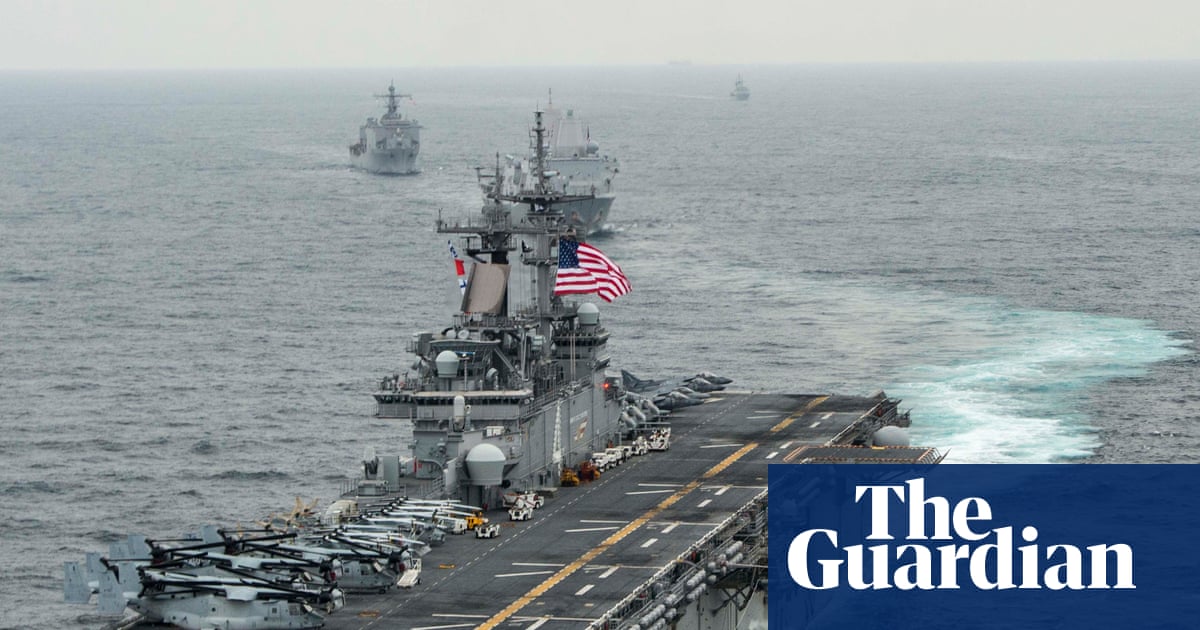
The US is reportedly preparing to send three more warships and thousands more troops to the Middle East as Iran's periodic attacks have effectively closed the Strait of Hormuz; more than a dozen allied nations issued a vague joint pledge to help ensure safe passage. President Trump publicly slammed NATO allies as 'cowards' for not wanting to 'help open' the strait and rejected a ceasefire, signaling continued escalation and political strain. Implication for portfolios: elevated risk-off sentiment, potential upside pressure on oil prices and disruption to global trade and supply chains.
The immediate market channel is a risk-premium on seaborne hydrocarbons and a shock to tanker availability — a sustained disruption in or around the Strait of Hormuz raises voyage times by a week+ for Gulf-to-Asia routes, which converts into a forward landed-cost shock roughly equivalent to $2–6/barrel (depending on bunker prices and VLCC utilization). That spread shows up first in freight (TD indices), insurance (war-risk premiums), and quick-pass-through to refiners with tight crude slates, pressuring product margins unevenly across regions over the next 1–3 months.
Defense and logistics suppliers capture a near-term revenue pulse: surge naval deployments and elevated maintenance/AMPS demand typically materialize in contract announcements and FMS orders over a 3–9 month window, while capex and accelerated procurement lift backlog visibility for large primes. Conversely, trade-route rerouting and higher fuel/insurance costs compress margins for integrated trade-dependent corporates (shipping, container logistics, some refiners) and can accelerate end-user demand destruction if sustained beyond a quarter.
Catalysts and tail risks are asymmetric. Short-term catalysts that would ricochet markets higher include a major tanker strike or quantifiable closure metrics (e.g., >20% drop in transits over 7 days); de-escalation catalysts are coordinated allied naval escorts, SPR releases, or diplomatic ceasefires that could unwind most premia within 30–90 days. Probability-weight the bird-in-hand effects (freight/insurance spikes and defense wins) against the lower-probability but high-impact scenario of protracted chokepoint closure which would meaningfully reroute global crude flows for many months.
AI-powered research, real-time alerts, and portfolio analytics for institutional investors.
Request DemoOverall Sentiment
strongly negative
Sentiment Score
-0.60
