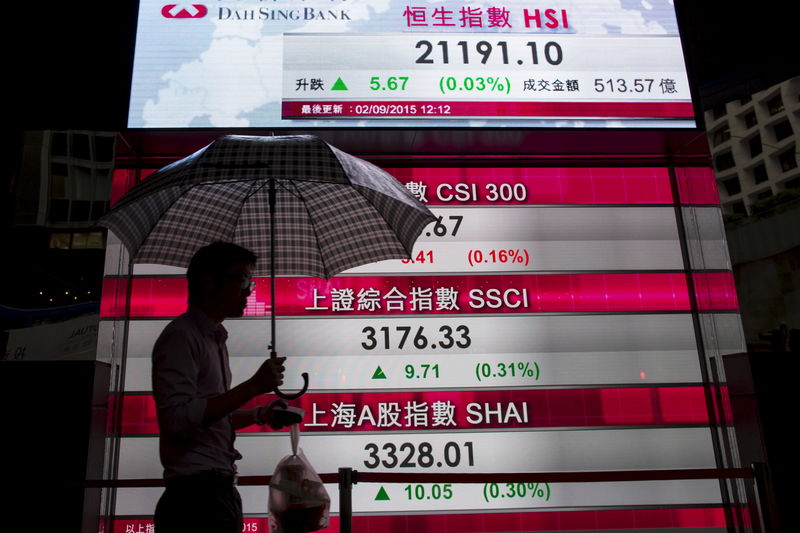
U.S.-Iran tensions escalated after U.S. forces seized an Iranian-flagged cargo ship in the Gulf of Oman and Trump warned of possible strikes on Iranian infrastructure. Asian equities were mixed to higher, with Japan's Nikkei 225 up 1%, South Korea's KOSPI up 1.1%, and China’s Shanghai Composite up 0.8%, while India’s Nifty futures fell 1% as oil prices surged and the Strait of Hormuz closure raised energy and inflation concerns. China left its one-year LPR at 3.00% and five-year LPR at 3.50% for an 11th straight month.
The immediate market read-through is less about the cargo ship itself and more about the repricing of the Middle East risk premium into inputs that matter most: crude, shipping, and inflation expectations. The first-order beneficiary is energy, but the second-order winners are U.S. domestic producers and refiners with limited exposure to Hormuz-linked supply, while the losers are Asian importers, airlines, chemicals, and any equity basket crowded into low-inflation multiples. If crude stays elevated for even 2-6 weeks, it pressures rate-cut timing globally and raises the probability that recent risk-on positioning gets hit through duration-sensitive tech and EM FX.
NVDA is interesting because it sits at the intersection of geopolitics and AI capex: a modest risk-off impulse does not change the secular story, but it can compress multiple expansion if rates back up or if semi supply chains in Asia get disrupted through shipping/insurance costs. The bigger second-order effect is on AI infrastructure budgets outside the U.S.; higher energy and transport costs can delay data-center buildouts in Europe and parts of Asia, which matters more for hyperscaler spending cadence than for near-term chip demand. The market is likely underweight this channel because it treats semis as insulated from macro, when in reality their terminal multiples are highly sensitive to real-rate volatility.
The consensus is likely overestimating how quickly this becomes a durable geopolitical crisis. The more probable near-term path is a volatility spike, not a structural supply shock, which means the best risk/reward is in short-dated convexity rather than outright directional bets. If diplomacy de-escalates within days, oil gives back quickly and the inflation/rates bid fades; if not, the trade becomes a wider hedge against an energy-led bear steepener rather than just a crude squeeze.
AI-powered research, real-time alerts, and portfolio analytics for institutional investors.
Request DemoOverall Sentiment
mildly negative
Sentiment Score
-0.15
Ticker Sentiment
