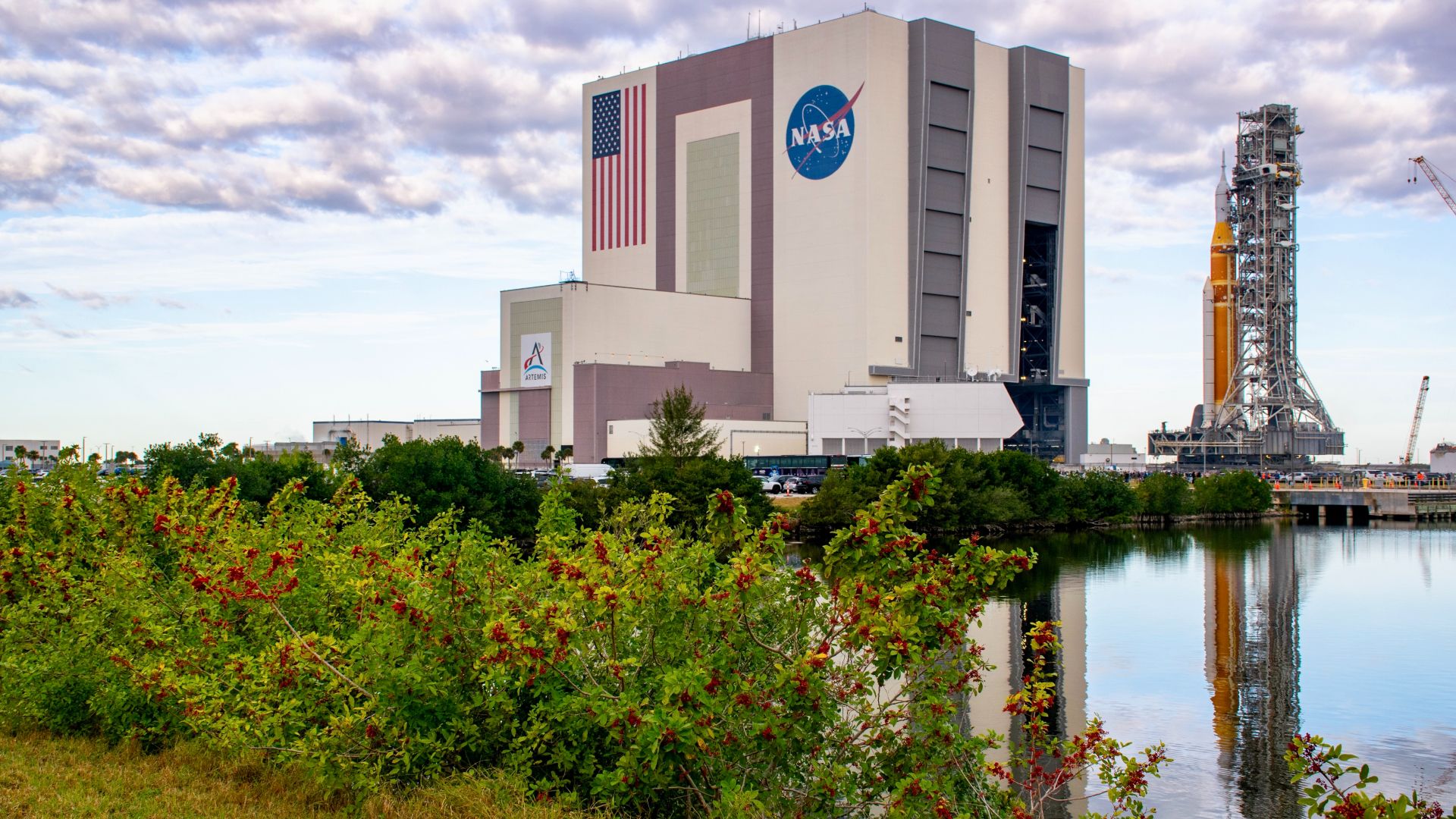
NASA will roll the Artemis 2 SLS from the VAB to LC-39B on March 20 (one-day slip from March 19) after replacing an electrical harness; the agency still targets an April 1-6 launch window with April 1 as the nominal opening. Artemis 2 is a 10-day crewed Orion shakedown carrying four astronauts; the 322-ft (98-m) rocket will traverse ~4 miles in roughly 12 hours at ~1 mph on the crawler. Programmatically, Artemis 3 was retasked to a 2027 LEO rehearsal, Artemis 4 remains the planned 2028 lunar return, and Artemis 5 could enable a second 2028 landing — the broader schedule depends on a flawless Artemis 2 execution.
This rollout hiccup is a reminder that hardware-first crewed programs have low-frequency, high-impact operational friction: even small subsystem work (electrical harnesses, avionics benches) cascades into schedule uncertainty, cost-to-complete creep, and repeated test cycles. For contractors with fixed-price or milestone-linked payments, each incremental delay shifts revenue recognition and can turn near-term cash flow beats into misses over a 3–12 month window as invoice milestones slip.
Second-order winners are commercial launch providers and their supply chains because programmatic unreliability increases demand optionality for third-party cargo/logistics solutions and accelerates internal NASA pressure to dual-source capabilities. Conversely, large primes that carry integration and legacy manufacturing responsibility absorb reputational and warranty risk; their stock valuations will increasingly reflect execution risk rather than pure backlog size.
Tail risks include a launch anomaly that forces program-wide recertification, a political funding reprioritization in a midterm cycle, or a supply-chain shock (engine/component failure) that propagates 6–24 months of schedule slippage. Near-term catalysts to watch are milestone certifications from prime subcontractors, any announced contract for commercial lander duties, and quarterly guidance changes from contractors—each can re-rate perceived program durability within days to quarters.
Consensus currently underweights the programmatic optionality commercial players enjoy: the market prices primes as if schedule risk is linear, but historical crewed programs show non-linear cost/time blowouts once a critical-path item fails QA. That asymmetry favors tactically long exposure to suppliers with diversified non-SLS revenue and short exposure to single-program integrators without quick corrective action plans.
AI-powered research, real-time alerts, and portfolio analytics for institutional investors.
Request DemoOverall Sentiment
neutral
Sentiment Score
0.05
