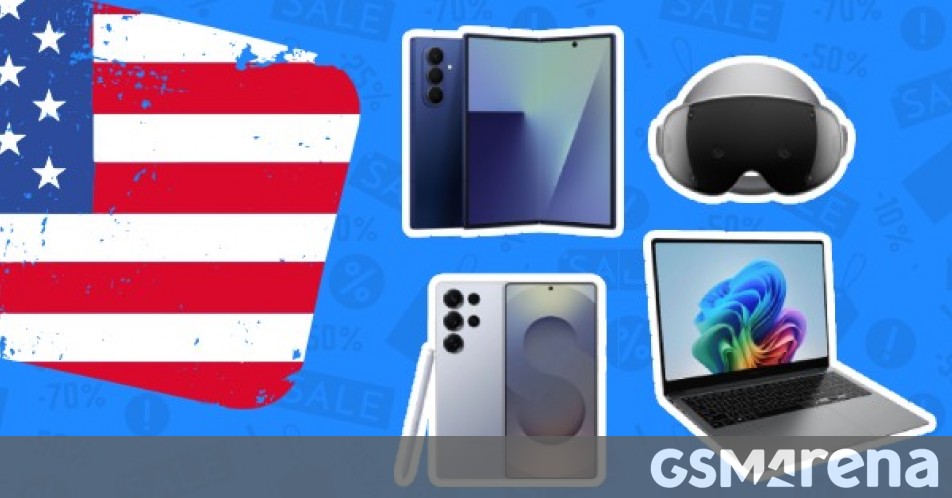
Samsung is extending Cyber Monday promotions into December with sizable trade-in credits and straight discounts across its mobile and device ecosystem: up to $700 enhanced trade-in for the Galaxy S25 Ultra, up to $1,000 for the Galaxy Z Fold7 (for select trade-ins), up to $1,140 off the Galaxy XR headset plus an extra 10% and bundled services, $200 off or up to $800 trade-in on the Tab S11 Ultra, and discounts/credits on watches, buds and Galaxy Book5 Pro models. The Book5 Pro machines highlight on‑device AI (Intel Core Ultra 7 with a 47 TOPS NPU and Copilot+), while some color/storage configurations may ship after Christmas; the promotions look designed to drive near‑term retail demand and inventory turnover ahead of upcoming launches with limited broader market impact.
Market structure: Samsung’s extended discounting signals OEM-led ASP compression in high-end Android hardware over the next 1–3 quarters; beneficiaries are software/service providers (GOOGL) and embedded-app vendors (ADBE) that gain distribution and potential subscription uplift from bundled Google AI Pro, YouTube Premium and Adobe Pulsar trials. Intel (INTC) stands to gain modestly if Galaxy Book5 Pro placements accelerate Windows/Intel PC shipments, but margin upside is limited given competitive silicon. Expect modest reallocation of consumer spend from full‑price hardware to service subscriptions, shifting revenue mix toward recurring digital revenue rather than component suppliers.
Risk assessment: Tail risks include a sharper-than-expected consumer demand slump (retail sales down >2% MoM Dec) that forces deeper markdowns and pressures semiconductor/order visibility, or regulatory scrutiny around Google bundling (FTC actions within 6–18 months) that could limit cross-subsidization. Immediate risks (days–weeks) are inventory/logistics delays from color/storage shipping windows; short-term (weeks–months) are holiday sales/inventory prints; long-term (quarters) are margin normalization and potential channel-conditioning where consumers wait for promotions. Hidden dependency: service revenue upside depends on conversion rates from free trials — if conversion <10% at 12 months, valuation uplift for GOOGL/ADBE will be muted.
Trade implications: Tactical long exposure to GOOGL (GOOG) favors a 1.5–2.5% portfolio weight with a 3–6 month horizon targeting +8–15% upside as service ARPU benefits materialize; use a protective 8% stop. Initiate a smaller 1–1.5% position in INTC via a 3‑month call spread (e.g., buy 6-month 1.5% delta call, sell 0.7 delta) to capture PC refresh upside while capping premium outlay. For ADBE, consider selling a 6–9 month cash-secured put at ~5% OTM to collect premium while setting an entry beneath current levels, target effective entry if assigned with expectation of 6–12 month recovery. Reduce discretionary retail/consumer hardware shorts only after Q4 inventory data; favor pairs over outright shorts to control idiosyncratic risk.
Contrarian angles: Consensus underestimates positive EBITDA leverage if free trials convert — a 10–20% conversion of bundled XR/AI trials could lift GOOGL/ADBE service CAGR by ~1–2 pts over 12 months, a mispriced optionality today. Conversely, the market may be underpricing the risk that repeated deep promotions condition buyers and permanently lower ASPs for flagship phones by ~5–10% over 12–18 months, pressuring suppliers and cyclical semis. Watch S26 launch (expect March–May 2025) as the pivotal catalyst that will reveal whether discounts were inventory clearance or a new pricing baseline.
AI-powered research, real-time alerts, and portfolio analytics for institutional investors.
Request DemoOverall Sentiment
mildly positive
Sentiment Score
0.25
Ticker Sentiment
