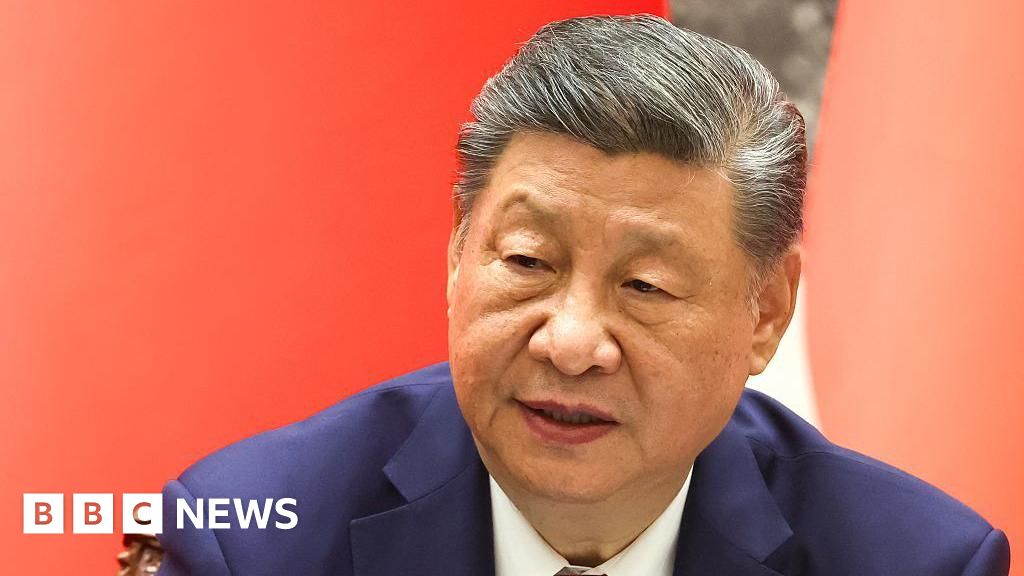
Xi Jinping will visit North Korea from 8-9 June for his first trip to Pyongyang in nearly seven years, meeting Kim Jong Un amid elevated tensions around North Korea's nuclear program and its growing alignment with Russia. The visit could influence trade, sanctions dynamics, and prospects for resumed US-North Korea or inter-Korean dialogue, but the article does not indicate any immediate policy change. Market impact is likely limited outside defense, sanctions-sensitive, and regional risk assets.
This is less about diplomacy than about signaling a tighter China-Russia-North Korea axis that raises the optionality of sanctions leakage, not an immediate policy breakthrough. The first-order market effect is probably muted, but the second-order effect is that Beijing is likely to tolerate more cross-border commerce and logistics friction relief as long as it preserves leverage over Pyongyang. That argues for a slow burn increase in activity around border provinces, transport bottlenecks, and any firms with indirect exposure to Chinese compliance loosening rather than a broad EM re-rating.
The bigger risk is escalation by normalization: Xi showing up effectively validates Kim’s nuclear status quo while creating a cover for incremental trade expansion. Over the next 1-3 months, that could improve North Korea’s hard-currency intake through tourism, construction imports, and border trade, which lowers the odds of near-term concessionary behavior toward Seoul or Washington. Over 6-12 months, the more important variable is whether Beijing uses the visit to reassert control over Kim or whether Pyongyang deepens the Moscow channel and reduces China’s leverage; the latter would be negative for Chinese diplomatic influence and positive for sustained sanctions arbitrage.
The underappreciated tail risk is South Korea policy response: if Seoul concludes dialogue is dead, it may accelerate defense spending, missile defense, and indigenous strike capability procurement. That creates a cleaner medium-term beneficiary set in Korean defense, electronics, and shipbuilding supply chains, while also increasing headline volatility for regional assets whenever missile tests follow the summit. The market is likely underpricing the probability that this visit becomes a prelude to more frequent provocations rather than de-escalation.
Contrarian take: the consensus may be too focused on the photo-op and not enough on the resource constraints China can impose if it wants leverage. If Beijing wants to prevent Kim from becoming overly dependent on Moscow, it can quietly tighten customs, fuel, and port access after the summit, which would cap any sustained North Korean economic uplift. So the trade is not outright bullish on DPRK adjacency; it is bullish on volatility, defense spending, and selective sanctions-sensitive logistics names if border flows expand.
AI-powered research, real-time alerts, and portfolio analytics for institutional investors.
Request DemoOverall Sentiment
neutral
Sentiment Score
-0.05
