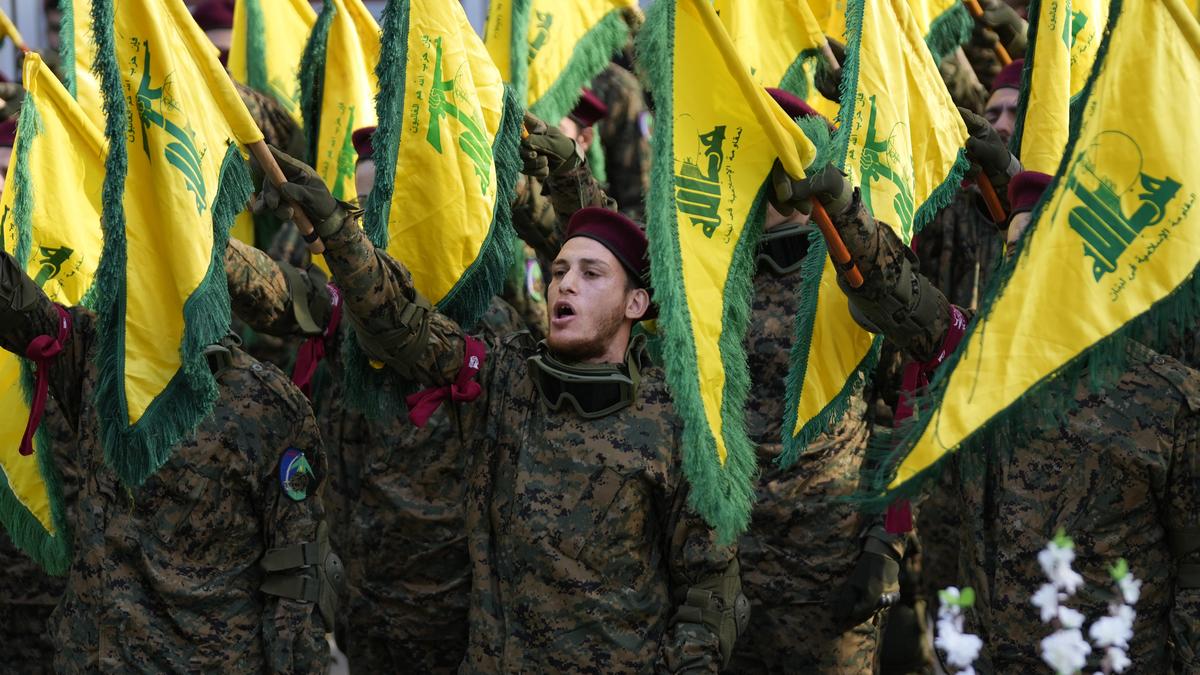
A two-week U.S.-Iran ceasefire was announced on April 8, but confusion remains over whether it extends to Lebanon: Pakistan's prime minister said it does, while Israel's prime minister said Lebanon is excluded. The article also says the war on Iran began on February 28 with joint U.S.-Israel strikes that killed Ayatollah Ali Khamenei and other senior leaders. The geopolitical uncertainty is materially negative and has broad market implications.
The market should treat this less as a one-off ceasefire headline and more as a sequencing problem: if Washington is willing to freeze one theater while leaving another ambiguously outside the deal, the risk premium shifts from a single war shock to a rolling-series of localized escalations. That is usually worse for risk assets because it keeps logistics, insurance, and contractor-capacity pricing elevated without delivering the relief rally that comes from a durable, broad-based de-escalation.
The second-order winners are not obvious military primes alone; it is the infrastructure layer that prices in persistent replacement demand, emergency hardening, and accelerated procurement cycles. Think border systems, drone defense, C4ISR, EW, and critical-infrastructure security vendors with short-cycle budgets — the contract mix improves when governments conclude they need faster deployment rather than legacy platform upgrades. Conversely, commercial shippers, air cargo, and regional industrials exposed to Levant/Middle East routing face a higher probability of intermittent disruption over the next 1-3 months even if headline violence pauses.
The key tail risk is that the ceasefire is interpreted differently by each side, creating a false sense of stability and a gap between diplomatic language and battlefield behavior. In that regime, the market typically underprices convexity: one failed violation can reset a 20-30% jump in freight/energy risk measures in days, while any genuine multi-front expansion would likely spill into broader EM FX and defense-readiness spending over quarters. The contrarian view is that a narrow truce may actually be bearish for defense names in the immediate 1-2 weeks if investors fade war headlines, but that weakness should be bought because replacement and deterrence budgets usually get revised upward after the first ambiguity-induced breach.
AI-powered research, real-time alerts, and portfolio analytics for institutional investors.
Request TrialOverall Sentiment
moderately negative
Sentiment Score
-0.35
