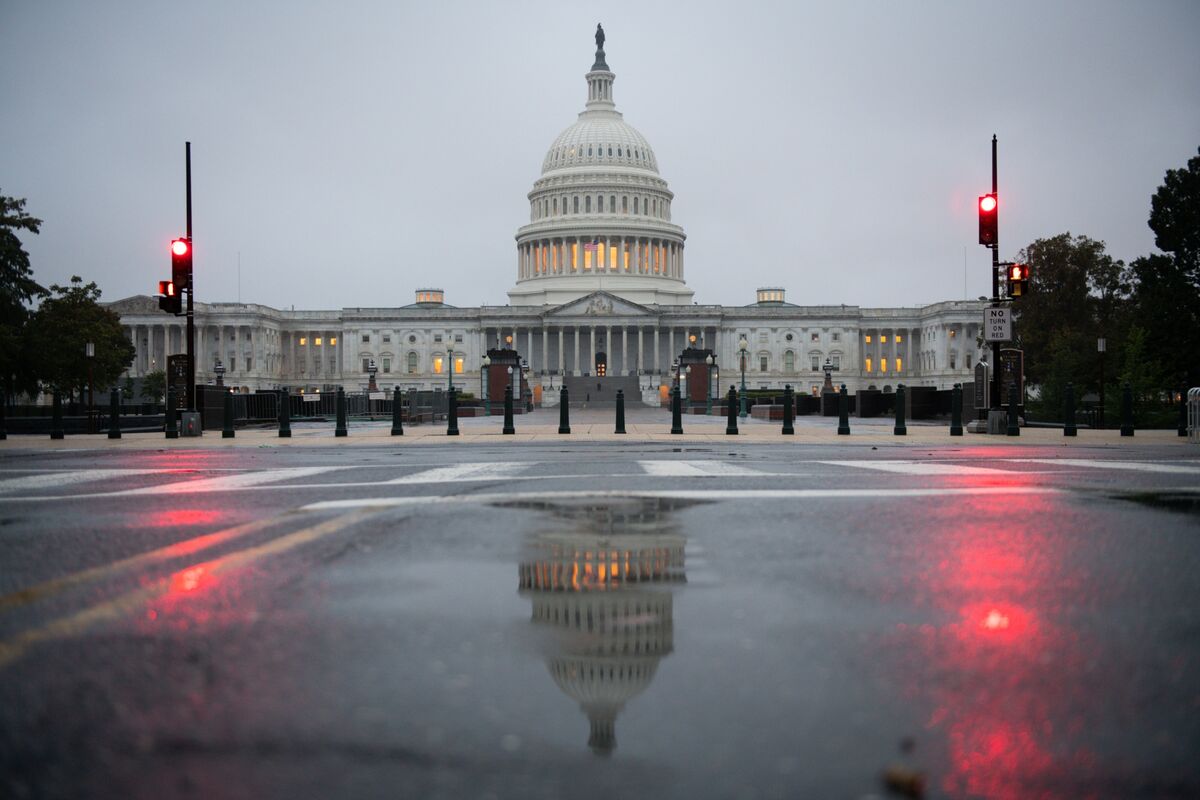
The Congressional Budget Office (CBO) estimates that the House-passed version of President Trump's tax and spending bill would increase US budget deficits by $2.42 trillion over the next decade. This projection reflects a $3.67 trillion decrease in expected revenues offset by a $1.25 trillion decline in spending through 2034, relative to baseline projections, potentially impacting long-term fiscal policy and market sentiment regarding US debt.
The Congressional Budget Office (CBO), a nonpartisan entity, projects that the House-passed Republican tax and spending bill would increase U.S. budget deficits by $2.42 trillion over the next decade, through 2034. This projected deficit expansion stems from an estimated $3.67 trillion decrease in expected revenues, which is only partially offset by a $1.25 trillion decline in spending relative to baseline projections. The "strongly negative" sentiment score (-0.65) associated with this development indicates significant market concern regarding the long-term fiscal health of the U.S. and its implications for debt sustainability. This substantial increase in the deficit outlook suggests potential upward pressure on government borrowing costs and could have a moderate impact (market impact score: 0.6) on broader financial markets, including fixed income and currency valuations.
AI-powered research, real-time alerts, and portfolio analytics for institutional investors.
Request DemoOverall Sentiment
strongly negative
Sentiment Score
-0.65
