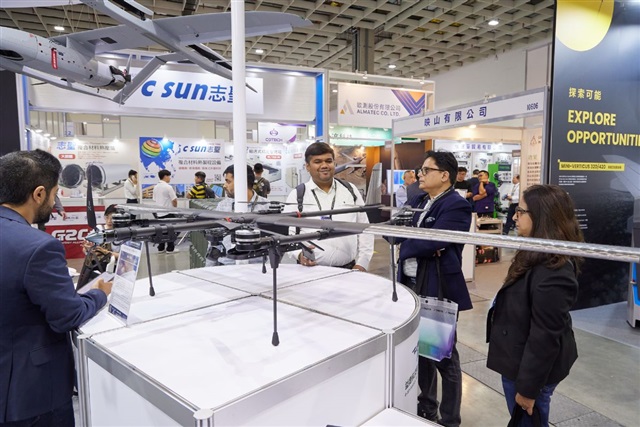
Ukraine is working to reduce dependence on China-linked supply chains as Taiwanese drone makers expand production in Poland and Lithuania. The shift points to a gradual reconfiguration of Eastern Europe’s industrial and defense supply chains, with implications for export controls and regional manufacturing capacity. The article is largely descriptive, with modest market relevance for defense and industrial suppliers.
This is less about a one-off sourcing shift and more about the start of a parallel defense-industrial architecture in Europe. The immediate winners are not just the drone assemblers moving capacity west, but the local contract manufacturers, electronics component suppliers, logistics firms, and industrial landlords in Poland and the Baltics that can capture volume without owning the front-end IP. The key second-order effect is that procurement sovereignty becomes a premium: buyers will increasingly pay up for dual-sourceable, non-China exposed subsystems, which should support margins for firms with certified alternative supply chains.
The more interesting loser is China’s embedded leverage over low-cost UAV components, batteries, motors, and sensors. If even a modest share of Eastern European demand relocates, Chinese suppliers face a slow-burn erosion rather than a sudden cutoff, but the cumulative effect can still matter because defense customers value qualification stability over price. That creates a bifurcation: commodity drone hardware gets commoditized, while compliant, export-control-resilient integrators should earn higher multiples as their addressable market expands across NATO-aligned buyers.
Catalyst timing matters: the first 3-6 months are about facility buildout, permitting, and working-capital funding; the 6-18 month window is when procurement frameworks and certification determine whether this is real or just headline reshoring. The main reversal risk is policy: any softening in export controls, a ceasefire that reduces urgency, or a crackdown on dual-use shipments from Europe could slow the capex cycle. A less obvious tail risk is margin compression if local wage inflation and energy costs in Poland/Lithuania rise faster than customers are willing to absorb.
The consensus may be underestimating how sticky this becomes once defense ministries qualify new vendors. Qualification is a moat, and once production is in-region, switching costs rise sharply because spare parts, training, and maintenance get localized. That means the move is probably early, not overdone: the market still prices this as a tactical re-routing of supply, when it is more likely a multi-year reallocation of defense manufacturing share across Europe.
AI-powered research, real-time alerts, and portfolio analytics for institutional investors.
Request DemoOverall Sentiment
neutral
Sentiment Score
0.10
