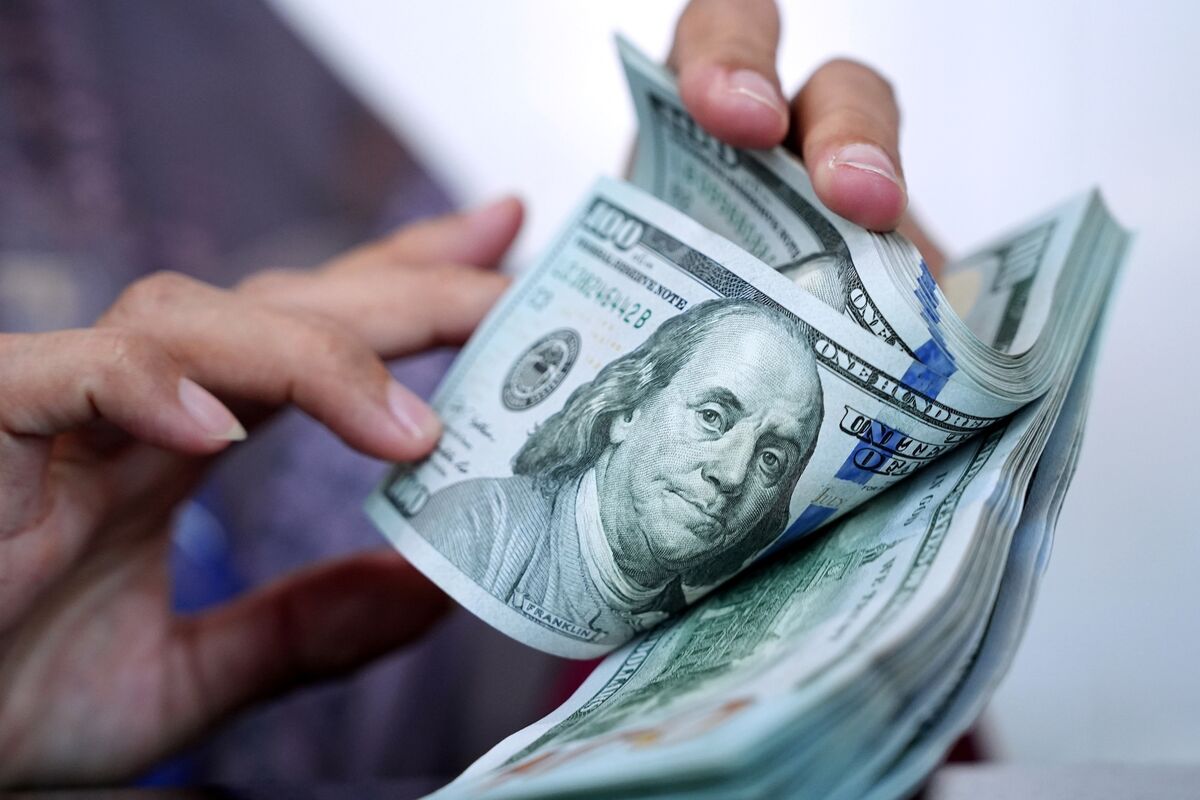
The Bloomberg Dollar Spot Index jumped 2% in June (best month since the Iran war) and firmed at the start of July as markets priced higher Fed-for-longer rates tied to the inflation fight. While many strategists expect a stronger dollar, Credit Agricole, Morgan Stanley and TD Securities are pushing back against that consensus. The development reinforces that Fed inflation-fighting guidance—especially under Chairman Kevin Warsh—remains a key driver of near-term USD direction.
The market is treating higher U.S. rates as a one-way support for the dollar, but that logic gets crowded fast once positioning becomes consensus. The real mechanism to watch is not spot FX alone; it is the tightening/loosening of global financial conditions that follows a sustained dollar move. If dollar strength stalls, the first beneficiaries are not U.S. banks, but non-U.S. revenue-heavy equities, commodities, and EM assets that have been discounted for a stronger USD regime.
For financials, the second-order effect is credit transmission rather than translation. A firmer dollar usually pressures offshore borrowers and commodity-linked credits, which can show up later in wider spreads, weaker loan demand, and softer capital markets activity; a weaker dollar reverses some of that stress and can improve risk appetite, but only after rate expectations stop rising. That means MS is more of a barometer for risk sentiment and deal flow than a direct FX winner, while regional lenders like OZK are more exposed to credit quality than to the currency itself.
Contrarianly, the consensus may be underestimating how fast the dollar can unwind if rate-cut expectations return even modestly. The move is likely overdone if recent dollar strength was driven more by positioning than by a durable shift in inflation or growth differentials; it is underdone if the Fed keeps surprising hawkish and U.S. data re-accelerate. Falsifier for the bearish-dollar setup: another monthly high in DXY into the next inflation/FOMC window, which would imply the market is still underpricing higher-for-longer and force a cover of any weakness-reversion trades.
AI-powered research, real-time alerts, and portfolio analytics for institutional investors.
Overall Sentiment
neutral
Sentiment Score
-0.10
Ticker Sentiment
