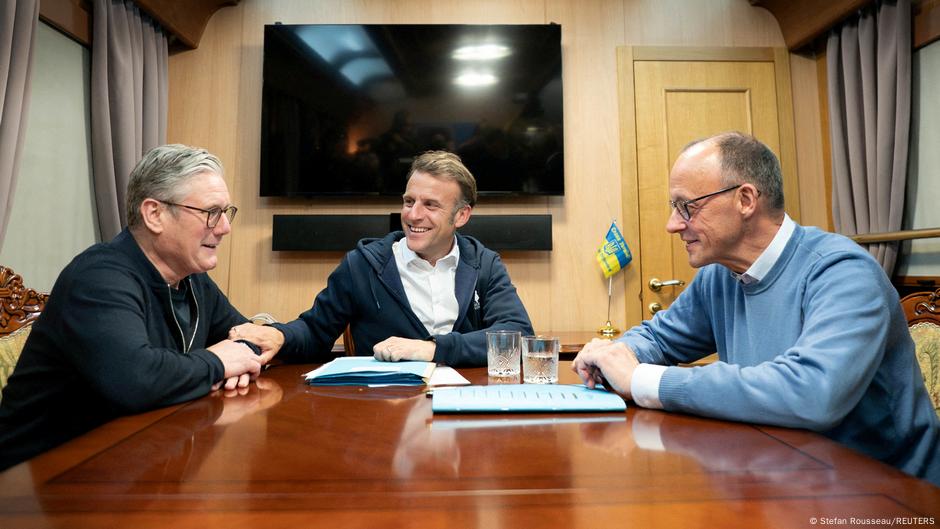
German Chancellor Merz is strategically reorienting the nation's foreign policy by formalizing an "E3" security and defense alliance with France and the UK, underscored by a new comprehensive bilateral treaty with London. This pivot is largely motivated by growing concerns over Russian threats and the potential unreliability of US security guarantees, signaling a push for greater European defense self-reliance and leveraging French/UK nuclear deterrence. While Germany acknowledges the need for increased defense spending, the move reflects a complex rebalancing of European security architecture amid evolving geopolitical risks and potentially significant implications for defense budgets and industry.
Germany is executing a significant strategic pivot in its foreign and security policy, formalizing a closer defense-oriented alliance with France and the United Kingdom, designated as the "E3". This realignment is codified in a new comprehensive bilateral treaty with the UK, the first of its kind since World War II, centered on security and arms cooperation. The primary catalyst for this shift is twofold: the direct threat posed by Russia and mounting uncertainty over the reliability of the United States' security guarantee for Europe, particularly in light of a potential Trump presidency. In a notable admission, Chancellor Merz acknowledged Germany's past as a defense "free-rider" and has committed to a massive increase in its defense spending. This move signals a push for greater European strategic autonomy, with the explicit suggestion that the nuclear deterrents of France and the UK could supplement, or eventually replace, the US security umbrella. However, expert opinion cited in the article suggests complete defense independence from Washington is unrealistic. The strategy is not without internal friction, as evidenced by tensions with Poland over border controls, indicating that the path toward broader European security cohesion beyond the E3 core remains complex.
AI-powered research, real-time alerts, and portfolio analytics for institutional investors.
Overall Sentiment
mixed
Sentiment Score
0.00
