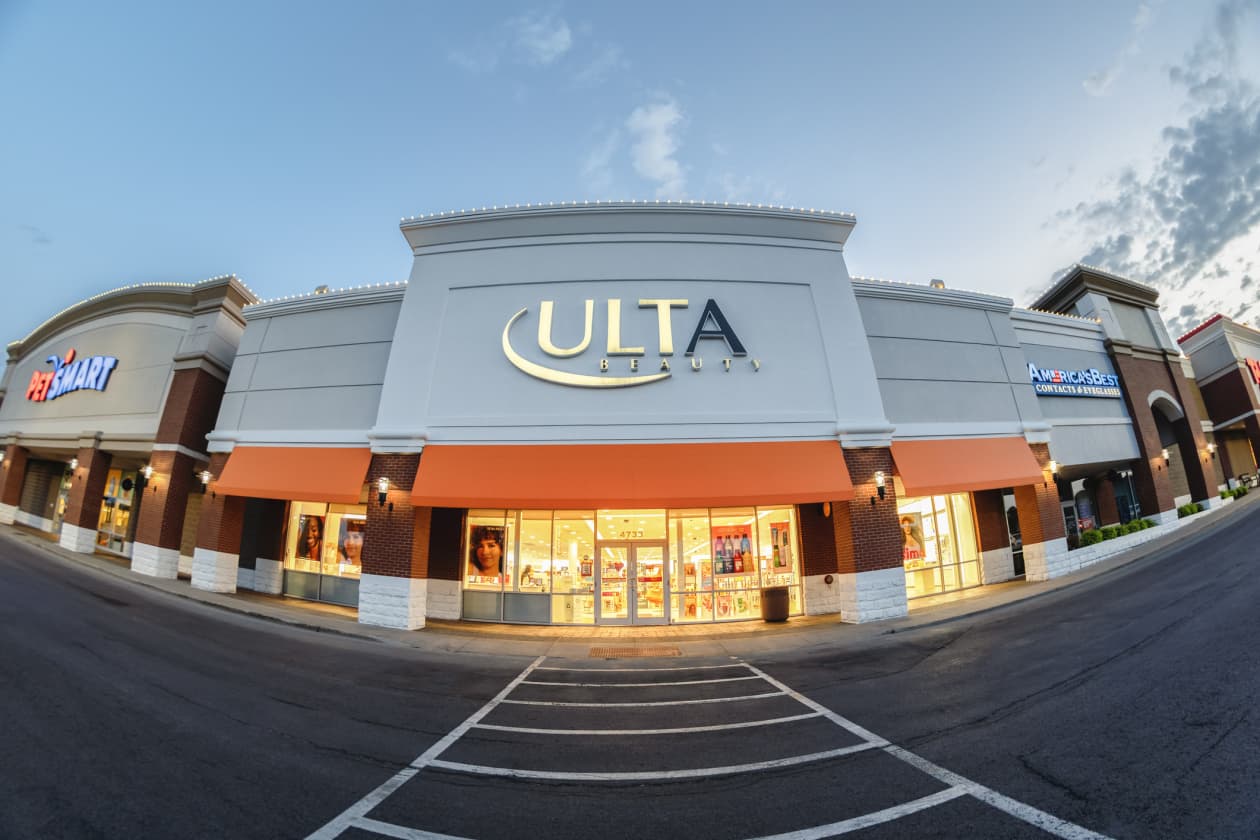
Ulta Beauty reported fiscal third-quarter EPS of $5.14 on revenue of $2.9 billion, beating FactSet analyst expectations of $4.61 and $2.7 billion and marking a 13% year-over-year revenue increase. The company raised full-year sales guidance to about $12.3 billion (from $12.0–12.1 billion) and lifted same-store sales guidance to +4.4%–4.7% (from +2.5%–3.5%), citing a 6.3% comp increase driven by a 3.8% ticket rise and 2.4% transaction growth and strength in e-commerce and 'masstige' skincare. The upside and upgraded outlook drove a ~6% after-hours stock move and reinforce durable consumer demand in beauty during the holiday season.
Market structure: Ulta (ULTA) is a clear winner — its ‘masstige’ mix and e‑commerce strength drive share gains versus pure mass retailers and mall‑anchored department stores; Q3 comps +6.3% with avg ticket +3.8% implies both pricing power and mix improvement. Suppliers of prestige skincare and small K‑beauty brands benefit via higher velocity; mass grocery/discount chains that rely on low‑margin private label are the likely losers. Cross‑asset: stronger beauty demand supports consumer discretionary equities, narrows credit spreads for retail, marginally reduces downside for consumer‑linked high yield; commodity exposure (palm/oleochemicals) is minimal relative to FX and rates sensitivity in retail margins.
Risk assessment: Key tail risks are a sharp consumer income shock (unemployment spike or CPI re‑acceleration), supply disruption from Asia, or social/regulatory product recalls — each could knock 15–30% off near‑term revenues. Immediate (days) risk: post‑print sentiment reversal; short term (weeks/months): holiday cadence and inventory; long term (quarters/years): brand saturation and competitor premiumization. Hidden dependencies include loyalty program economics, promotional cadence, and e‑commerce returns that can compress margins faster than sales growth. Catalysts to monitor: weekly Circana sales, ULTA comps in early December, and FY guide revisions.
Trade implications: Favor a tactical overweight to ULTA via equity or defined‑risk options into the holiday window and FY guide season. Consider a 2–3% portfolio long in ULTA stock with a 10% stop and a 20–30% upside target over 6–12 months, or a 12‑month LEAPS call (delta ~0.40) sized to equivalent risk. For cheaper exposure, sell a short‑dated (60–90 day) out‑of‑the‑money put to monetize elevated consumer confidence, or buy a call spread into Jan 2026 to cap cost while retaining upside.
Contrarian angles: The market may underprice margin pressure from promotional activity and rising e‑commerce fulfillment/return costs — earnings beat can be transitory if gross margins erode >200bps. Conversely, consensus may underappreciate durable demand from Millennials/Gen Z self‑gifting (historical ‘lipstick effect’) that could sustain 3–5% annual share gains. Watch for unintended consequences: prestige brands moving direct or exclusive launches (e.g., Sephora partnerships) which would compress Ulta’s assortment advantage and cap long‑term multiple expansion.
AI-powered research, real-time alerts, and portfolio analytics for institutional investors.
Request DemoOverall Sentiment
strongly positive
Sentiment Score
0.78
Ticker Sentiment
