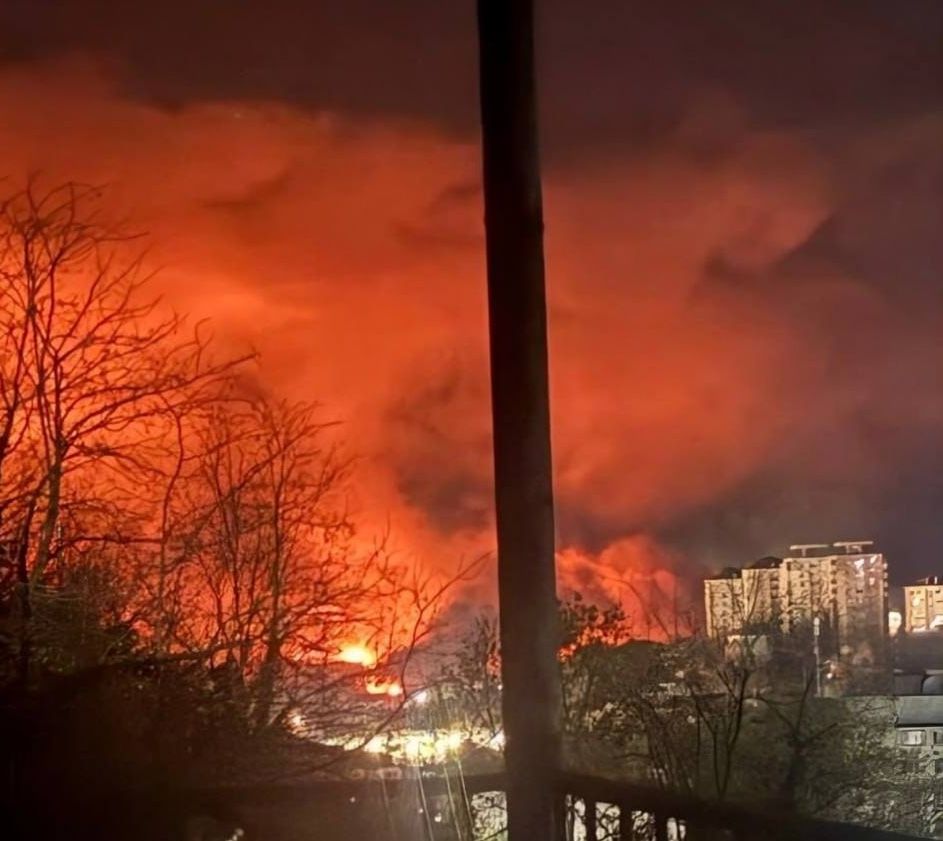
Ukrainian drones struck the Tuapse Oil Refinery, a Rosneft facility with a processing capacity of about 12 million tons per year, sparking fires that spread and may have reached neighboring fuel reservoirs. The attack killed two children and injured two adults, while local schools were closed for April 16. The refinery is a key Russian fuel supplier and the Port of Tuapse handles up to 10% of Russia's petroleum-product exports, underscoring the broader supply risk to Russian energy infrastructure.
This is less about one refinery outage and more about the market learning that Russia’s downstream network is becoming a structurally higher-cost, lower-reliability system. Repeated precision strikes against refining and port infrastructure create a compounding effect: even partial outages force more domestic product re-routing, reduce export flexibility, and raise the implicit security premium embedded in Russian barrels. The second-order winner is not necessarily crude producers; it is non-Russian refiners and product importers that can arbitrage tighter diesel and fuel oil balances into margin expansion.
The key near-term risk is product tightness, not crude tightness. Refined products are harder to substitute quickly than crude, so disruption to a large coastal refinery/port complex can widen diesel cracks and lift bunker/distillate freight economics within days, while crude benchmarks may lag if OPEC+ spare capacity and inventories absorb headline supply concerns. If the fire meaningfully degrades secondary processing units, the repair timeline can stretch from weeks to months, and each additional strike raises the probability of precautionary shutdowns across nearby assets.
The broader military implication is also important: attacks on logistics nodes that feed transport and defense supply chains can create localized bottlenecks that are invisible in headline oil balances. That increases the odds of intermittent diesel shortages in southern Russia and raises transport costs for internal distribution, which can indirectly pressure industrial output and wartime logistics over a 1-3 month horizon. The market is likely underpricing the persistence of these disruptions because it still treats them as discrete events rather than a campaign targeting system reliability.
The contrarian view is that the reflexive bullish reaction in crude may be overstated if this reduces Russia’s ability to export products more than crude, effectively redirecting volume rather than destroying it. If Russian exports simply shift from refined products to crude, the cleaner trade is on product spreads and non-Russian refining margins, not a broad long-energy beta position. The more durable signal is a widening gap between crude and distillates, plus increased volatility around shipping insurance and Black Sea logistics.
AI-powered research, real-time alerts, and portfolio analytics for institutional investors.
Request DemoOverall Sentiment
strongly negative
Sentiment Score
-0.55
