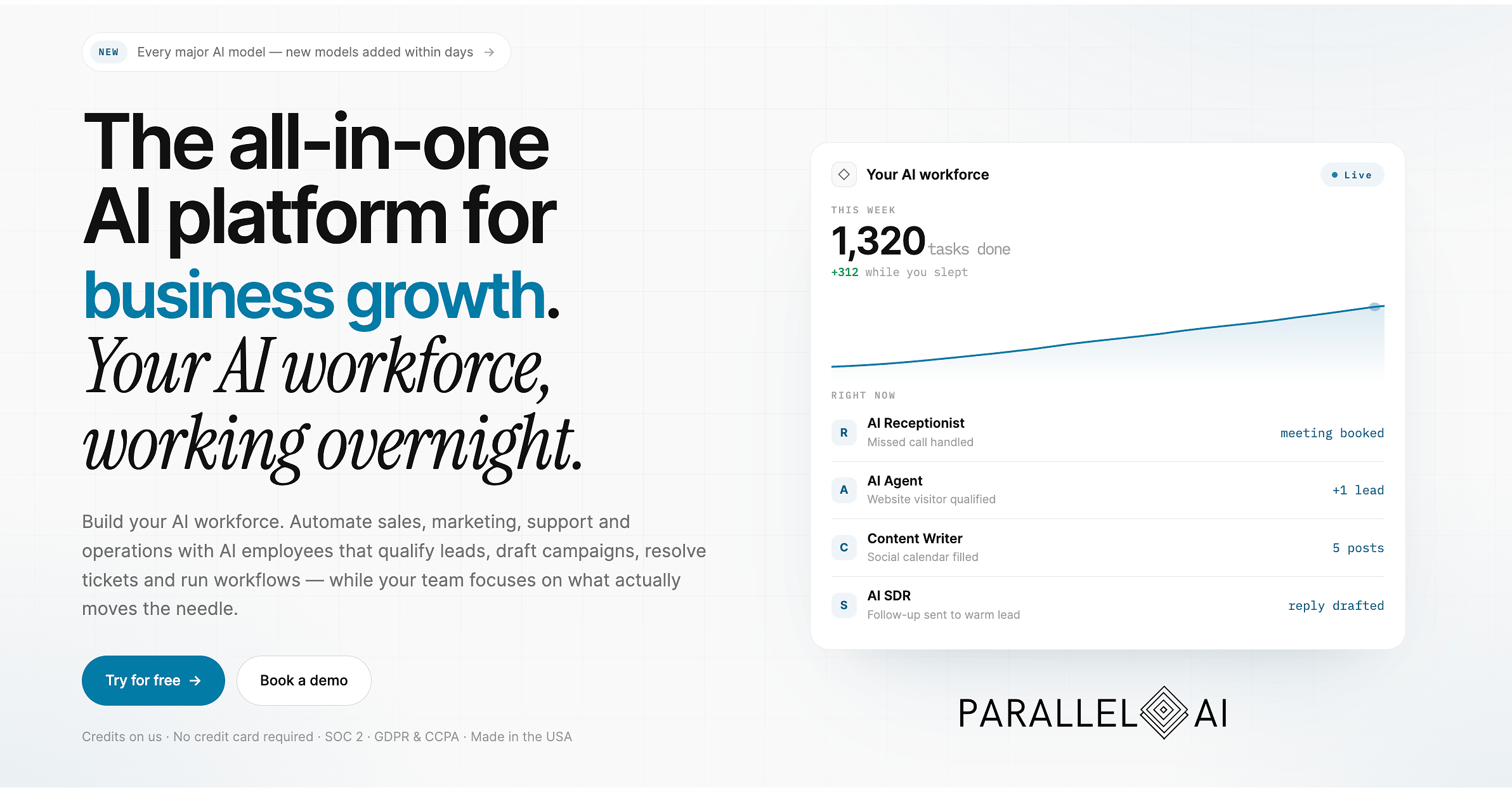
Parallel AI reported 10x revenue growth since January 2026 and said it is now SOC 2 compliant, positioning the platform as a unified replacement for fragmented sales and marketing tool stacks. The company claims AI agents automate lead management and customer conversations across a single system used by 5,000+ customers. It also added Strategic Advisors (including OpenAI GTM leader David Ortiz) as it expands go-to-market and enterprise readiness, which may support modest positive momentum for the company.
This is more a category signal than a direct fundamental read-through. The important mechanism is budget consolidation: if buyers are willing to pay for workflow ownership, spend migrates away from fragmented point tools and toward vendors that sit on the system of record plus the system of action. That favors broad-suite software names like HUBS and CRM, while pressuring smaller data-enrichment, sequencing, and engagement vendors whose features can be replicated inside a larger platform or by AI layers bundled at low marginal cost.
The near-term market impact is likely limited because this is a private-company PR, not an independently verified demand update. Over 1-3 quarters, the real test is whether this kind of consolidation shows up in public comps as higher net retention and lower churn in all-in platforms, or in slower new-logo growth for point solutions. A hidden risk for the platform vendors is AI inference cost: “unlimited” usage can look like a growth accelerant until gross margin and CAC payback normalize downward.
The contrarian read is that SOC 2 and advisory-board signaling are table stakes, and 10x growth off a small base can overstate durability. The consensus may be too eager to extrapolate vertical AI consolidation into a durable moat; in practice, many customers adopt these tools as a cheaper overlay before they standardize on existing CRM/workflow stacks. The thesis breaks if public SaaS names show accelerating AI attach without margin compression, or if enterprise procurement keeps favoring best-of-breed specialists on security, data residency, or workflow depth.
AI-powered research, real-time alerts, and portfolio analytics for institutional investors.
Overall Sentiment
mildly positive
Sentiment Score
0.35
Ticker Sentiment
