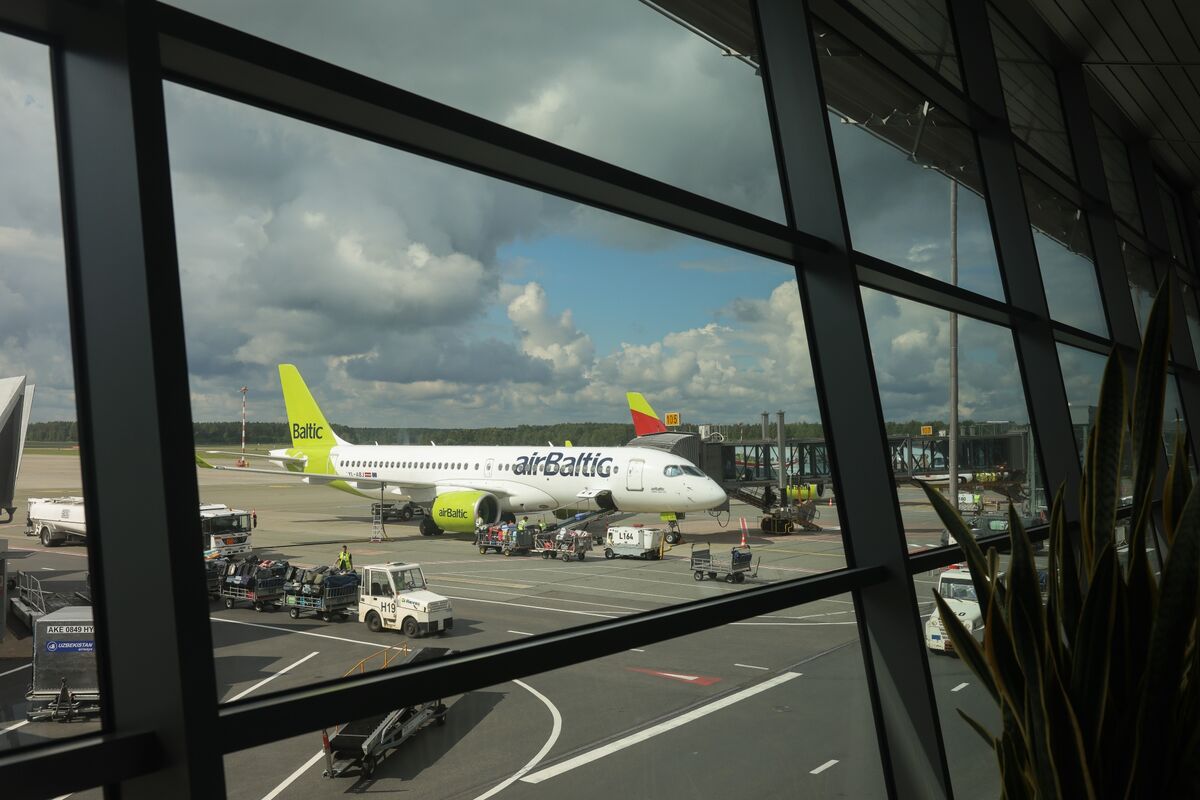
Air Baltic’s €380 million ($436 million) bonds due 2029 plunged about 16 cents, trading around 67 cents on the euro—its largest daily drop since issuance in 2024. The sell-off was driven by a surge in aviation fuel prices linked to the Mideast war, raising concerns over the struggling Latvian carrier's ability to absorb higher fuel costs and stressing its credit profile.
Small, regionally focused carriers with concentrated balance-sheet maturities are the natural stress point when jet fuel spikes because fuel is a large, near-cash operating cost that forces either margin compression or cash burn if fares can’t repriced quickly. Larger low-cost carriers with scale, hedging programs and access to capital markets gain optionality: they can raise fares selectively, redeploy capacity into higher-yield routes, and pick off market share from weaker competitors on key trunk and leisure routes within 1–3 quarters. Airports, ground-handling and regional tour operators in the Baltics and Northern Europe face a two-way shock — lower throughput if capacity contracts, but temporarily higher per-passenger yields for surviving carriers that reduce frequency, which can increase airport unit revenues but hurt concession and cargo volumes.
The key catalysts are fuel trajectory (days–weeks headlines, months for sustained margin impact), immediate refinancing/liquidity cliffs within 6–12 months for smaller issuers, and political responses (targeted subsidies, lessor forbearance or state support) that can turn insolvency into a managed restructuring. A sustained fuel shock plus tightening credit spreads amplifies default probability non-linearly for single-A-to-BB issuers that lack hedges; conversely, a diplomatic de-escalation, SPR releases or a quick re-routing of supply could reverse spreads within 30–90 days. Monitor: bunker/jet fuel crack spreads, lessor uptime statements, and covenant waivers or new equity injections — each is a binary catalyst with multi-notch rating consequences.
Consensus is pricing pure idiosyncratic default risk, but it often overlooks the acquisition option embedded in scale players: survivors can raise fares and redeploy capacity to extract outsized yield per ASK. That implies a two-way trade: idiosyncratic debt of small carriers can offer high carry to patient buyers if restructuring probability is overstated, while liquid instruments allow shorting broad airline beta if fuel remains elevated. Execution should size for asymmetric outcomes — small long distressed-credit positions financed by short airline ETF or short options to cap funding costs while keeping payoff convex to a recovery or further deterioration.
AI-powered research, real-time alerts, and portfolio analytics for institutional investors.
Request DemoOverall Sentiment
strongly negative
Sentiment Score
-0.65
