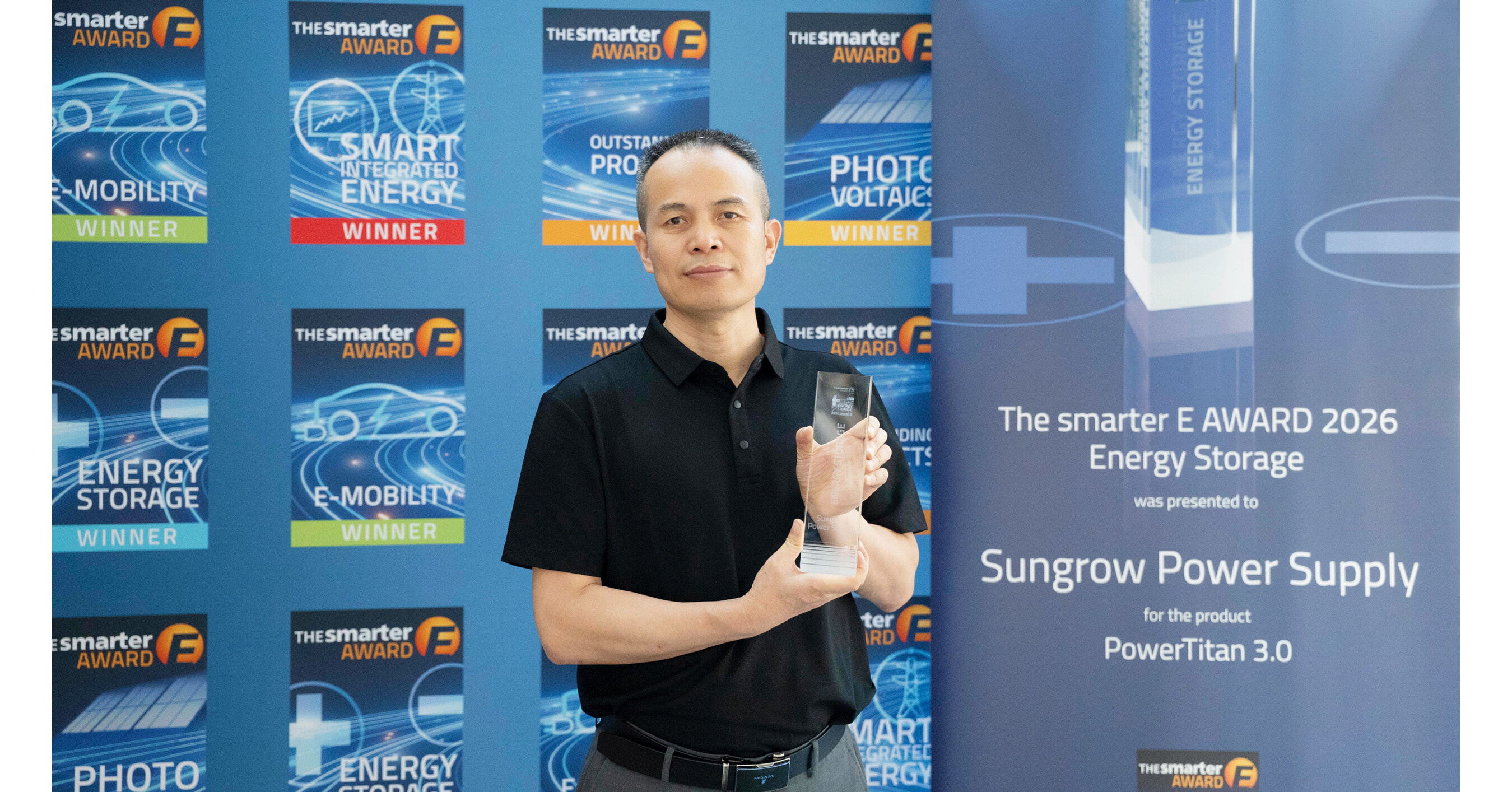
Sungrow’s PowerTitan 3.0 ESS won The smarter E AWARD 2026 (Energy Storage) at Intersolar, with Sungrow noting it is the only Chinese brand to win the category. The company highlights 99.3% power conversion efficiency and 92% round-trip efficiency, estimating a 1 GWh project can generate up to €16 million of additional revenue over a 20-year lifetime, and claims a 1 GWh system can be grid-connected in as little as 12 days. Sungrow also cites a 7.5 GWh Abu Dhabi order with Masdar and targets 10 GWh deliveries of PowerTitan 3.0 across Europe in 2026.
This is more useful as a competitive signal than a single-name catalyst. The market takeaway is that Chinese storage vendors are moving further up the bankability curve: if a buyer like a sovereign-backed developer is comfortable contracting at scale, the moat in utility-scale ESS shifts from branding to installed cost, delivery speed, and warranty confidence. That is structurally negative for higher-cost Western integrators that rely on software, financing, or local-content narratives to protect pricing.
The second-order effect is margin compression in Europe and MENA, where grid-connected storage is increasingly a procurement race. If a supplier can shave weeks off commissioning and still clear reliability hurdles, project developers can pull forward CODs and improve IRR, which forces competitors to match on service, logistics, and terms rather than just hardware specs. That is a headwind for names like FLNC and, to a lesser extent, TSLA Energy if buyers begin to benchmark against an aggressively priced Asian stack.
The near-term catalyst path is not the award itself; it is whether the disclosed pipeline converts into shipments with acceptable gross margin and warranty reserves over the next 1-3 quarters. The main falsifier is any sign of delayed project acceptance, rising field failures, or discounting that suggests the volume is being bought rather than earned. Over 6-18 months, the real question is whether Chinese storage exports can keep scaling without trade barriers, financing friction, or national-security scrutiny in Europe and the Gulf.
Contrarian view: the consensus may overread this as a pure share-gain story when it may simply confirm that utility buyers are standardizing on low-cost, containerized storage. If that is right, the biggest winner is not the vendor but the developer/IPP and the grid-scale buildout itself. If investors want a trade, the cleaner expression is shorting overpriced incumbents on rallies rather than chasing the name behind the press release.
AI-powered research, real-time alerts, and portfolio analytics for institutional investors.
Request DemoOverall Sentiment
mildly positive
Sentiment Score
0.25
Ticker Sentiment
