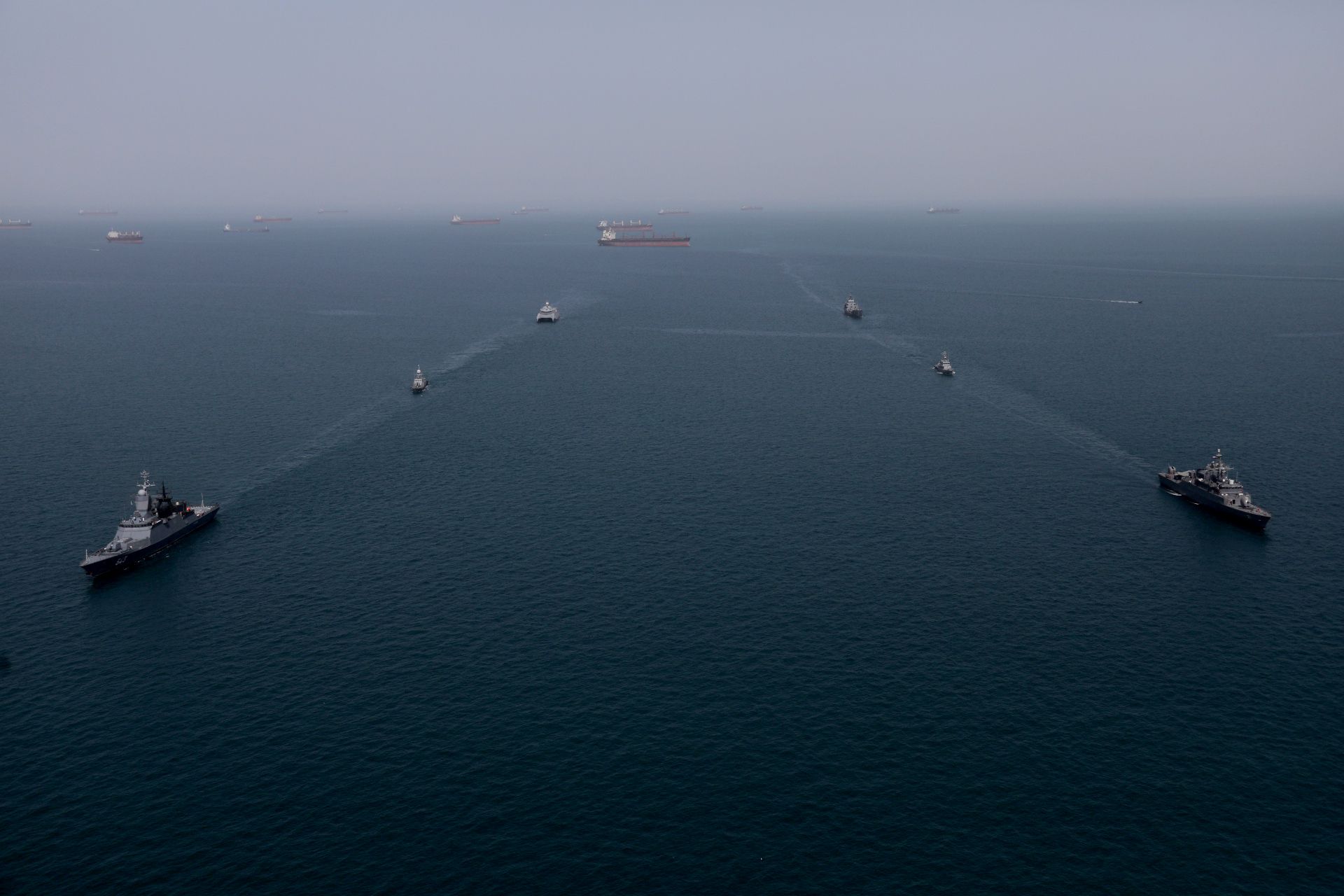
The 142-meter superyacht Nord crossed the Strait of Hormuz on April 25 despite ongoing maritime restrictions, highlighting continued exemptions and enforcement uncertainty in a key global shipping chokepoint. The article also notes that two U.S.-sanctioned tankers, five cargo ships, and a passenger ferry transited during the same period, underscoring elevated geopolitical risk around a route that carries roughly one-fifth of global oil and LNG shipments daily.
The market implication is not the yacht itself but the signaling embedded in selective enforcement: if Russian-linked traffic is receiving preferential passage while broader restrictions persist, the Strait is drifting from a binary closure risk into a two-tier regime. That lowers the probability of an immediate full supply shock, but it increases dispersion across cargoes, insurers, and counterparties because access now depends on political alignment rather than published rules. In practice, that favors traders and operators with embedded state relationships and hurts smaller shippers that cannot negotiate exceptions or absorb delay costs.
For energy, the biggest second-order effect is on volatility rather than outright price level. Even a limited disruption regime can keep front-end Brent risk premia elevated because the marginal barrel now carries legal, insurance, and routing uncertainty, but the absence of a total closure caps the tail. The more important risk is a rapid escalation from “managed passage” to arbitrary detention or fee extraction, which would hit LNG and refined-product flows first due to tighter scheduling and fewer routing alternatives.
The underappreciated angle is that sanction arbitrage becomes a transport business, not just a commodity one. Expect strengthening economics for brokers, dark-fleet operators, marine insurers with sovereign backstops, and port/logistics firms that can transact in compliant jurisdictions; the losers are mainstream tanker lessors and Western insurers exposed to war-risk premium repricing. If exemptions for Russian-linked assets persist for weeks, the market may overestimate the probability of a broad chokepoint event and underprice the more durable regime shift: chronic frictions, higher transit costs, and periodic local disruptions that bleed margins across the supply chain.
Near term, the catalyst path is binary and fast-moving: any incident involving a non-exempt vessel could reprice the whole complex in hours, while diplomatic clarification from Tehran could compress risk premia within days. Over a one- to three-month horizon, the question is whether this becomes a normalized carve-out system; if yes, oil may give back some geopolitical premium, but shipping equities tied to higher rates and insurance spreads should outperform. The contrarian view is that the market may be too focused on headline closure odds and not enough on the steady monetization of access control, which can be just as bullish for select transport intermediaries as an actual blockade.
AI-powered research, real-time alerts, and portfolio analytics for institutional investors.
Request DemoOverall Sentiment
neutral
Sentiment Score
-0.10
