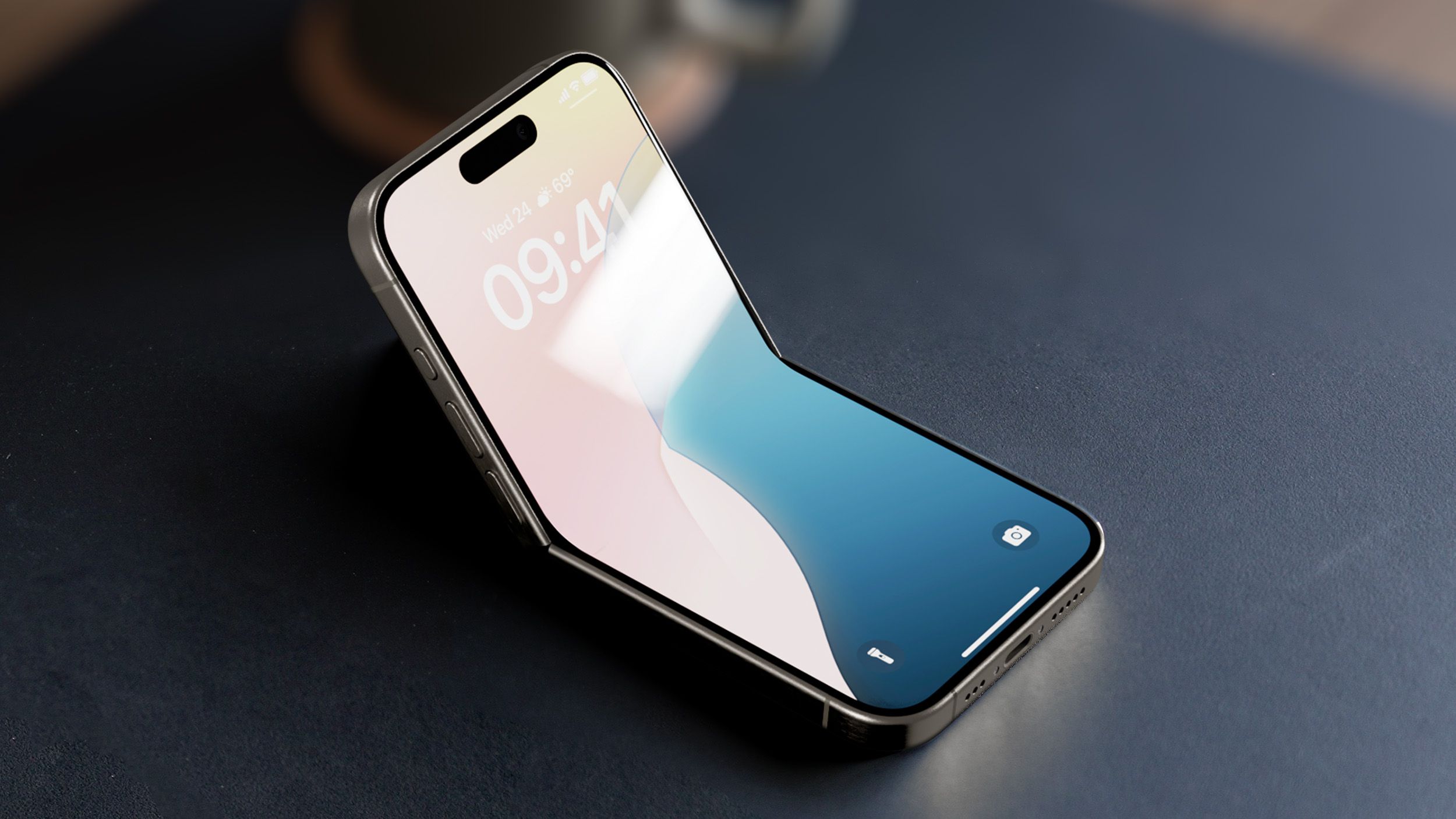
Apple reportedly abandoned a flip-style (clamshell) foldable iPhone due to weak new-use-case benefits and engineering compromises (reduced internal space limiting battery capacity and rear camera performance). The firm may instead offer a smaller slab model while continuing work on a larger book-style foldable expected in 2026; prior small-format attempts (iPhone 12 mini/13 mini) were discontinued after two generations due to poor sales.
Apple's decision context creates a subtle reallocation opportunity: engineering and supplier capacity earmarked for clamshell hinge, ultra-thin glass and odd-form camera stacks will likely be redeployed into the larger book-style foldable and regular slab SKUs. That raises the odds over the next 12–24 months that suppliers with flexible OLED, advanced hinge-less laminates and mainstream camera module scale win share versus niche hinge specialists; inventory and tooling that were meant for clamshell geometry could be repurposed or written down, creating dispersion across suppliers.
At the product/marketing level, shelving the clamshell reduces the addressable “compact premium” segment where Apple had weaker brand pull; expect Apple to lean into product-line simplification and price/feature densification (bigger batteries, better rear cameras) to preserve ASPs rather than chase low-volume form-factor experiments. This makes near-term margin upside more likely for incumbent component suppliers serving flagship slab designs, while firms whose sole value prop was hinge or fold-specific modules face binary outcomes (repurpose vs obsolescence) over the next 6–18 months.
Catalysts to watch: WWDC/Sept roadmap comments and 10-Q inventory disclosures (days–months) for signs of repurposing or write-downs, and component order book changes with suppliers (months–years) as Apple ramps the book-style foldable. Tail risks include a sudden shift back to clamshell demand if a competitor posts strong clamshell sales, or patent/IP friction that forces Apple into a suboptimal mechanical design—either could re-open the shelved path or compress margins for suppliers.
AI-powered research, real-time alerts, and portfolio analytics for institutional investors.
Request DemoOverall Sentiment
neutral
Sentiment Score
0.00
Ticker Sentiment
