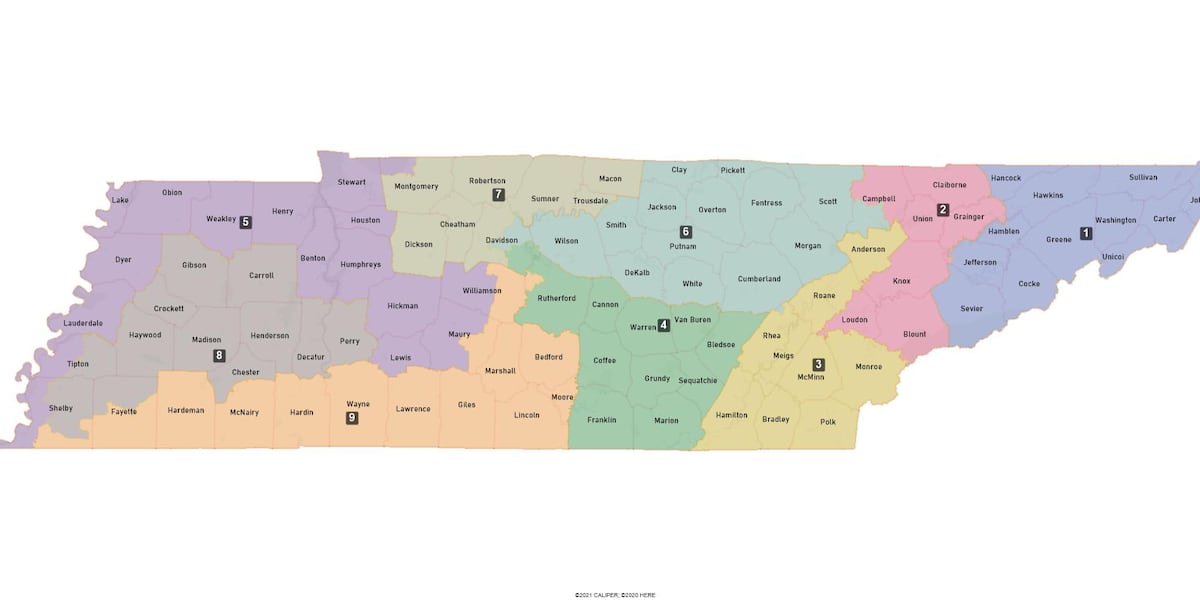
Tennessee Republicans have released a proposed new congressional map during a special session, with committee presentations scheduled for Wednesday and floor votes expected Thursday. The plan is intended to align the state's representation with conservative priorities and remove racial data from the mapmaking process, while Democrats argue it could dismantle Memphis's only Black-majority district. The Supreme Court's recent redistricting rulings are cited as the legal backdrop, but the article is primarily political and has limited direct market impact.
This is a governance shock, not an earnings event, but the marketable implication is that Tennessee is entering a multi-quarter period of elevated political and litigation optionality. The immediate beneficiaries are Republican-aligned incumbents and any statewide officeholders whose coalition is strengthened by a cleaner partisan map; the losers are the Democratic Party’s structural odds in the state and, more importantly, the legal defense bar and public-affairs firms that will likely see a burst of spending. The second-order effect is not in Tennessee-specific assets — it is in the precedent trade: if this passes cleanly, other GOP-led states will test how far they can push race-neutral but outcome-maximizing redistricting before courts react.
The key risk is that the market is likely underpricing the length of the process. The first headline catalyst is Thursday’s vote, but the real move is over months: injunctions, expedited appeals, and potential emergency SCOTUS action. That creates a path where the map is initially treated as durable, then repriced if a lower court enjoins implementation before candidate filing deadlines. The tail risk is asymmetric: a court setback would not only reverse Tennessee’s plan but could chill copycat efforts in other states, reducing the probability of a broader redistricting wave.
The contrarian angle is that the consensus may be overestimating how much seats can actually be moved in the near term. Even if the new map is enacted, practical benefits may be delayed by litigation and by the fact that incumbency, fundraising, and local branding still matter in midterm turnout environments. In other words, the trade is not a clean immediate seat-flip story; it is a volatility and process story, with the most tradable edge in names exposed to election-adjacent legal spend rather than in directional political beta.
For portfolios, this argues for expressing the theme through event-driven options and pairs rather than outright risk. The setup favors short-dated volatility around the vote and the first injunction window, while the broader structural trade should be on companies that monetize elections litigation and compliance workflows if redistricting battles proliferate across states.
AI-powered research, real-time alerts, and portfolio analytics for institutional investors.
Request DemoOverall Sentiment
neutral
Sentiment Score
-0.05
