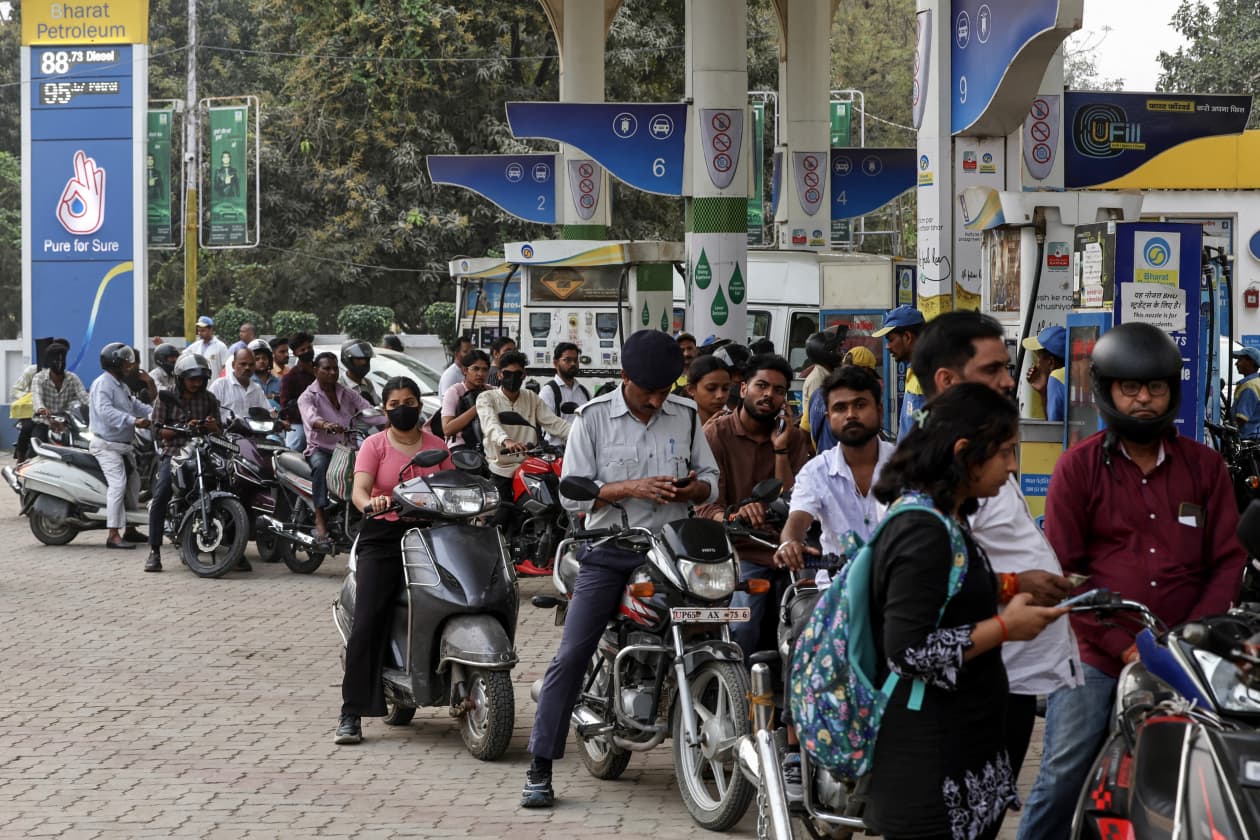
20% of global oil supply is disrupted by the nearly two-week Iran conflict, according to Rapidan Energy Group—more than double the ~10% disruption from the 1956-57 Suez crisis. Rapidan warns there is no spare global oil production capacity to cushion the shock, implying significant upside pressure on oil prices, elevated market volatility and broad supply-chain risks.
The most immediate, underpriced transmission mechanism is transport: longer routings, insurance premiums and port congestions create acute demand for crude tankers and floating storage, which can jack TCEs higher within days and sustain elevated freight for 1-3 months. That tightens delivered crude into key refining hubs unevenly, creating regional crack divergence—diesel/jet over gasoline—incentivizing traders to reallocate barrels away from low-margin refineries and into those with scale and logistical advantage.
Refiners with light-sweet feedstock access and merchant marketing (merchant refiners, export-oriented complexes) are positioned to capture outsized margins for a quarter or two, while vertically integrated majors face throughput rebalancing and refining yield mismatch that can compress downstream returns even as upstream commodity cashflows look comfortable. Second-order: petrochemical feedstock tightness and fertilizer inputs (via gas-linked feedstocks) will lift margin volatility and could spur substitution or feedstock stockpiling over the next 2-6 months.
Policy and market responses are the main path to mean reversion: coordinated releases from strategic reserves, an OPEC+ production pivot or rapid freight normalization would unwind the price impulse within 4-12 weeks; conversely, escalation or insurance market disruption would extend dislocations into seasons (6-18 months). The asymmetric tail is on escalation; the asymmetric mean-reversion catalyst is policy coordination combined with storage arbitrage and temporary contango, which can turn the market from backwardation to balanced quickly once barrels flow.
AI-powered research, real-time alerts, and portfolio analytics for institutional investors.
Request DemoOverall Sentiment
strongly negative
Sentiment Score
-0.70
