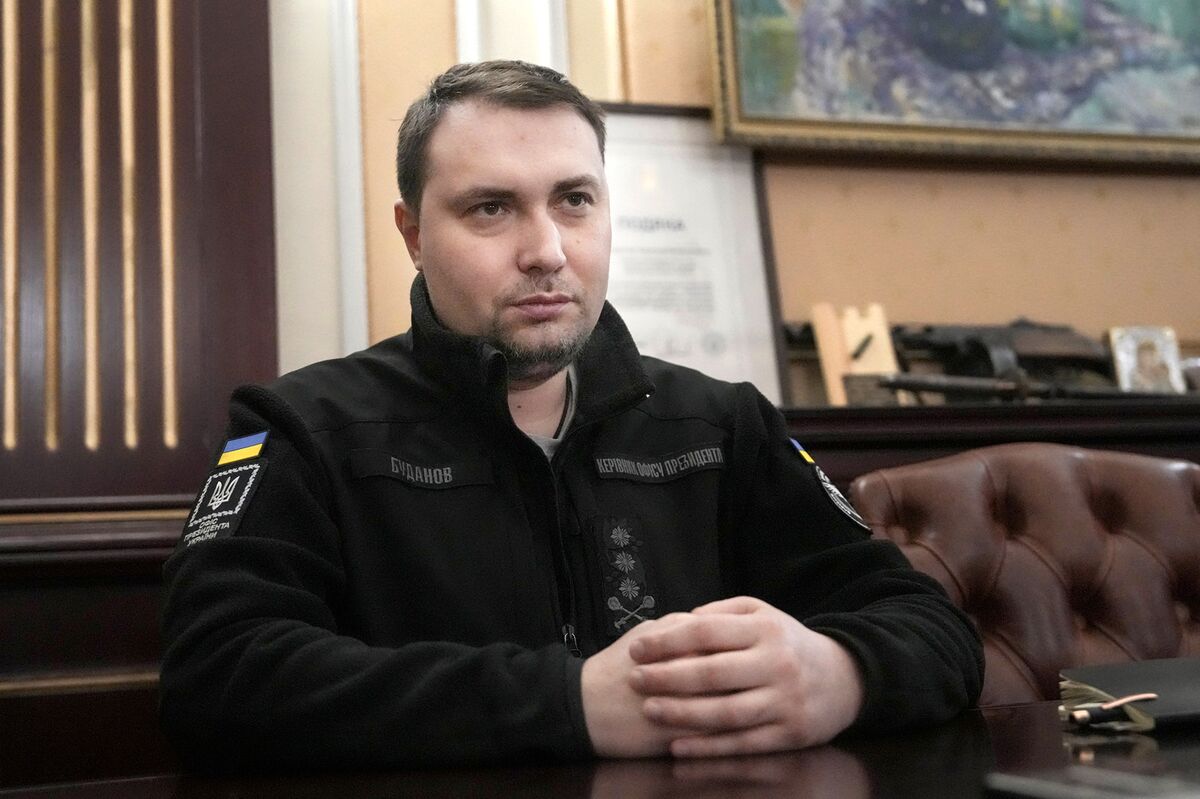
Kyrylo Budanov has been moved from military intelligence to lead Ukraine’s presidential office, a politically significant appointment that has sparked speculation about his future career path. The article frames the move against the backdrop of Ukraine’s war with Russia and Budanov’s public admiration for Napoleon, but it contains no market-moving economic or corporate data.
This is less about one personnel move and more about the formalization of a wartime command economy around a trusted security insider. When military intelligence figures migrate into the political center, the near-term effect is usually better execution on mobilization, procurement, and internal discipline, but at the cost of a more centralized, less transparent state apparatus. That tends to support continuity in external financing in the short run, while increasing the odds of policy friction later with donors who care about governance conditionality.
The second-order market implication is not Ukraine-specific sovereign stress so much as a modestly higher persistence of the war premium across European defense, energy security, and cyber-related budgets. If the political system is increasingly run by security hawks, ceasefire probability can fall even if battlefield dynamics are unchanged, which lengthens the tail on defense procurement cycles and keeps air-defense, drones, EW, and munitions demand elevated. The beneficiary set is broad but indirect: primes with European exposure, select munition suppliers, and firms tied to reconstruction logistics if the conflict remains frozen rather than resolved.
The contrarian risk is that investors overread personalization as strategizing. A stronger security chief can improve battlefield administration yet still fail to solve the harder issue: sustaining manpower and fiscal capacity over 12-24 months. If donor fatigue or domestic legitimacy weakens, concentration of power can become a liability, increasing succession risk and policy reversals faster than the market is pricing. In that scenario, the trade is not to chase a generic pro-war basket, but to own volatility around event risk and avoid assuming linear escalation of support.
From a cross-asset lens, this argues for keeping a tactical hedge against a drawn-out conflict rather than a directional bet on immediate market shock. The edge is in duration: war-related equities can grind higher on budget certainty over quarters, while sovereign and FX risk usually reprice only when external funding or political cohesion visibly cracks. That asymmetry suggests the better expression is a calm long on defense cash flows paired with an option-defined hedge on any Europe risk assets that remain complacent about ceasefire probability.
AI-powered research, real-time alerts, and portfolio analytics for institutional investors.
Request TrialOverall Sentiment
neutral
Sentiment Score
0.00
