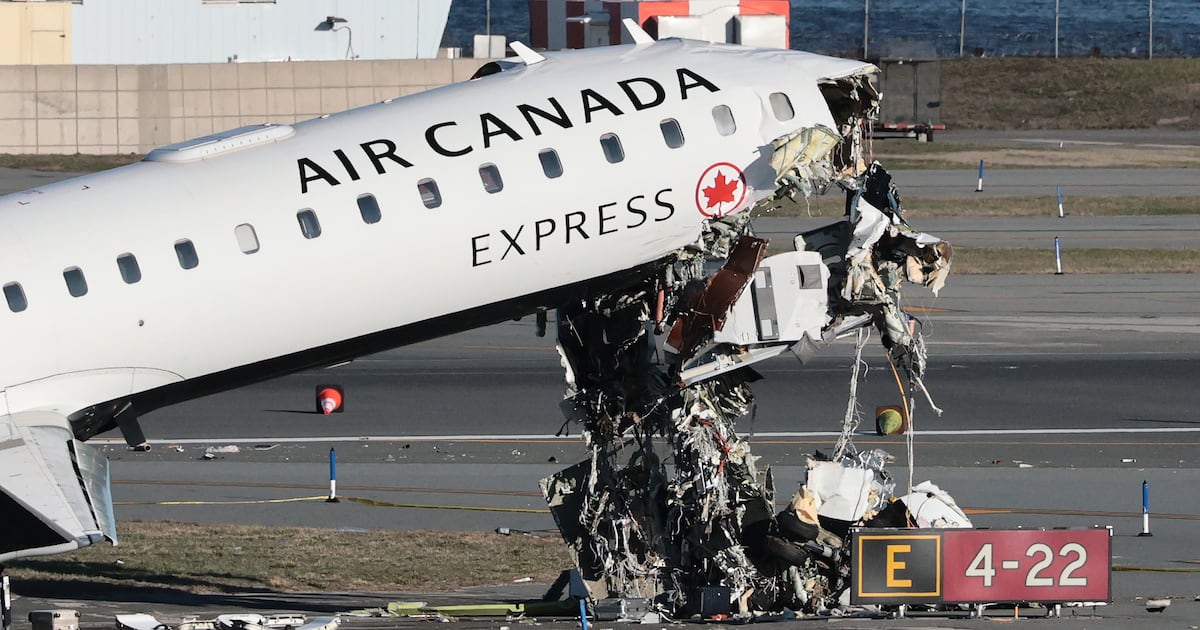
A fatal runway collision at LaGuardia left two pilots dead and dozens injured after investigators said an emergency truck without a transponder was not tracked by the airport’s ASDE-X surface detection system. The NTSB report says controllers cleared the Air Canada Express jet to land about 20 seconds before emergency vehicles moved, and runway warning lights extinguished seconds before impact. The findings point to major operational and safety-control failures at a high-profile U.S. airport, with likely scrutiny of airport technology and procedures.
This is not just an aviation-safety headline; it is a governance failure with an extended tail because the operational gap is cheap to fix but expensive to prove ex post. The second-order effect is a likely acceleration of regulatory tightening around airport surface surveillance, vehicle transponders, and crew-procedure enforcement, which should increase capex and retrofit spend across U.S. airports over the next 6-18 months. The market should think less about one-off liability and more about a broader compliance cycle that raises the cost of operating in dense hubs.
The immediate losers are airport operators, regional carriers, and contractors exposed to incident-related disruption, insurance claims, and higher scrutiny on runway-adjacent operations. Any vendor tied to surface detection, transponder hardware, airfield lighting, or airport automation should see a medium-term demand bump as regulators push for redundancy rather than point solutions. The more important second-order effect is on scheduling reliability: even if accident frequency stays low, airlines may face more conservative runway flow management and longer turnaround buffers at constrained airports, a margin headwind for high-utilization networks.
The contrarian read is that this may be more bullish for safety-tech vendors than the headline implies, but not necessarily for the broader aviation complex. The probability-weighted catalyst is not immediate litigation alone; it is a 3-12 month procurement wave once audits uncover similar blind spots elsewhere. Investors often underprice how one highly visible incident can convert latent maintenance and avionics backlogs into mandated spend, especially when the fix is discrete and politically easy to fund.
AI-powered research, real-time alerts, and portfolio analytics for institutional investors.
Request TrialOverall Sentiment
strongly negative
Sentiment Score
-0.78
