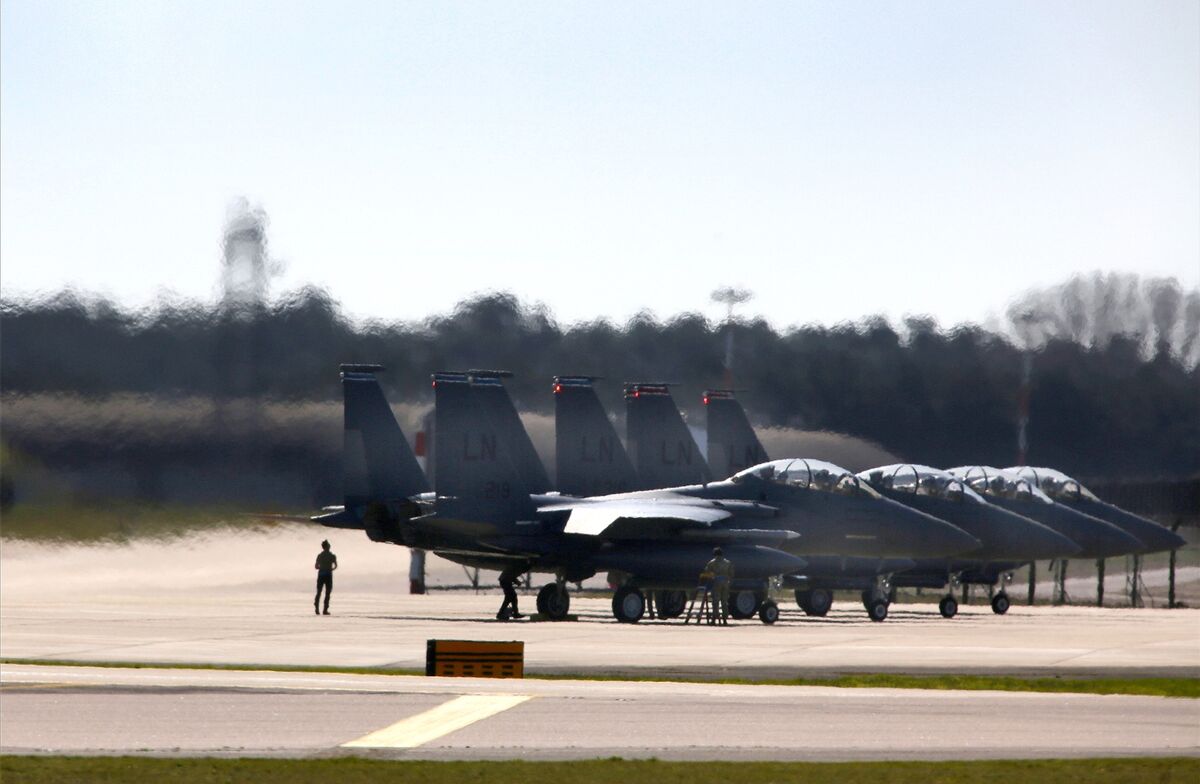
At least 16 US military aircraft have been destroyed since the start of the war with Iran, including 10 Reaper strike drones and roughly six other aircraft badly damaged. Notable losses include three US F-15s downed by friendly fire in Kuwait and a KC-135 tanker destroyed during refueling, which killed all six crew; the scale of losses heightens escalation and geopolitical risk and is likely to trigger near-term risk-off flows and support for defense and energy-related assets.
The immediate market reaction will be driven less by headline losses and more by a sustained rise in operational attrition rates that forces longer-term shifts: inventory drawdowns for spares, accelerated depot maintenance, and a reweighting from pure production to sustainment contracts. Expect procurement tails to lengthen — primes that capture high-margin lifecycle, logistics and training work (spare parts, engine shop visits, avionics field upgrades) will see revenue growth realized over 6–24 months rather than immediate lump-sum wins.
Second-order supply-chain effects are non-linear: small vendors that make niche sensors, radomes, fuel systems and flight-control line-replaceable units (LRUs) may hit capacity constraints quickly because their lead times are 6–18 months and they sit behind single-source agreements. That creates a two-tier opportunity set — the large primes can scale via subcontracting but margin expansion is constrained, while specialized mid-cap suppliers can reprice backlog and expand margins if they can fund capacity expansion.
Catalyst map: near-term (days–weeks) the main drivers are geopolitical escalation or de-escalation signals and any temporary grounding/inspection directives that amplify logistics strain; medium-term (3–12 months) drivers are Congressional budget reallocations and firm contract awards for sustainment and ISR; long-term (12–36 months) the structural shift is toward survivable, distributed unmanned and sensor-fused architectures which reweights R&D budgets. A reversal could come quickly if credible diplomacy reduces sortie rates or if rapid lessons-learned reduce accident/attrition rates, which would decompress immediate sustainment demand and pressure specialist suppliers' order visibility.
AI-powered research, real-time alerts, and portfolio analytics for institutional investors.
Request DemoOverall Sentiment
strongly negative
Sentiment Score
-0.70
